Showing posts with label Disease Management. Show all posts

Wednesday, March 19, 2014

A Generic Keyword "Pitch" to Better Sell the Medical Home

Applause!
While the just concluded 2014 Medical Home Summit was a wonderful learning and networking confab, it did have it's moments of jargon-laced salesmanship.

Think mixing two parts suspect data with one part dubious claims and a helping of preordained conclusions, bake with PowerPoint and serve to a fawning audience with a garnish of sweeping generalizations. And the dessert?  Applause.

Naturally, some of the Population Health Blog's evidence-based colleagues fussed over the occasional spills of snake oil. The PHB isn't at all concerned, because it was taught years ago by the old disease management industry that even the most pristine research in the most elite journals gets spun.

And let's face it: we collectively crossed that Rubicon when the Mr. Obama sold us a health insurance reform program that promised we could keep our doctors.

Since we all gotta make a living, the PHB is pleased to offer a free service to its more honest, non-for-profit and spin-challenged colleagues. It has combined its trove of disease management nostrums with a list of medical home keywords (underlined) that appeared in many of the Summit's presentations and huckstered over cheese and wine during the Exhibit Hall receptions:

Our (insert name of your medical home program) is a transformative and population-based initiative that shifts health care delivery from volume to value that proves that that JAMA article (link here) was wrong. Our transparency is only matched by our EHR registry and teaming of physicians, nurse practitioners, social workers, office staff, clerks, temps and janitorial service workers and we (pick one: have been, will be or should be) the subject of a (pick one: grant or report) by (pick one or more: PCPCC, the Commonwealth Fund, AHRQ, Medical Home News) that further shows why JAMA was woefully mistaken.

By proactively focusing on impactful care coordination and reducing care gaps, engagement of both patients and primary care providers drives triple-aim outcomes that include (insert percent numbers here without p values), which further demonstrates the JAMA article is a despicable outlier.

Our savings, enhanced clinical outcomes, decreases in readmissions, improved patient care experience and betterment of the community show that (name of medical home program) is foundational to the success of accountable care, which is why JAMA sucks.

As a result, we conclude that (pick one or more: politicians, employers) (pick one: wisely have or definitely should) require commercial and government insurers to pay (pick one or more: millions, specialists less, or through the nose) to save primary care despite what JAMA says.

Monday, March 17, 2014

A Reprise of the Infamous CBO Report on Disease Management and the De-linking of Health Insurance and Wellness

Two things "heard on the street" at today's Medical Home Summit:

1) The recent JAMA article on the failure of the medical home to reduce health costs is provoking the same defensiveness as the infamous 2004 CBO report on "disease management."  PCMH advocates are using the same arguments that were used by the old DM vendors to defend their business model back in 2004.

Two of the more common ones heard by the Population Health Blog are that 1) today's model is far improved over the Ver. 1.0 reported in the JAMA article and 2) the improved health status of populations is not correlated with reduced insurance claims expense.
 
2) The bad news is that employers have given up on health insurance and many are prepared to push their workforce into the health insurance exchanges.  The good news is that they are continuing to invest in wellness and health promotion programs for their employees - not because they believe it saves money, but because it increases productivity.

In other words, commercial health insurance and wellness are being de-linked.

Tuesday, January 7, 2014

Is $1 Billion a Good Investment for Disease Management? We May Finally Have an Answer

Take two of these and call for
savings in the morning
Anyone familiar with the history of disease management industry will almost certainly can recall Soeren Mattke's 2007 article that provocatively asked Evidence for the Effect of Disease Management: Is $1 Billion a Year a Good Investment? Based on what was known in the peer reviewed literature at that time, Dr. Mattke's answer was a desultory "uncertain," and he recommended that buyers of disease management services approach the industry's vendors with "skepticism."

Well, it took him seven years, but Dr. Mattke has finally agreed with the Disease Management Care Blog that investment in disease management can be good.  Writing in the January 2014 issue of Health Affairs, Dr. Mattke and other colleagues from RAND look at the impact of disease management involving thousands of employees at PepsiCo.

In 2003, Pepsi started an employee health program that included risk assessments, on-site wellness events, lifestyle management, disease management, complex care management, telephone nurse advice lines, and maternity management. By 2011, there were 5 telephonic lifestyle programs (weight management, nutrition management, fitness, stress management and tobacco cessation) and 10 telephonic chronic disease management programs (asthma, coronary artery disease, atrial fibrillation, congestive heart failure, stroke, hyperlipidemia, hypertension, diabetes, low back pain, and chronic obstructive pulmonary disease).

Of the greater than 67,000 Pepsi employee participants, 2,610, 17,432 and 2,162 persons with an average 6.4 years of participation in disease management, lifestyle management and both, respectively, were matched, using propensity scoring, to Pepsi non-participants. The two groups' insurance claims expense and absenteeism were compared.

Overall, all the participants had an average of $360 per member per year (PMPY) less cost compared to the non-participants. The participants' vs. the non participants' cost curves diverged and became statistically significant after 3 years

However, it turned out that the savings was confined to the disease management population, which had a lower cost of $1632 PMPY.  Participants in the lifestyle management had negligible savings.  Disease management had a return on investment of $3.78

Participants in both disease management and lifestyle programs had a savings of $1,920 per year.

Despite the lack of any impact on claims expense, lifestyle management was associated with a reduction in self-reported absenteeism of .13 days per year.  In contrast, disease management had no impact on absenteeism.

The DMCB's take:

This builds on the evidence (like this and this) that later generation, remotely based telephonic disease management can reduce claims expense.  $360 PMPY for $67,000 employees translates to more than $24 million in savings per year for Pepsi. Even if the company spent millions on its health programs, the impact is something that both the employees and shareholders can be happy about.

As skeptics continue to wonder at the continuing commercial success of the disease management (now called "population health") industry, the DMCB reminds them that many other companies like Pepsi are also looking at their return on investment. They undoubtedly like what they see, but unlike Pepsi, are not taking the time or effort to publish their results.  Pepsi, in the meantime, deserves kudos for their commitment to the science of population health.

That being said, this is a company sponsored disease management program that is limited to employees and dependents.  The DMCB is less certain about the impact of these programs in typical "free range" commercial or government insurance settings.

The study isn't perfect, because there could be hidden biases.  As the authors point out, even propensity matching can't guarantee that the two populations were truly similar; since participation was voluntary, it's possible that the participants were more health conscious and that characteristic - not the disease management - is what's responsible for the observed savings.


Monday, June 17, 2013

The MIddle Class Bubble and the Long Term Implications for Care Management & Health Care

According to this 2011 article in The Atlantic, the middle class is in trouble.  The Disease Management Care Blog agrees and wonders if they are ultimately doomed. Either way, there are important implications for health care in general and the care management industry in particular.

The amateur DMCB explains.

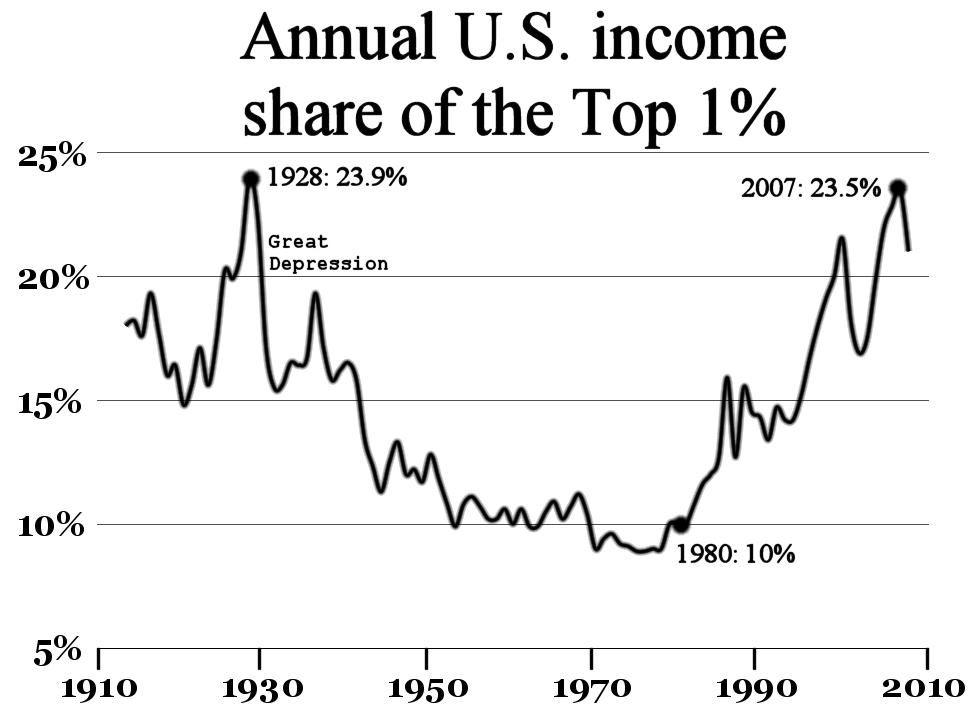
With the advent of the Gilded Age in the 1870s, the industrial revolution ushered in more than a century of heavy industry, railroads, mining, commercial farming and manufacturing that were powered by millions of skilled and unskilled workers. Wealth and power remained concentrated in an elite 1% plutocracy that had prevailed throughout most of human history, but a newly emergent "middle class" benefited from high wages and became an accepted part of the American political and cultural landscape.  Thanks to their labor, the quality of goods and services increased while simultaneously becoming cheaper.

While the middle class was in retreat at the turn of the millennium, The Great Recession suggests that their century-long party may be truly over. Global competition with the free movement of labor and capital combined with automation have made the costs of industry even cheaper. The plutocracy that has always been there can shrug off the effects of a recession, but the intrinsic value of traditional labor has popped, bubble fashion

In the last decade, persons in the nominal middle class with less than $90,000 a year in income have had flat wages and have been unable to increase their spending. Since 2000, American manufacturing - which has not only lost ground to China but become more mechanized - has lost about a third of its jobs. This has played itself out in geographic terms, where the elite hubs around Washington DC, San Francisco and Boston have high wage job listings, while cities like Detroit and Miami have been in the dumpster. In other words, much of the middle class is being hollowed out and being forced to downjob into personal services, retail and food preparation - while leading lives that are at risk for financial stress, partner conflicts, single parenting and troubled children.

In the meantime, the DMCB suspects that the "fat cat" billionaires so reviled by progressives are not any more numerous or fantastically wealthy.  The DMCB thinks that they're only more visible.  It remains to be seen if government will be successful in moving wealth from that top 1% to the struggling 99%.  History suggests otherwise.

Long term implications for the health and care management industry:

Health care will sort into 1) high end, high touch, personalized care for a small elite that can not only afford it, but will be responsible for profitable top line revenue and 2) a strained publicly underfunded system with thin margins for the rest.  Care management providers will likewise sort into these two camps.  The first involves high margin value, the second involves low margin volume.  Given the disparate business models, it's unlikely that single companies will be able to do both.

While universal access to affordable health insurance remains a bipartisan goal, high out-of-pocket costs combined with limited provider access for persons outside of the 1% will increase the popularity of cheap "DIY" care involving eHealth. This is a natural fit for the care management industry.

Lacking factory work, more workers than anticipated may be available as the U.S. population ages and the demand for personal health care attendants increases.

Classic health care "knowledge workers" may not be immune, since information tech and automation may enable machines to generate a differential diagnosis and read an x-ray, while cheap and highly trained remote labor may be able to deply robotics to perform routine surgeries.  For the care management industry, an on-line script that prompts a nominally-trained health educator may be able to replace nurse care managers.

Image from Wikipedia

Tuesday, April 2, 2013

The Persistence of Disease Management: It's Not Going Away......

We're all aware of the past criticisms of "disease management." According to the critics, these for-profit vendors were in collusion with commercial insurers, relying robo-calls to blanket unsuspecting patients with dubious advice. Their claims of "outcomes" were based on flawed research that was never intended to be science; it was really intended to market their wares.  

But suppose the Disease Management Care Blog alerted you to:

1. A company that had developed a patient registry to identify at-risk patients who had not received an evidence-based care recommendation? Software created mailings to those patients that not only informed them of the recommendation but offered them a toll-free number to call if there were questions. Patients who remained non-compliant were then called by coordinators, who made three attempts to contact the patient and assist in any scheduling needs. If necessary, a nurse was available to telephonically engage patients and develop alternative care options.

If you think that sounds like typical vendor-driven telephonic disease management, you'd be right.  You'd also be describing an approach to care that was studied by Group Health Cooperative using their electronic record, medical assistants and nurses.  When it was applied to colon cancer screening, a randomized study revealed each additional level of support progressively resulted in statistically significant screening rates.

Or how about.......

2. A major insurer that decided to use its claims data to identify its own "best practices" without waiting for any published evidence-based studies?  Since "strict experimental conditions cannot always be met," shortcuts like time-series analyses" and "propensity score approaches" will be used to "blur" the lines between feedback and evaluation, as well as the lines between provider and insurer?

If you think that sounds like an commercial insurer muscling into health care delivery while using quasi-experimental research shortcuts, you'd be right.  You'd also be describing how Medicare's Innovation Center is borrowing from the disease management industry's approach.  It's all here.

Lastly, there's......

3. A major insurer that decided to NOT to pay primary care sites enough fee-for-service or capitation, preventing them from hiring nurses who could provide coordinated care.  The insurer instead hired its own nurses and "embedded" them in the primary care sites while linking additional monthly payments of approximately $5 to pay-for-performance metrics.

If you think that sounds like a step away from the usual Patient Centered Medical Home, you'd be wrong.  In this instance, having the embedded nurses did not get in the way of the sites achieving PPC-PCMH recognition. What's more, compared to usual care in a prospective randomized study that was underwritten by the medical-home fans at the Commonwealth Fund, the embedded nurse approach resulted in better hypertension care, breast cancer screening and fewer emergency room visits.

Alas, disease management: to paraphrase The Bard, a rose still smells as sweet by any other name, especially if it's used by Group Health, CMS and the Commonwealth Fund.