While readers digest the reality of a Trump Presidency and Republican control of both houses of Congress, the Population Health Blog (PHB) has been trying to assess the "down ballot" implications for healthcare and mHealth providers.
While the universe has been turned upside down, its initial reaction for mHealth is bullish. As for the rest....... read on.
While he was a wacky campaigner, the PHB suspects that Mr. Trump's "campaign promises" were really opening negotiating positions. While immigration, the Supreme Court and business regulatory reform will be top of mind, he'll eventually get around to making deals in the healthcare space, because that is his nature. That is the real wild card and increases uncertainty.
That being said, what can the PHB predict?
Given Mr. Trump's and the Republican majority antipathy to Obamacare, the Affordable Care Act is likely to be gutted. While U.S. Senate Democrats can create mischief with the filibuster, many are also up for election in two years. As a result, commercial insurance premium subsidies, the minimum benefit, the IRS penalty and ACOs are toast.
Because it's working pretty well, the PHB rates it as unlikely that Congress will alter the basic underpinnings of fee-for-service Medicare and the Medicare Advantage programs. Unfortunately, however, that also means that the complex reporting and payment changes of MACRA - and its premise of "value-driven" Medicare - will stay on track.
According to The Washington Post, more of the federal support of Medicaid will transition to block grants. The PHB suspects that when the budgeting is done, the Republicans will trade greater local leeway for less money. It remains to be seen how states will respond by altering eligibility requirements.
So, over the short term who wins and who loses?
Patients lose - but slightly: those who are outside of Medicaid, many of them will buy skinnier coverage or not buy any commercial insurance. While that will mean that many will forego needed medical care, Obamacare's deductibles were already leading in that direction. Those in Medicaid will find their healthcare coverage dependent on their state's fiscal priorities; on the other hand, many Governors will fight to do the right thing. Medicare patients will do OK. The good news is still that if anyone shows up at 3 AM with motor vehicle trauma, the system will still take care of them.
Hospitals/Inpatient Service Providers lose and a lot: Without premium subsidies, more persons will forego commercial health insurance, and Medicaid will have less money. Since a lot of inpatient healthcare utilization is preference insensitive, that means more bad debt and deeper fee schedule discounts. By the way, interest rates are destined to rise, making hospital debt more expensive. They'll consolidate, and a pro-business climate in D.C. may make this easier.
Physicians neutral: while physician incomes will also be buffeted by more bad debt and deeper Medicaid discounts, the PHB suspects a critical mass of docs were increasingly disenchanted with Obamacare and its impacts on their professionalism. While policymakers and organized medicine groups (such as the AMA) may argue that this is a Pyrrhic Victory, all of this will be overshadowed by the top line impacts of MACRA, which is not going away. This will quickly eat up the docs' bandwidth. They'll continue to consolidate into larger groups, but away from hospitals, which can no longer afford them.
Organized Medicine loses: the AMA and many of its sister organizations supported Obamacare and stayed inside the Beltway Bubble. Eight years later, those chickens are coming home to roost. They now have to choose between being part of a new solution or being a member of the loyal opposition. Both are unpalatable.
Health Technology/mHealth wins: patients will look for tech solutions that offer faster, cheaper or better care that include, for example cloud-based guidance for diabetes control, remote provider advice web sites and home telemonitoring. To the degree that it offers a substitutive level of care, insurers will gladly pay for it, and since there are revenue opportunities for providers, they'll pay for it too. A pro-business posture in Washington DC, a focus on other healthcare issues and less regulatory overhang means that apps, devices, gadgets, big data, The Cloud and SasS will continue to expand. The future remains bright for companies like MedSolis.
Long term? This depends more on the economy. If it can return to 3% growth and if the labor participation rate increases, more persons will be able to afford housing, transportation, education and healthcare.
Showing posts with label Health Reform. Show all posts
Showing posts with label Health Reform. Show all posts
Thursday, November 10, 2016


Monday, October 5, 2015
Physician Owned Private Practice Is Still Alive and Well: Here's Why
 |
| A death greatly exaggerated... |
The PHB has been skeptical about the death of private practice, and the breakfast did little to change its mind.
What it learned is that there is no shortage of business for outfits like TAG. A typical private practice client is a group of ten or more physicians with multiple clinics in a multi-county area serving thousands of patients. These groups range from primary care to pain management to women's service to cardiology. While their revenues and expenses cannot be taken for granted and payer hassles abound, it's not impossible for a nimble and hard-working group of private practice docs to serve their patient population and still end the year in the black.
In addition, it hasn't been that unusual for individual physicians who are in salaried positions in large hospital-dominated provider organizations to contact TAG to explore the options for going into "private practice."
Anecdotal you say?
Despite the narrative that the death of private practice is "unstoppable," there are plenty of reasons to be contrarian:
1) The latest good information (like this) on physician employment that supports the narrative that private practice is dead is from the AMA's 2012 data base. While newer data from 2014 indicate that independent primary care practice is dwindling, there are pockets of specialty physician private practice that are remaining strong. In other words, one reason for the growth of salaried physicians is their flight from continuing struggles of primary care, not toward the advantages of employment.
2) Whether they're in a salaried position or in private practice, today's physicians are still demanding autonomy, adequate resources, input and to be rewarded. Given reports like this and this on getting docs to
3) And speaking of being rewarded, physician compensation in ACOs don't appear to provide any particular advantages.
4) What about the patients, you ask? Good question, and you can be sure that the docs are asking it too.
The point? Large hospital-provider systems relying on salaried physicians are an important option in health care reform. The PHB suggests that reports of the death of private practice have been exaggerated and it will also remain an important option.
Stay tuned!
Tuesday, September 15, 2015
Physician Participation in Board of Directors: Transcending the Bottom Line
Two quotes:
One is from Citizen Kane: "Well, it's no trick to make a lot of money... if what you want to do is make a lot of money."
The other is from a long-past Population Health Blog mentor: "Docs can be good at taking care of patients, or at golf. The problem is that they can't do both."
The PHB had both in mind while it wrote this just released paper appearing in the American Journal of Medical Quality. Somewhere in the nexus of a) patient care, b) having a sustainable enterprise and c) consumerism, all of the health providers, payers, buyers, vendors, systems and business associates need to know that the bottom line is not about making money and being able to afford a country club membership.
A low handicap is all well and good, but more is needed.
The message of the paper?
During the era of ascendant managed care in the 1990s, researchers examined the association between physician participation in the governance of health entities and their performance. The result was several peer-reviewed studies that demonstrated that when there was physician participation on a board of directors, measures of profitability, quality assurance and social performance were higher compared to institutions without a doc in the boardroom.
As PHB readers are well aware, managed care was eventually defanged. Interest in physician governance waned and the rest is history.
Except things are heating up. There are millions of newly insured, and healthcare is poised to consume 20% of GDP. As we look for ways to achieve the Triple Aim, the PHB decided to to dust things off and reexamine the merits of physician governance.
Here's what it found:
1. Industry Expertise: physicians' broad awareness of health care is just as important financial expertise in the banking sector or educational expertise in university governance.
2. Outcomes: As healthcare organizations participate in public reporting, physicians' familiarity with outcomes data can help their fellow board members provide better oversight of what the numbers really mean and how to improve them.
3. CEO Success: Health care organizations' chief executives don't have to be physicians, but physicians can help them grapple with increasingly complicated marketplace.
4. Diversity: Physicians have been acculturated over their professional lives to skeptically evaluate things for themselves. While this can be challenging in some settings, the good news is that this independence of thought can be counted on to reduce the risk of corporate "group-think."
5. Credibility: Physicians are still widely admired for their integrity. This can help set the "tone at the top" as well as diminish the risk that a health care organization is putting profits before patients.
6. Professional Development: physicians' commitment to lifelong learning can act as a role model for lay board members who may be unwilling to commit to the time or the expense of continuing education.
7. Competitive Insights: Physicians are more likely to be aware of the strengths, weakness, turf and politics in their own as well the competitors' organizations.
Given the evidence, it seems that any health care organization without a doc on their board is missing out on an important value proposition that not only adds to, but transcends the bottom line.
Just sayin'.
One last thought: when any physician ponders participation in governance, he or she will have to deal with three unique barriers: 1) loss of practice income, 2) a time commitment away from the bedside that could erode their clinical skills and 3) the loss of prestige that comes from having a less than 100% commitment to their profession.
More on that in a future post.
 |
| Healthcare corporate governance in action |
One is from Citizen Kane: "Well, it's no trick to make a lot of money... if what you want to do is make a lot of money."
The other is from a long-past Population Health Blog mentor: "Docs can be good at taking care of patients, or at golf. The problem is that they can't do both."
The PHB had both in mind while it wrote this just released paper appearing in the American Journal of Medical Quality. Somewhere in the nexus of a) patient care, b) having a sustainable enterprise and c) consumerism, all of the health providers, payers, buyers, vendors, systems and business associates need to know that the bottom line is not about making money and being able to afford a country club membership.
A low handicap is all well and good, but more is needed.
The message of the paper?
During the era of ascendant managed care in the 1990s, researchers examined the association between physician participation in the governance of health entities and their performance. The result was several peer-reviewed studies that demonstrated that when there was physician participation on a board of directors, measures of profitability, quality assurance and social performance were higher compared to institutions without a doc in the boardroom.
As PHB readers are well aware, managed care was eventually defanged. Interest in physician governance waned and the rest is history.
Except things are heating up. There are millions of newly insured, and healthcare is poised to consume 20% of GDP. As we look for ways to achieve the Triple Aim, the PHB decided to to dust things off and reexamine the merits of physician governance.
Here's what it found:
1. Industry Expertise: physicians' broad awareness of health care is just as important financial expertise in the banking sector or educational expertise in university governance.
2. Outcomes: As healthcare organizations participate in public reporting, physicians' familiarity with outcomes data can help their fellow board members provide better oversight of what the numbers really mean and how to improve them.
3. CEO Success: Health care organizations' chief executives don't have to be physicians, but physicians can help them grapple with increasingly complicated marketplace.
4. Diversity: Physicians have been acculturated over their professional lives to skeptically evaluate things for themselves. While this can be challenging in some settings, the good news is that this independence of thought can be counted on to reduce the risk of corporate "group-think."
5. Credibility: Physicians are still widely admired for their integrity. This can help set the "tone at the top" as well as diminish the risk that a health care organization is putting profits before patients.
6. Professional Development: physicians' commitment to lifelong learning can act as a role model for lay board members who may be unwilling to commit to the time or the expense of continuing education.
7. Competitive Insights: Physicians are more likely to be aware of the strengths, weakness, turf and politics in their own as well the competitors' organizations.
Given the evidence, it seems that any health care organization without a doc on their board is missing out on an important value proposition that not only adds to, but transcends the bottom line.
Just sayin'.
One last thought: when any physician ponders participation in governance, he or she will have to deal with three unique barriers: 1) loss of practice income, 2) a time commitment away from the bedside that could erode their clinical skills and 3) the loss of prestige that comes from having a less than 100% commitment to their profession.
More on that in a future post.
Friday, August 7, 2015
Channeling the Fox News Rebublican Debate for Health Care Reform
Last night, the Population Health Blog secured a suitable beverage supply, pulled up a chair and tuned to the Republican Party debate. As predicted, there was little substantive attention to health reform.
That won't stop the PHB. Lacking specifics, it's offering an important public service by channeling the debate's bombast to a hypothetical question:
"Specifically, what is the first thing you would do on the first day of your administration, as the next U.S. President, to control the growth of health care spending?"
Chris Christie - "I'd do hugs, not drugs!"
Scott Walker - "Since they've hacked all our medical records anyway, let's outsource it to China."
Rand Paul - "Stop the outsourcing of how we pay for it to China!"
Ben Carson - I've done brain surgery on conjoined Siamese Twin health policy specialists; one lost their brain and when I was done, I couldn't tell the difference between the two!"
Donald Trump - "You're stupid for even asking that, but I'd build a wall around every hospital."
Jeb Bush - "If everyone ate some milquetoast everyday like I do, they'd be calm and healthy, like me!"
Ted Cruz - "I'd shut down the government."
John Kasich - "If all Americans would only go to Ohio hospitals, costs would go down."
Marco Rubio - "I had a $100,000 in educational loans, and I look forward to $100,000 in loans to pay for my health care bills."
Mike Huckabee - "The purpose of health care is not not kill people or break things!"
That won't stop the PHB. Lacking specifics, it's offering an important public service by channeling the debate's bombast to a hypothetical question:
"Specifically, what is the first thing you would do on the first day of your administration, as the next U.S. President, to control the growth of health care spending?"
Chris Christie - "I'd do hugs, not drugs!"
Scott Walker - "Since they've hacked all our medical records anyway, let's outsource it to China."
Rand Paul - "Stop the outsourcing of how we pay for it to China!"
Ben Carson - I've done brain surgery on conjoined Siamese Twin health policy specialists; one lost their brain and when I was done, I couldn't tell the difference between the two!"
Donald Trump - "You're stupid for even asking that, but I'd build a wall around every hospital."
Jeb Bush - "If everyone ate some milquetoast everyday like I do, they'd be calm and healthy, like me!"
Ted Cruz - "I'd shut down the government."
John Kasich - "If all Americans would only go to Ohio hospitals, costs would go down."
Marco Rubio - "I had a $100,000 in educational loans, and I look forward to $100,000 in loans to pay for my health care bills."
Mike Huckabee - "The purpose of health care is not not kill people or break things!"
Thursday, August 6, 2015
The Gap Between Rank and File Physicians and Their Leaders
 |
| Awaiting our orders |
According to this Commonwealth Fund and Kaiser Family Foundation survey, only a minority of "front-line" primary care providers (including a sample of non-physicians) believe that the major linchpins of health reform such as value-based payments, Accountable Care Organizations (ACOs) and medical homes are having a "positive impact on medical care."
The survey relied on a representative national sample of 1,624 primary care docs and 525 nurse practitioners and physician assistants who were working in primary care practices. 64% and 87%, respectively, were compensated with a mix of salary and/or capitation and 55% of the docs' had incentives that were based on quality, patient surveys or cost. Just under 30% were participating in some sort of ACO arrangement.
Only 33% of the physicians and 40% of the non-physicians believed medical homes are beneficial.
26% of the physicians also viewed ACOs negatively. Among the physicians who were in an ACO, "three of 10 said ACOs are having a positive impact, one-quarter said their impact is negative, and 20 percent said they have no impact."
What's more, 50% and 40% of physicians and non-physicians believe quality incentives are having a "negative" impact on the quality of care.
And how bad is it? 47% and 27% of physician and non-physicians are considering retirement "earlier than they thought they would."
And then there is this separate report by the "American Association for Physician Leadership." According to partner "Navigant Center for Healthcare Research and Policy Analysis," this survey of 2,398 of the Association's members shows that "55%" believe the Affordable Care Act has "more good than bad," that "69%" felt that physicians should be held "accountable for costs of care" and that 57% agreed that ACOs will "be a permanent model for risk sharing."
And just was is the AAPL? The Population Health Blog didn't know this, but it's the rebranded American College of Physician Executives (ACPE). Being a member of AAPL doesn't necessary mean that a doc occupies a position of leadership in a hospital or clinic, but the credential suggests a strong interest in that career path.
Why the disconnect between physician leaders and rank and file primary care physicians?
It could be argued that their vantage point enables the leaders to be better aware of the realities of health reform and that those realities have yet to be communicated or accepted by primary care physicians. Cue the narrative about education, aligning incentives, letting the malcontents quit and questioning whether physicians should even be in charge.
But the PHB isn't sure that quite explains everything.
The recent controversy over maintenance of certification (MOC) is a telling example of how easy it is for otherwise smart and respected physician leaders who are advancing quality and value to get it really wrong. Thanks to all the publications, webinars, meetings, PowerPoints in the closed-information loops of health reform, it's too easy for well-meaning leaders to recycle Washington DC's value-based nostrums. The PHB is running into many of them, and the group-think is getting both boring and alarming.
In other words, just because "leaders" are championing change doesn't mean the rank and file "get it." There is also no guarantee that there won't be inconvenient raising of ethical concerns, a reprise of the anti-managed care backlash, a strike threat or even acts of civil disobedience.
Based on the input of physicians who are at the front lines and are seeing the impact first hand, health reform remains very much a work in progress. And maybe it's the physician leaders that don't get it.
Stay tuned.
Image from Wikipedia
Wednesday, July 8, 2015
Three Downsides to Commercial Health Insurer Consolidation
 Writing in The Wall Street Journal, Scott Gottlieb argues that the Aetna-Humana and the Anthem-Cigna combinations are evidence of waning insurer competition that is the direct result of Obamacare. Not only are ACOs not a panacea, but the Affordable Care Act's insurance mandate to limit administrative costs is forcing Aetna et al to spread their costs over a larger base. Dr. Gottlieb fears that the oligopolies won't be able to deliver on innovation and will limit consumer choice
 Too bad The WSJ didn't give him more print space. If they did, Dr. Gottlieb may have also pointed to three other potential downsides to commercial insurer consolidation:
1) The concentration of risk: While having a small regional health insurer go bust is a big problem for hundreds of thousands of insurance enrollees, having a for-profit national insurer with tens of millions of enrollees go bust would be a national catastrophe. Think Lehman Brothers, Black Swans and Too Big To Fail.
2) Cronyism: Politicians and C-Suite executives no longer blush at the prevalence of the revolving door between government and all industry. Health insurance will likewise be too regulated and complicated to leave to anyone other than insiders, who will naturally be unable to discern the line that separates their interests from the patients'.
3) Political Power: Will Washington DC and 50 states really be able to stand up to a handful of companies that dominate a fifth of the national economy? Years ago, the commercial insurers remained silent while they were called "Fat Cats." The Population Health Blog bets that the next time a While House blames the insurers for rising costs, they won't remain so deferential.
Image from Wikipedia
Wednesday, April 15, 2015
Reform of Medicare's Sustainable Growth Rate: Be Careful What You Wish For
 Be careful what you wish for. The law of unintended consequences. I'm from the government and I'm here to help.
 These were the nostrums that the Population Health Blog considered when the Senate passed House Bill 2 and killed the walking budgetary undead known as the Sustainable Growth Rate or SGR.
As PHB readers know, the Balanced Budget Act of 1997 law attempted to use the SGR to substitute medical inflation with general inflation adjustments to the Medicare physician fee schedule. Since the costs of CAT scans have risen faster than cat food, Congress periodically had to pass catch-up "fixes."
As the PHB understands it, the just-passed "Medicare Access and CHIP Reauthorization Act of 2015" undoes the SGR by substituting 0.5% increases for the next five years. Medicare payment cuts that were scheduled to kick in immediately have been averted - just in time.
The PHB will review what the bill does. Then it will look at some downsides.
What does the bill do?
During the five year period, Medicare will transition to two new payment models.
In 2019 the Physician Quality Reporting System (PQRS), Value-Based Modifier and electronic record Meaningful Use (MU) will be consolidated into single program dubbed the Merit-Based Incentive Payment System (MIPS).
Physicians who choose to participate in MIPS will be assessed on a consolidated measure of quality, cost/utilization and electronic record MU. They will also have to report on participation in quality improvement activities. CMS will offer technical assistance for QI. Medical organizations will be able to provide input into quality. The quality data will be collected and housed in certified registries. More research will be applied to emerging science of risk adjustment for cost/utilization.
The MIPS composite performance score will range from 0 to 100 (it's on page 40 of the Bill). MIPS incentive payments will be adjusted based on change from baseline using the mean as a performance threshold. Physicians who fail to report or participate will automatically be assigned a score of zero. Physicians participating in a medical home (as defined by Medicare) will automatically be assigned the highest score.
Physicians falling below the mean will experience percentage-based payment cuts. Payment incentives for the winners will be budget based. Physician-specific data will be made publicly available.
MedPAC will be charged with monitoring MIPS impact on Medicare beneficiary access to care.
There are also incentives for physicians to leave MIPS behind and participate in alternative payment models (APMs). The incentives will be greater than the MIPS program, giving physicians another reason to join an ACO. If successful, fee-for-service will eventually go away.
The PHB's take on the legislation?
Something is better than nothing, but the PHB readers need to be aware of the potential downsides:
0.5% increases may not keep up with physician costs. While the SGR was repugnant, the patches were tied to medical cost inflation.
As Congress continues to "reform" health care, uncertainty will continue to abound. Never mind the continued vulnerability of a fifth of our economy to partisan rancor, this particular bipartisan exercise in legislation still went to the wire. That's success?
Congress - which admittedly knows little about health care - is still outsourcing considerable administrative judgment to the Secretary of HHS. This is a political appointee who presides over a vast and largely unaccountable bureaucracy. That is, unless, you have pull like this.
While it's called "APS," it doubles down on ACOs, which still have an uncertain impact on cost and quality. We still do not know how to reconcile the theoretical efficiencies of large provider systems with the real world need for antitrust enforcement.
If - emphasis on the word if - MIPS and APS don't work out, more physicians will flee the Medicare program. They'll cater to credit-card wielding patients, further reducing access to socioeconomically vulnerable persons who have no other options. While the legislation charges MedPAC with monitoring access to care, they may not spot problems in time.
As for MIPS:
The economic upside incentives are based on an assumption that the money will be there and that Congress will fund it.
PQRS and MU programs, which are still based on dubious evidence (here and here), are alive and well.
Because there's a mean or median on a 0 to 100 scale, 50% of participating docs are guaranteed to be economic losers. That information will be in the public domain. And that's only part of the problem.
Gaming may still be possible. Examples include avoiding high risk patients, questionable links between reporting vs. outcomes and moving the goalposts by changing reporting thresholds.
Reporting MIPS data may turn out to be odious; similar tone-deaf hassles and their associated costs led to the rebellion against specialty society maintenance of certification.
Medicare will provide technical assistance? Really?
Thursday, March 26, 2015
Health Policy Insights from the Medical Home Summit: Wellness, ACOs
 |
| The Opening Ceremony of The Medical Home Summit |
In no particular order, here are some PHB take-aways:
One representative from household-name health insurer spoke in a lofty plenary session on the merits of keeping patients healthy. While the PHB was inspired by the videos of device-wearing joggers, it all seemed eerily reminiscent of the wacky pharmaceutical company value-propositions from years ago. That's when these companies said that they weren't selling "pills" but "cures." It remains to be seen if Humana's transition from pooling risk to promoting fitness will lead to a similarly unprofitable ending.
More than one smart policymaker expressed skepticism on-stage about the ability of Accountable Care Organizations to reduce costs or increase quality. Wow. The PHB suspects more ACO shoes are getting ready to drop inside the beltway. If that's correct, it seems the expert-class is not only reducing their exposure to the coming stinkbombs, but is retooling to get in on The Next Big Idea gravy train.
One compelling speaker suggested that truly "patient-centric" primary care medical homes should offer timely access, the ability to talk to the doctor by phone at any time and attentiveness to the social dimensions of their patients' needs while richly rewarding docs to provide high-value care to fewer patients. When the PHB mused out loud that may be what precisely what Concierge/Direct Primary Care practices are doing, the reaction of the audience prompted momentary concern that it might get lynched.
The looming repeal of the SGR was mentioned only in passing, suggesting that few believe that this latest legislative fix portends a renewed commitment to health care reform. As the PHB understands it, the current proposal commits Medicare to a .5% increase in physician fees per year over the next five years. This reminds the PHB of a compromise it made when the Spouse countered that a loaded SUV was a better option than a loaded sedan. We got the loaded SUV.
And the EHR wasn't mentioned at all, which kept the PHB from offering its novel twist on Ms. Clinton's Emailgate tempest. It's clear that the Secretary reasonably concluded that her State Department's email system was unable to meet her personal workflow electronic communication and documentation needs. Our nation's EHR-using physicians feel her pain and salute her for her approach to finding a workable solution. After the American Medical Association gives her a suitable award, they should ask her if they can expect that same commitment to innovative health information technology solutions when she wins the White House.
Image from Wikipedia
Wednesday, February 4, 2015
Maintenance of Certification (MOC) Update: A Health Reform Lesson
 |
| The 1967 Corvair. A non-PHB version |
The sweet perfume of our relationship more than made up for the odor of car exhaust, unsightly blemishes, noisy rattles and rusted floorboards.
Cracking the windows, touches of spray paint, the AM radio volume knob and care where you placed your feet also helped.
It wasn't until courtship turned to relationship that the spouse's true thinking began to manifest itself.
That's why, years later, the PHB was unsurprised by President Obama's disavowal of his you-can-keep-your-health-plan assurances. Substitute Federal minimal essential benefit requirements, narrow networks and unaffordable premiums for spousal safety demands, mocking eye-rolling and intrusive hints about the merits of a new car, and readers should understand the PHB's acquiescence.
So the PHB shrugged off the notification that its life-long American Board of Internal Medicine (ABIM) specialty credential wasn't really a life-long credential.
Enter maintenance of certification or "MOC."
More background can be found here, but, briefly, the sweet perfume of accomplishment was overcome by the MOC stink of intrusive, unproven as well as expensive documentation, education and testing renewal requirements.
Thousands of the PHB's physician colleagues were less submissive about the matter in print and on-line. There were also competitive threats, lawsuits, online petitions, and websites. The American Medical Association weighed in. And then state medical societies, which have a vital interest in serving their membership, began to sound the alarm.
And it paid off.
While the PHB would have predicted that the academics populating the ABIM leadership were about as likely as Mr. Obama or the PHB spouse to change their minds, they've issued a "we got it wrong and sincerely apologize" announcement.
As a result, many of their documentation requirements are on hold, the test is being revamped, fees are being reduced and the education options are being broadened.
Good for the ABIM and good for the practice of internal medicine.
This kind of mea culpa is a good first step in engaging the opposition and is likely to turn many critics into allies. More importantly, this is a great example of the impact of grass roots activism and the advocacy of organized medicine.
If this can happen in this corner health care, perhaps there are other areas of health reform where a well placed apology might be a good first step.
The magnanimous PHB is also happy to admit that, in retrospect, the spouse was right about the Corvair. At one point, highway snow was blowing up into the passenger compartment. At 60 miles an hour. Seriously.
Since then, it has gotten to like and keep lots of other stuff. It makes having to pay so much for its own heath insurance a little more tolerable.
Image from Wikipedia
Monday, February 2, 2015
CMS and Health Reform: More of the Same
.jpg) |
| Unmentioned..... |
After reading the CMS press release, a CMS blog post and this article in the New England Journal, the Population Health Blog has concluded that it's more of the same.
As the PHB understands it, Medicare's January 26 announcement is that it will build on three ongoing reforms:
1. Financial incentives to expand "alternative payment" methodologies to 30% of all reimbursement by 2016 and to 50% by 2018. These include accountable care organization arrangements, monthly fees to Patient Centered Medical Homes and use of bundled payments. In addition, 85% of fee-for-service payments that are still in place will be linked to quality by 2015, with an increase to 90% by 2018.
2. Promoting "provider integration." That apparently means a new forum called the Transforming Clinical Practice Initiative, with a first yet-to-be-planned meeting in March of 2015. In addition, CMS will continue to rely on its Partnership for Patients and the Patient Centered Outcomes Research Institute.
3. Information technology (IT) including more promotion of electronic records, meaningful use, interoperability and universal information technology standards.
[Yawn]
The cynical PHB is not impressed. The Obama Administration was using, is using and will continue to use faux announcements to advance its reforms. What's more, when it reads the CMS pabulum, it's riddled with the same top-down mainframe rhetoric on realigning care, moving from volume to value, accountability, alternative payment models, serving populations, building a better system, increasing coordination, convening meetings, promoting information technology etc. There are no new details here.
The PHB will share three insights, however:
1. CMS, Ms. Burwell and their White House handlers lost an opportunity to reach out to the Republicans about the sustainable growth rate and leveraging that to build on multiple areas of agreement to jumpstart bipartisan reform. Doing so could have accelerated the forward momentum of value-quality-cost-based reforms beyond the 2016 elections.
2. That being said, health care providers need to increase their familiarity with the opportunities as well as perils of payment reform as well as the very real barriers to fixed payment schemes.
3. The announcements are a reminder how CMS is still fixated on the EHR, while the real innovation is occurring in handhelds and their associated applications. The PHB figures that its not about the providers and their desktop electronic records, but about patients and their smart phones. As these devices continue to grow in speed, power and sophistication, providers who figure out how to use the iPlatform to leverage self-care, communication and decision support will thrive.....
With or without Medicare's incentives, promotion or IT policies.
Image from Wikipedia
Tuesday, August 5, 2014
Think Bundled Payment is Inevitable? Think Again
 |
| Getting bundles of these is easy? |
In 2010, California's Integrated Healthcare Association and RAND piloted a bundled payment with gain-sharing arrangement for a set of orthopedic surgery procedures. Six commercial health insurance plans, eight hospitals and one independent practice association (IPA) agreed to participate in a uniform payment program. There were technical consultants, a steering committee, and physician committees that presided over deciding which services would be included in each of the orthopedic bundles.
Problems abounded. There were delays, fewer than anticipated surgeries, doubts about whether the bundles would result in meaningful change, concerns about administrative burdens and problems fitting the bundles into some of the existing capitated contracts.
It all boiled down to:
1) Details: it turns out that an episode of care is complex and intertwined, making it difficult to establish consensus over what should - and should not - be covered in a bundle payment. Insurers naturally favored inclusion of as much as possible while providers favored preserving separate fees for as many related services as possible.
2) Distrust: each of the participants had different motivations. Insurers wanted the overall volume of orthopedic procedures to drop. Hospitals wanted their implementation costs covered. Insurers wanted to price the bundle using a roll-up of fee-for-service minus a discount, while the hospitals demanded a higher aggregate payment plus higher volumes of referrals from the insurers. Insurers wanted to transfer risk, while the hospitals wanted a stop-less provision.
3) Information technology: the legacy systems of both the hospitals and insurers were unable to process the bundles. Attempts to switch to a manual system only increased inefficiencies.
4) Whither the physicians: Not only was it complex figuring out how to compensate doctors for their services within a bundle, California has a prohibition against the "corporate practice of medicine" by hospitals. Other regulatory concerns over managed care contracts made things worse.
5) Critical mass: the absolute volume of orthopedic procedures was less than anticipated. This diminished the financial as well as educational return on investment.
The introduction to the article sums up the Population Health Blog's takeway:
"Evidence is lacking on the effectiveness of bundled payment in terms of improving the quality of care, reducing its costs or both. Existing evidence about bundled payment programs mostly comes from bundled payment designed with more limited scope that have little generalizability to current programs."
This real world attempt shows that "bundled payments" are not a health reform slam-dunk.
Wednesday, June 25, 2014
A Path Toward Further Health Reform Is Lined With the IRS?

Enter The New England Journal with a pair of perspectives on the coming prospects for the Affordable Care Act.
Over on the left, the Brooking Institution's Henry Aaron believes that, notwithstanding ascendant Republican hopes for the 2014 elections, Mr. Obama's veto power virtually guarantees the law's survival. The only question is whether politics will get in the way of any adjustments. Once we're into 2015 and beyond, these could include the mandate (weaken any penalties?), Medicaid (spending caps?), the states' roles (allow for local modifications?) and changing affordability standards (increasing income-based premium support for families).
Over on the right, the American Enterprise Institute's Joe Antos agrees there is no going back. He offers up some potential conservative modifications for 2015 and beyond, such as shifting the insurance premium support to a defined contribution basis (versus a defined benefit), shielding mainstream health insurance by moving catastrophically ill persons to "high-risk" pools and requiring insurers (including Medicare) to leverage consumer education and incentives along with provider teaming to help steer beneficiaries toward lower-cost care options.
Drs. Aaron and Antos both agree that IRS-based enforcement rules may force significant changes. Under current law, poor persons who underestimated future income for today's premium support calculations may be subject to claw-backs. According to Dr. Aaron, the IRS is responsible for administering that, and any payment would ultimately go to the insurer long after the fact. Dr. Antos points out that the IRS's enforcement of the mandate could lead to the spectacle of tax refunds being withheld from low-income individuals and families.
The PHB is less sanguine. While the PHB is no political pundit, the likely increase in the number of Republicans in Congress after 2013 combined with the kick-off of the 2016 Presidential race portends more of the same health reform gridlock.
The only good news from Aaron and Antos is that growing antipathy toward the IRS may lead Congress to uncouple the IRS and it's enforcement mechanisms from the ACA. It may not be an example of pristine bipartisanship, but if it leads to necessary modifications of the ACA, that's not necessarily a bad thing.
Stay tuned!
Image from Wikipedia
Tuesday, June 24, 2014
A "Penny Dreadful" Take on Health Reform
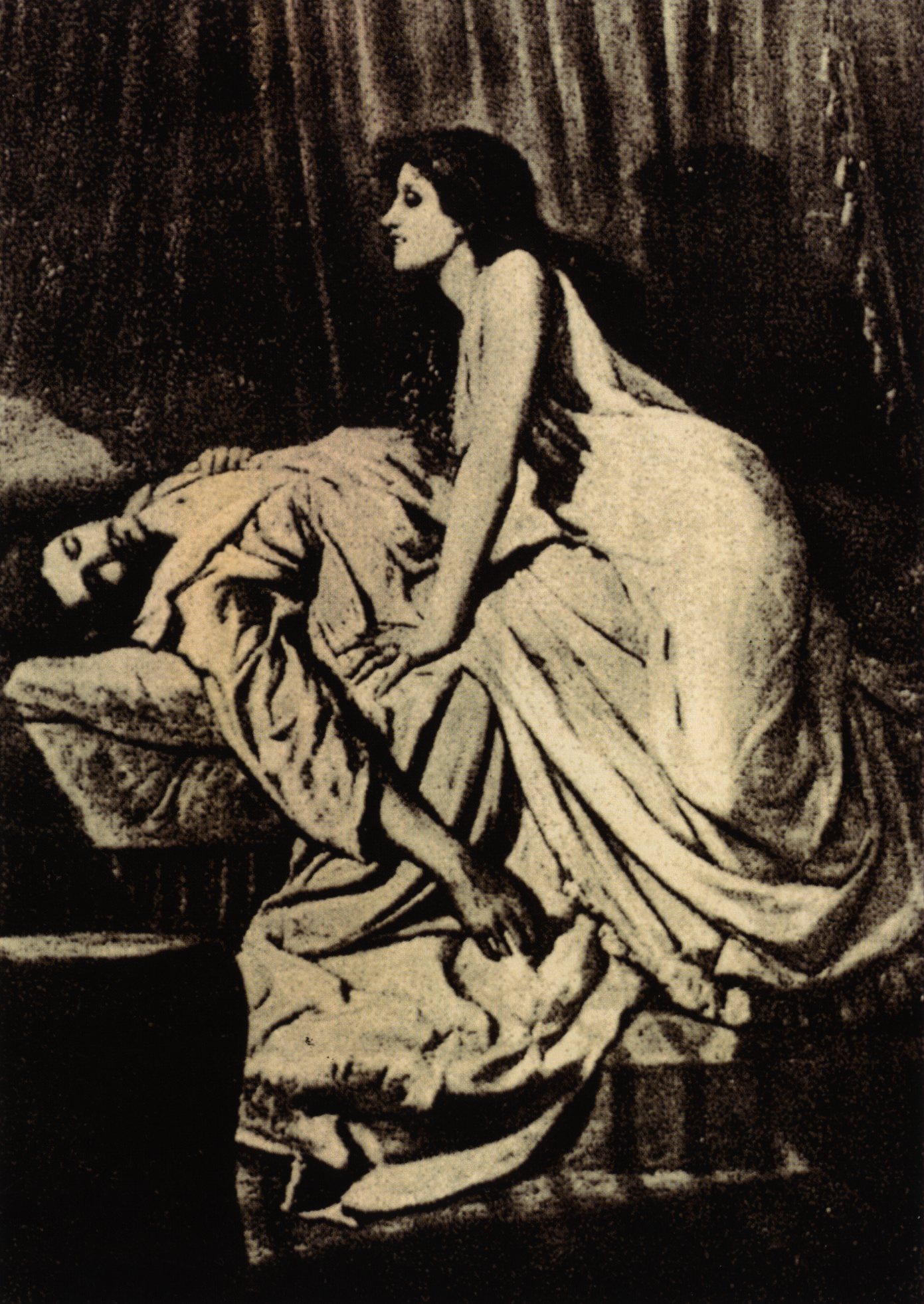 To the spouse's enduring disappointment, the Population Health Blog has been ensnared by the Showtime horror series Penny Dreadful. Set in the 1890'sVictorian England, viewers can follow the derring-do of Dr. Frankenstein, Sir Malcolm Murray and Vanessa Ives as they quote Shelley and hunt for vampires.
The good news that even this corner of vacuous TV media, the PHB can find some lessons in health reform.
For example.....
Young Dr. Frankenstein creates a monster. While that's what you get for stitching miscellaneous body parts together and zapping the corpse with life-giving electricity, Dr. Frankenstein should also know......
1) things would have been worse if he had installed electronic health record in his laboratory, and
2) that's what happens when docs are too morose and wear far too much mascara.
When a ship hailing from Egypt has been quarantined by the London authorities because of supposed plague, the intrepid Sir Malcolm shrewdly deduces it is ultimate source of all the recent "chicanery." Since the ship is infested with lusty, blond and bloodthirsty vampire-vixens, his conclusion is correct. But, he should also be aware that....
1) the Veterans Administration has conducted an internal investigation and has found that no evidence that any patient has been harmed and,
2) he has given the PHB a reminder to use the word "chicanery" in a future blog post.
Dorian Gray is able to continue his dissolute libidinous lifestyle by standing in front of a painting and instantaneously curing his claw marks and, while he's at it, his probable sexually transmitted diseases. The PHB wonders if this is the key to harnessing the life-prolonging potential of telomerases, but it also cautions....
1) that this should be ignored by the medical community until it has been subjected to repeated randomized clinical trials and approved by the FDA, and
2) the U.S. government's deficit won't be helped by subjecting the painting to a medical device tax.
Dr. Van Helsing quotes from a lurid penny novel to prove that vampires do exist. This is an inspirational example of how early hematologists used disparate clues to arrive at obscure diagnoses. It is also....
1) a telling example of how doctors can quote from faux authoritative texts to support any predetermined medical conclusion.
After a long stay in a mental asylum for a "psychosexual disorder," Vanessa Ives is still prone to fits where her eyes turn white, she channels demons and she floats around the room. This is evidence that she needs to return to the asylum stat, but is also
1) obviously why thorazine-loaded blow darts were invented
2) better than the any of her battle scenes from the movie 300 Rise of an Empire
Tuesday, May 13, 2014
Google Bus: A Future for Health Care?
The Population Health Blog's travels have included San Francisco. That's where it got to learn about the "Google Bus" imbroglio. As the PHB understands it, some Silicon Valley companies have arranged for private buses to transport their high-wage techies to and from work. Long-term city locals, upset at the rising rents of gentrification, see the luxury buses as emblematic of an upstart class of professionals who are "too good" to take public transportation.
"Welcome to the future of health care!" says the PHB.
As public financing with private insurance subsidies (Obamacare) and government insurance (Medicare and Medicaid) expand, public budgets will sooner or later be insufficient to support their good intentions. Examples outside of healthcare include education (Chicago), national defense (Pentagon) and infrastructure maintenance (bridges).
While it's no expert on public transportation, it believes the system has been generally starved for funds. Unable to adapt to shifting demand with new routes and new buses, the private sector in San Francisco has stepped up with its own solution.
The same could happen with health care. While we are headed toward a future where everyone has health insurance, similar underfunding (leading to catastrophes like this) could lead to significant service shortfalls. Persons - with access to the money it takes to pay their own way - will cut their own deals with private-pay providers and high end hospitals.
They'll ride in luxury and the rest of us will resent it.
"Welcome to the future of health care!" says the PHB.
As public financing with private insurance subsidies (Obamacare) and government insurance (Medicare and Medicaid) expand, public budgets will sooner or later be insufficient to support their good intentions. Examples outside of healthcare include education (Chicago), national defense (Pentagon) and infrastructure maintenance (bridges).
While it's no expert on public transportation, it believes the system has been generally starved for funds. Unable to adapt to shifting demand with new routes and new buses, the private sector in San Francisco has stepped up with its own solution.
The same could happen with health care. While we are headed toward a future where everyone has health insurance, similar underfunding (leading to catastrophes like this) could lead to significant service shortfalls. Persons - with access to the money it takes to pay their own way - will cut their own deals with private-pay providers and high end hospitals.
They'll ride in luxury and the rest of us will resent it.
Monday, May 12, 2014
Jack Bauer and Health Care Reform: A Multiple Choice Test
Business travel kept the Population Health Blog from being able to watch the live broadcast of Fox Network's "24." Good thing the spouse DVR'ed the show for the PHB's later viewing pleasure.
We turned it into a date night.
While it was inspired by the derring-do of super-spy Jack Bauer, the PHB couldn't help itself, and combined some of lessons of 24's TV drama to the conundrum of health care reform. That's why it concocted this multiple-choice test that simultaneously challenges readers' knowledge of 24's opening episode and Obamacare:
1) After being "off the grid" for four years. Jack reemerges in London, only to be taken into custody by the United States. Jack is captured because (chose the best answer)......
a) that was his intent all along,
b) his EHR-enabled Google glasses decision support suggested that was the best course of action,
c) his handgun accidentally discharged and traumatically amputated the great toe on his right foot.
2) The U.S. President, who is visiting London, is apparently suffering from a progressive dementing illness. Viewers know this because (chose the best answer)......
a) he got mixed up over the difference between Ted and Franklin Roosevelt,
b) he believes that the U.S. would be better off with a "single payer" health care system,
c) he believes past-President Obama's malpractice reforms will eventually have an impact.
3) Chloe O'Brian has gone from employed, blond and naïve to unemployed, goth and tattooed. That's because (chose the best answer)......
a) she's gone renegade,
b) if her income were higher, she wouldn't qualify for health insurance premium subsidies,
c) staring at 5 computer monitors simultaneously for so many years has addled her brain.
4) When a Bauer confederate climbed to the top of a van and readied a rocket propelled grenade, the PHB spouse said (chose the best answer)......
a) "Watch this!"
b) "I can't wait until the Blacklist comes on."
c) "His noble visage reminds me of my husband!"
5) Evil doers have figured out to remotely hack drones' Hellfire missile systems. They can do this because (chose the best answer)......
a) of an evil intent against the national interests of the United States,
b) they did not rely on the information technology contractors responsible for the healthcare.gov debacle,
c) that's a risk of handhelds when they're not put on airplane mode prior to take-off.
We turned it into a date night.
While it was inspired by the derring-do of super-spy Jack Bauer, the PHB couldn't help itself, and combined some of lessons of 24's TV drama to the conundrum of health care reform. That's why it concocted this multiple-choice test that simultaneously challenges readers' knowledge of 24's opening episode and Obamacare:
1) After being "off the grid" for four years. Jack reemerges in London, only to be taken into custody by the United States. Jack is captured because (chose the best answer)......
a) that was his intent all along,
b) his EHR-enabled Google glasses decision support suggested that was the best course of action,
c) his handgun accidentally discharged and traumatically amputated the great toe on his right foot.
2) The U.S. President, who is visiting London, is apparently suffering from a progressive dementing illness. Viewers know this because (chose the best answer)......
a) he got mixed up over the difference between Ted and Franklin Roosevelt,
b) he believes that the U.S. would be better off with a "single payer" health care system,
c) he believes past-President Obama's malpractice reforms will eventually have an impact.
3) Chloe O'Brian has gone from employed, blond and naïve to unemployed, goth and tattooed. That's because (chose the best answer)......
a) she's gone renegade,
b) if her income were higher, she wouldn't qualify for health insurance premium subsidies,
c) staring at 5 computer monitors simultaneously for so many years has addled her brain.
4) When a Bauer confederate climbed to the top of a van and readied a rocket propelled grenade, the PHB spouse said (chose the best answer)......
a) "Watch this!"
b) "I can't wait until the Blacklist comes on."
c) "His noble visage reminds me of my husband!"
5) Evil doers have figured out to remotely hack drones' Hellfire missile systems. They can do this because (chose the best answer)......
a) of an evil intent against the national interests of the United States,
b) they did not rely on the information technology contractors responsible for the healthcare.gov debacle,
c) that's a risk of handhelds when they're not put on airplane mode prior to take-off.
Tuesday, April 29, 2014
Handling HHS Secretary Nomination Questions
.jpg) The Population Health Blog notes that HHS nominee Burwell has been scheduled to appear before the U.S. Senate Health, Education, Labor and Pensions Committee on May 8. In all likelihood, the hearing will alternate between yawnfest softball and hyperparisan gotcha questions on the budget, ACA repeal, agencies and contraception.
The Population Health Blog notes that HHS nominee Burwell has been scheduled to appear before the U.S. Senate Health, Education, Labor and Pensions Committee on May 8. In all likelihood, the hearing will alternate between yawnfest softball and hyperparisan gotcha questions on the budget, ACA repeal, agencies and contraception. The PHB plans on watching C-SPAN, hoping that some of the questions deal with its favorite blogging topics.
In the unlikely event that they do come up, the public-service minded PHB is pleased to prep Ms. Burwell with some "canned" and ready-to-go responses. The turnkey options below have been crafted to upend foes and friends alike.
When asked any question about "population health," respond by:
1. pointing out that you rely on the Population Health Blog's definition and, based on its author's many insights, believe that it is a promising feature of health reform, or....
2. affirming that "if you like your population health, you can keep it," or...
3. saying that HHS remains strongly committed to evaluating and further developing the future role of population health as an important option to derive high value care for Medicare beneficiaries!
When asked about the part of the Obamacare law that includes "shared decision making," respond by:
1. noting years of research on the topic have demonstrated that it is among the few interventions that can simultaneously reduce health care costs and increase beneficiary satisfaction, or...
2. reiterating that Congressional Republicans are not going to share in any decision making when it comes to any health care reform, or....
3. saying that HHS remains strongly committed to evaluating and further developing the future role of shared decision making as an important option to derive high value care for Medicare beneficiaries!
When asked about the Patient Centered Medical Home, respond by:
1. quoting extensively from the PCPCC web site, or...
2. announcing cautious support for the medical home, but confirm HHS' intention to name it something else, create alternate criteria, assess different outcomes and insist on budget neutrality, or...
3. saying that HHS remains strongly committed to evaluating and further developing the future role of the Patient Centered Medical Home as an important option to derive high value care for Medicare beneficiaries!
When asked about care management, respond by:
1. pointing out that, for the right patients, studies like this show teaming between physicians and non-physicians can result in outcomes that are the result of more than the sum of its primary care parts, or...
2. announcing your intent to regulate the carbon footprint of all Medicare-participating acute-care hospitals, or...
3. saying that HHS remains strongly committed to evaluating and further developing the future role of care management as an important option to derive high value care for Medicare beneficiaries!
When asked about primary care, respond by:
1. not saying that the 10% fee increase has resulted negligible changes in primary care physician satisfaction, or...
2. promising you're going to fix low primary care fee schedule rates faster than a Florida ophthalmologist submitting a $10,000 Medicare billing code, or...
3. saying that HHS remains strongly committed to evaluating and further developing the future role of primary care as an important option to derive high value care for Medicare beneficiaries!
When asked about the sustainable growth rate, respond by:
1. Denying any White House responsibility, or....
2. Denying any White House responsibility, or...
3. Denying any White House responsibility
Image from Wikipedia
Monday, March 10, 2014
The Concentration of Naiveté
 The Population Health Blog's car garage is not the size of a football field.
 So, when the PHB spouse parks our car inside, she tends to err on the side of safety. She pulls far forward so that the rear bumper doesn't get "dinged" by automatic closure of the garage door. That obliges the Population Health Blog to inconveniently squeeze past and climb over the front bumper when it wants to use the PHBmobile.
The win-win fix to our travails arrived last Christmas when the perspicacious PHB gave the spouse a positionally adjustable ceiling-mounted laser. It blinks a ruby red light through the windshield onto the dashboard when the car is in optimum position. Pull too far forward, and the beam will be directed on the floor or a front seat.
Since it's been installed, the PHB spouse has ignored it. The laser beam is effectively pointing at the back seat.
The good news is that the PHB's naiveté was limited to parking habits, one house's garage and a spend of $19.
Not so for Ezekiel Emanuel's work in health reform in the White House and a spend of far more money.
According to this article in this weekend's Wall Street Journal, the well-meaning Dr. Emmanuel couldn't change the habits of Medicare's vast bureaucracy or of Mr. Obama's formidable political advisors. As a result, bundled payments remained the stuff of demonstration projects, while the closure of tax exclusions for employer sponsored health insurance was limited to "Cadillac" plans.
What's more, professional liability reform died in the crib thanks to the White House chief of staff Rahm Emanuel's unwillingness to stir the political pot:
He immediately cut me off: "Shut the f— up! We are not doing malpractice. Period. Every time the AMA comes in here, they don't talk about malpractice." Their first, second and third priority, he said, was the formula used by Medicare to determine doctors' pay. "We don't need to do malpractice for the doctors, and I am not alienating the president's base for nothing," he barked. "Stop it."
Rahm's reaction told me everything that I needed to know about the politics of the issue. Democrats would accept malpractice reform under two circumstances: if they needed it to keep the AMA's support for the bill, or if they needed it to attract Republican support. Neither was true. In backroom negotiations, the AMA was solely focused on securing higher physician payments—not on malpractice. And not a single Republican in Congress would even negotiate.
The president had already aggravated liberals by forgoing a "public option." He'd offended unions by limiting the tax exclusion. He wasn't going to antagonize trial lawyers, another core Democratic constituency, for no gain.(from the WSJ, March 7 "Inside the Making of Obamacare.")
In its own small way, the PHB called attention to the AMA's narrow-minded focus on the SGR five years ago. But the AMA's blunder and PHB's prescience are not the point. Or, rather, points:
1. The health reform that eventually passed was a curious mix of White House naiveté and Washington inside-the-beltway politics. The result was the Affordable Care Act which continues to spawn quick-fix delays and throw sand in the gears of government. We deserved better.
2. By concentrating risky decision making in Washington DC, the upside gains in big government may be undercut by the downside of unintended consequences and half-baked decision-making in all 50 states. It's scary to think that the likes of Dr. Emanuel had such power.
Lessons learned.
Wednesday, March 5, 2014
"Opt-Out" Health Insurance Enrollment
 |
| Say no to your health insurance? |
It seems the Senate Republicans no longer want to repeal Obamacare and are OK with keeping many of its more popular reforms. Instead, they're focusing on undoing selected provisions, such as repealing the minimum benefit, returning some aspects of medical underwriting and resurrecting the "block grants" for Medicaid.
But one of the more interesting wrinkles in the proposal is "auto-enrollment."
Those of us from the bygone days of "disease management" may recall the debates over the merits of "opt-in" versus "opt out" participation in our programs. The former required persons to actively chose to be entered into nurse coaching, which had the advantage of committing resources to a highly motivated population. The latter approach assumed all patients with a condition were enrolled and, only if they specifically requested it, would they allowed to stop the coaching phone calls. Unfortunately, "opt-out" usually gathered many patients who never answered the phone and were "engaged" in name only.
Well, the Republicans are apparently proposing that states be allowed to "auto-enroll" persons eligible for premium payment support into an insurance plan or Medicaid without their up-front permission, just like the old "opt-out" disease management days. The tax credit would cover the insurance costs, no bills would be issued to the consumer and voilà! the risk pools would expand. Patient choice would be preserved, because persons could always just say no.
The DMCB was always of fan of opt-in disease management. Not only were patients who wanted to be in the program more amenable to behavior change, it allowed the program to "flex" the nurses that we needed as the program grew in scope. However, when it comes to insurance, the DMCB thinks the Republicans may be onto something with their opt-out insurance approach.
Count it as a fan.
Tuesday, March 4, 2014
Using the Health Reform Template on Ukraine
 Many decades ago, the teenage father of the Disease Management Care Blog personally witnessed the Russian invasion of a smaller bordering country. If he were alive today, the DMCB dad would scoff at Mr. Obama's assertion that the Russians are "on the wrong side of history."
 Rather, they are being entirely consistent with their history.
Yet, the healthcare-minded DMCB can't help but see several parallels between the geopolitical situation in Ukraine and the health-reform situation in the United States. While the DMCB dad would have advised hoarding gold gasoline and gunpowder, the DMCB would like to be far more constructive. It points out to Mr. Obama that there are some ACA-like options that can help with this Kiev kerfuffle.
And even if none of these actions help, they'll at least give that appearance:
Since Mr. Putin is acting like a bully, treat him the same disdain you've shown to many of the commercial insurance company CEOs. While, just like those CEOs, he is unlikely to be cowed, the political base will still love it.
Just like the ACA, it's OK to publicly set and then disregard hard conditions and firm deadlines on Ukraine. Mr. Putin (unlike your Republican opponents, by the way) won't take them seriously either, which ironically gives you the flexibility to likewise adapt as other short-term considerations arise.
Instead of the hard work of doing one thing well, create a flurry of initiatives. Recall that what the U.S. really needed a was a fix for the individual insurance market. Instead, it got so much more, including payment reforms, mandates, minimum benefit language, caps on administrative costs. ACOs, insurance exchanges and lots of lawsuits. While Ukraine needs the Russians out of Crimea, a similar approach calls for lots of G8 actions, U.N. resolutions, I.M.F. interventions, economic sanctions and Kerry speeches.
Speaking of the United Nations and the International Monetary Fund, it's OK to outsource much of the heavy lifting outside of the White House. Just as you tasked Congress with writing the ACA, think about letting the European Union take the lead, starting with a courageously worded condemnation of the carbon footprint of all those Russian tanks.
Finally, if things get uncomfortable don't hesitate to use the power of the bully pulpit to change the topic. Options include immigration reform, income inequality among your donors, extending early childhood education to newborns and promoting frozen yogurt as an alternative energy source.
Coda: The DMCB missed a key parallel involving the reliance on lawyers. Health reform and Ukraine have less to do with patients or civilians, but attorneys and jurisprudence.
In the category of "you can't make this stuff up," after this post appeared, the March 5 Wall Street Journal quoted Mr. Obama as saying, in reference to international law, " I know President Putin seems to have a different set of lawyers making a different set of interpretations, but I don't think that's fooling anybody."
Tuesday, February 4, 2014
Cost, Quality and Access in Health Care: Are All Three Out of Reach? Really?
 Maybe the Disease Management Care Blog has been wrong. And maybe there are implications for health reform.
The DMCB explains.
When it lectures at population health conferences, it patiently explains that health care data analytics will always involve trade-offs between speed, accuracy and detail. For example if it wanted insight on the quality of care for a cohort of persons with diabetes, it could want the results tomorrow (speed), that captured 100% of the population (accuracy) and included standard deviations as well as age and sex breakdowns (detail).
Analytics always must decide to pursue two out of three. For example, the DMCB might want detail and accuracy, but that will take extra time.
And so it goes.
An example from a parallel universe is the automobile market. One Mr. Ford got past selling cars that were any color the customer wanted so long as they were black, Detroit infamously forced consumers to make trade-offs in speed, safety, gas mileage and quality.
2014 may be a watershed year where much of the DMCB's trade-offs are false choices.
Bob Dylan argues that global consumers can have speed and safety and mileage and quality; he may have a point.
Returning to the health care industry, the DMCB wonders if the electronic record's expanding ability to capture patient detail combined with logarithmic growth in computational processing power will give providers the ability to hit "Ctrl-F1" and get an immediate, detailed and comprehensive on-screen report on the status of all persons with a particular attribute, like the presence of diabetes.
Which brings the DMCB to the infamous health care "iron triangle" of quality, access and cost. The DMCB believes that the re-emergence of narrow insurance networks is simply a trade-off of access in exchange for quality and cost. On the other hand, if consumers demand access and quality, they might have to settle for the high out-of-pocket costs of a stinky "bronze plan."
But here's the rub. If Detroit can move the needle on automobiles and if the electronic record and supporting infrastructure is finally reconciling speed, accuracy and detail, who says the health care industry won't eventually crack the quality, access and cost conundrum? The DMCB thinks it may take a while (Detroit took decades) but if the current pain over Obamacare eventually results in getting all three, maybe it will have been worth it. Maybe it is within reach.
Just maybe. We'll see.
Subscribe to:
Posts (Atom)





 Posts
Posts