Showing posts with label Pioneer. Show all posts

Tuesday, September 8, 2015

The Majority of Medicare ACO Participants Appear to Have Lost Money in 2014

There's no other way to put it.

Like many wonks, the Population Health Blog glommed onto this recent CMS report report on the 2014 performance of the Pioneer and Medicare Shared Savings Accountable Care Organizations (ACOs). 

While there's some quality reporting data, the PHB decided to focus on the economics.

It ain't pretty.

Briefly, as the PHB understands it:

The 20 Pioneer and 333 Medicare Shared Savings Accountable Care Organizations generated a total of $411 million in savings.

Among the Pioneer participants:

15 out of 20 generated savings.  Only 11 of the 15 earned enough savings to trigger a payment from CMS that totaled $82 million.  The PHB calculates that's an average payment of approximately $7.5 million for each ACO. 

Three of the Pioneer ACOs had to provide clawbacks to CMS of $9 million, or an average $3 million each.

Of the 333 Medicare Shared Savings participants:

92 out of 333 saved $806 million in health care costs.  They received checks totaling $341 million.  The PHB calculates that's a payment of $3.7 million per ACO. 

Another 89 of the Medicare Shared Savings reduced costs, but not enough to trigger a payment from CMS.  That also means that the rest of these ACOs didn't even reduce costs.

The PHB's conclusions:

ACOs in the Pioneer program have about a 50% chance of getting some money back.  Assuming that there are from $2 million to $7 million per year in program support costs - in addition to the all of the foregone billable services - it's not clear to the PHB that the business model is sustainable (for example) for many of the Pioneer participants.  To add downside-risk insult to injury, there's a 15% chance a Pioneer ACO would have to pay Medicare.

ACOs in the Shared Savings program have a 75% chance that they won't be able to generate enough savings to cover the lost of income from fewer billable service or their program costs.

That's a majority of the participating ACOs.

Admittedly, there are several advantages to ACOs.  They 1) are an answer to the threat of rising health care costs, 2) are a laboratory for bundled payments, 3) promote care coordination and 4) are linked to medical homes.

But that's all for naught if the majority of the program participants are losing money in a massive exercise in risk transfer involving hundreds of millions of Medicare dollars.

This is health reform?

++++++++++++++++++++++

Coda: The PHB can't help noting that the title of the CMS report is "Medicare ACOs Provide Improved Care While Slowing Cost Growth in 2014."   That may be technically true, but that title is more about spin than about the science. The findings haven't been submitted to the scrutiny of peer-review, and until it is, the PHB won't really know what to believe.


Wednesday, July 17, 2013

Pioneer ACO Program Results: Why Saving Money for CMS Doesn't Mean The Business Model is Viable

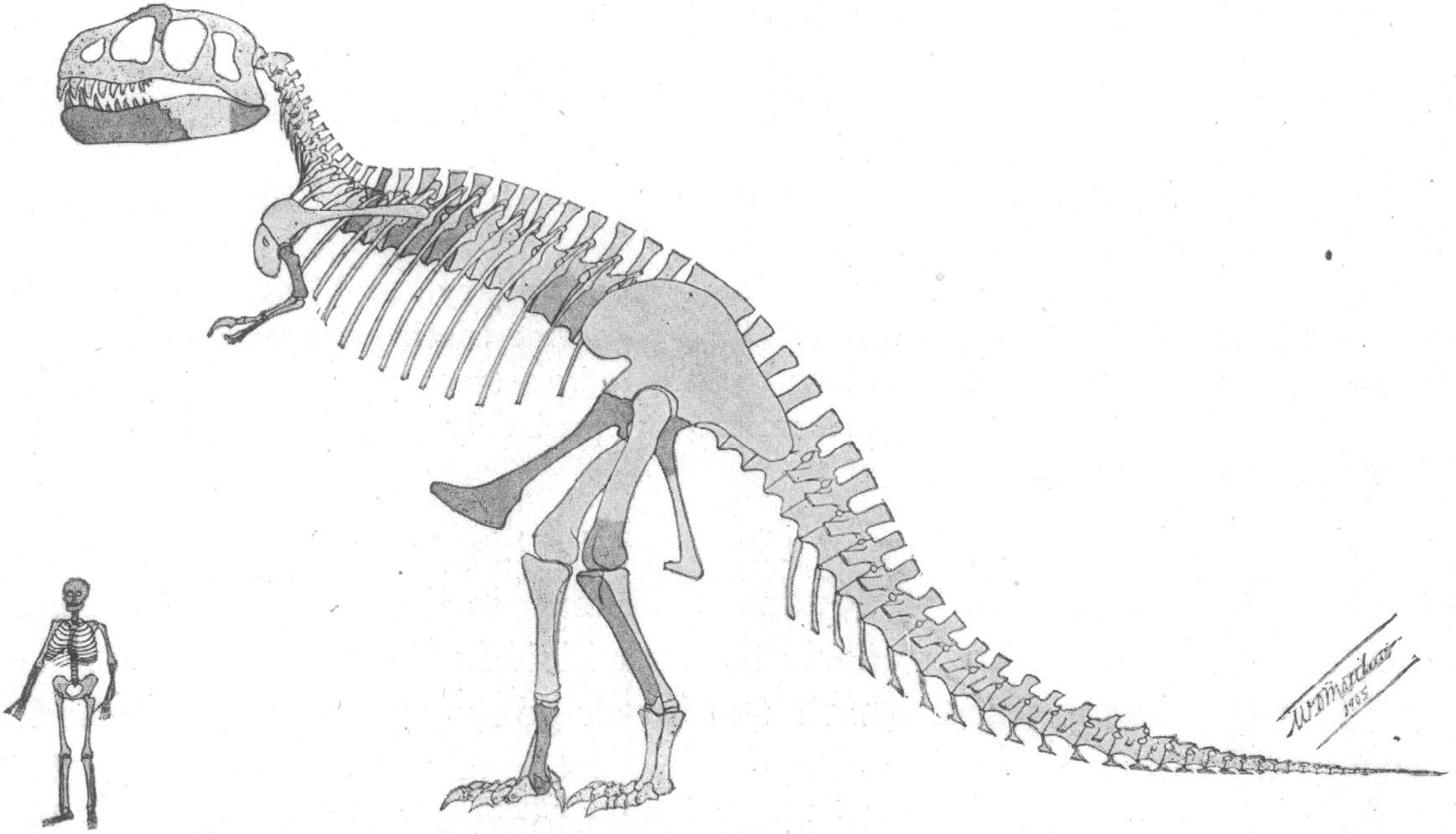
According to South Dakota researchers, the predator status of Tyrannosaurus rex can no longer be questioned. After finding one of its teeth embedded in the healed spine of a Hadrosaurus, paleontologists now believe T rex was a fearsome hunter, not an carrion munching opportunist

But, asks the Disease Management Care Blog, how do we really know that that Hadrosaurus wasn't  pretending to be dead when the T rex took its bite?  Alternatively, the Hadrosaurus could have been sleeping and only looked dead to a slow-witted and lazy T rex

Dino doubts, says the DMCB, remain.

Such is the level of skepticism that the DMCB is bringing to its reading of the recent CMS press release describing the initial results of the Pioneer ACO program.  CMS says "positive" and "promising." The DMCB says "problematic" wonders if, like the T rex dilemma, there isn't an alternative interpretation.

The DMCB explains.

Recall that the Pioneer ACO program is designed to test whether large integrated organizations can be successfully rewarded for reducing health care costs through a program of "shared savings."  Under the program, if the savings exceed a minimum threshold, CMS will remit a portion of the upside savings back to the participating organizations.

According to the press release, the health care costs for the 669,000 Medicare beneficiaries cared for by the 32 Pioneer ACO program providers grew only .3% versus .8% for a parallel group of "similar beneficiaries." 13 organizations exceeded the savings threshold, which will lead to Uncle Sam writing checks for $76 million in shared savings.

This front page article in The Wall Street Journal has more detail. It says 18 of the 32 reduced health care costs, which leads the DMCB to conclude that five otherwise "successful" participants did not cross the required savings threshold. Two participants lost money. That, in turn, suggests the remainder, or twelve, broke even.

Details on how each individual institution fared are not readily available.  According to WSJ, Boston's Partners Healthcare reduced Medicare claims expense by $14 million.  They will be rewarded with a shared savings check of $7 million. Wisconsin's Bellin-ThedaCare will get "several million."

Good "win-win" news for the Pioneer organizations, CMS, Uncle Sam and U.S. taxpayers, right? A critical mass (40%) achieved millions in shared savings, which means proof of concept met and that a key part of Obamacare is successful, right?

"Not exactly," says the DMCB.

It figures 100% of the participating organizations had to each invest millions for personnel and other infrastructure to pursue the Medicare savings in the first place.  In other words, they were in the red before Pioneer even began.  That means that, in addition to the two participating organizations that lost money, the 12 that "broke even" as well as the 5 that did not make threshold also lost millions

That's 19 losers or almost 60% of the participating organizations.

In addition, it's possible that for some of the 13 "winners" that the shared savings awards won't  match their up-front multi-million dollar investment either.  Assuming that's true, it's possible that as many as two thirds of the Pioneer organizations lost money. No wonder 9 of the participants have signaled a desire to exit the program.

The DMCB's dinosaur analogy may be apt.  Given a two out of three likelihood of losing millions in the first year of operations, ACOs may just be too big and complicated to survive in the current health care environment.  Nonetheless, the Pioneer program will continue and the DMCB will stay tuned for the Year 2 results.

In the meantime, the DMCB wishes CMS good luck in using these "positive" and "promising" results to expand the program anytime in the near - or distant - future.  

Sunday, July 10, 2011

Some Facts About "Pioneer" Accountable Care Organizations

You know its pretty bad when a lead review article in the health reform-friendly journal, Health Affairs, likens the Shared Savings Program's Accountable Care Organization (ACO) model to an Edsel, "widely considered one of the worst cars of all time." 

All well and good, but what author Harris Meyer also did was update the Disease Management Care Blog on a parallel ACO program launched by the CMMS Innovation Center on May 17.

It's been dubbed "Pioneer."

Knowing that DMCB readers may be interested in some background about this "Pioneer" thingy, here's a quick summary of what the DMCB thinks are the more important parts:

Purpose:

This three to five year Pioneer ACO Program is tailored to fast-track health provider organizations that already have care coordination programs up and running to what the Feds believe is the next level: ACO status.  During the first 2 years, the candidate organizations will operate under a shared savings arrangement.  If successful, payments will transition, as the DMCB understands it, to a "population-based payment model" that involves a mix of capitation and fee-for-service reimbursements.

Money:

Payment to the participating ACOs will be based on historically projected and risk and inflation-adjusted per capita  targets. At the end of the various measurement periods, the Pioneer ACOs' claims expenses will be judged against their targets.  To get any money, they will have to be above a 1% threshold.   Once that is achieved, the shared savings will range from 60 to 75% and be capped at 10% of total expenditures.  Downside losses will also be possible. Like the Shared Savings Program, any unmet quality measures (to be defined in the final Shared Savings regulations) will also be used to subtract from the shared payment. CMS promises to provide historically, monthly and quarterly data reports.

Other insurers also have to join in and the number of their patients has to comprise more than 50% of the total. 

Last but not least, much of the payment details are being left intentionally vague so that CMS can be flexible.

Patients:

At least 15,000 Medicare beneficiaries (or, if rural, 5000)  have to be available in order for an organization to participate in Pioneer.  While the default is to assign patients prospectively, the organizations can ask for retrospective assignment.  Patients will not be locked into any network.

In the application process, these ACOs will also need to document how they are prepared to meet the needs and preferences of their patients with "patient centered care."  Patients will notified that they can call an 1-800 number with any concerns.  CMMI promises to analyze utilization data and audit any ACOs with claims patterns that suggest care is being withheld. 

What else?

The Innovations Center hopes 30 programs will eventually participate. If you are interested, it may be too late. Letters of intent were due June 30. The application process closes on August 19. 

A fact sheet is here.