Showing posts with label Risk. Show all posts

Monday, February 23, 2015

The Third Wave, Informatics, Quantum Mechanics and Health Care Reform

Schrödinger's cat
While the Population Health Blog continues to mull the promise vs. reality of Alvin Toffler's book on The Third Wave "Information" Age, it's been struck by the observation that any Wave's ideals are often applied to institutions.

It's a classic chicken vs. egg self-reinforcing feedback loop. For example, during the Second Wave, the industrial mindset gave rise to bureaucracies. 

Which prompts the PHB to wonder if the electronic health record (EHR) was the inevitable result of the Third Information Wave, or its intrusive invention?

Whither Biology in Health Care's Third Information Wave?

Yet, at the same time, the physician PHB has been struck by the emergence of biology-laced health reform jargon.  It's not unusual to read or hear that care delivery should have "organic" features (e.g., here and here) and resemble "ecosystems" (here and here).  Indeed, the intellectual underpinnings for integration is eerily close to complex 'living" entity, with a whole that is more than the sum of its semi-autonomous parts.  Think more organism than organization.

Biology: Not Incompatible but Synergistic

And before you assume that the healthcare paradigm of binary silicon-based electronics is  incompatible with complex carbon-based life forms, recall that DNA has been recast as a computer, and life has been defined as a DNA software system. Is networked machine intelligence in a large regional delivery system all that different than the chromosomes and enzymes that enable me to type this blog?

It seems that the "biology" of "information technology" is not cognitive dissonance, but a perfect, if ironic, window into where health care is headed.

Enter Statistics

And since software is ultimately about information, "medical informatics" has - by definition - moved front and center. Assuming it is "patient-centric," success in our Third Information Age is less about collecting patient anecdotes than their associated data: assembling and using of means, standard deviations, p < .05 significance, associations, predictors, regressions, known-unknowns, unknown-unknown Black Swans, artificial intelligence and "big data" inputs. Little wonder, then, that the informatics underpinnings of "population health" are increasingly being used by policymakers and has captured the attention of the entities such as the Institute of Medicine, and The White House.

Statistics on Steroids: Quantum Mechanics and What We Don't Know

Quantum mechanics is bubbling up into popular media (from photography to leadership). Health care - from the atomic level  of molecular biology to the societal level of public health - has not been immune.

Mix quantum mechanics with some Triple Aim, and Heisenberg's "Uncertainty" over position vs. momentum tells us that the more intense the statistical measurement of health care quality and cost, the greater the complexity, impreciseness and chaos. 

If so, it may be that the best that health system architects will ever be able to do is define the range of probabilities, risk and uncertainty that underlie cost, quality and care. 

Which leads the PHB to......

Risk as the Coin of the Healthcare Realm

Insurers are masters at measuring and monetizing (and, when necessary, avoiding) health risks. They understand the inherent uncertainties of health care. In the PHB's estimation, the quantum sophistication of the Information Age is going to lead the next level: managing uncertainty.

The Bottom Line: Outcomes vs. Risk Management

As health informatics and analytics grow, health care's imprecision will become better defined. We'll understand that not every patient with diabetes will be known to have diabetes, not every patient known to have diabetes will have a test for diabetes and collecting all individual tests for diabetes will never tell us what's really going on for the universe of diabetes.  The idea that we can use the health system to attain 100% measurement or perfection is about as real as the quantum state of Schrödinger's cat.

OK, What About the Real World?

While quantum mechanics already has some real world applications, it's too early to predict how risk, uncertainties and probabilities will factor into the future of health reform.  But the PHB confidently predicts that patient outcomes will be less a function of diabetes control, rehospitalization rates, medication compliance or satisfaction. 

Instead, it will be about understanding the determinants of a lower risk of diabetes complications, a lower chance of rehospitalization, a greater likelihood of medication compliance and a higher probability of satisfaction.  Quantum mechanics tells us that when measurement causes these well-managed probabilities to "collapse" out of their "quantum" state, the measurements will look better.

All that remains is determining the best combination of buyers, payers, insurers, providers and government necessary to achieve that.

It starts with the risk.  Complex health systems that adapt to that fundamental paradigm shift will win.

Wednesday, April 30, 2014

Wishful Ideology About Integrated Delivery Systems

Kaiser Health News has posted a telling interview with former White House health adviser Ezekiel Emanuel MD. In it, Dr. Emanuel repeats a bold prediction about the end of health insurance companies:

Question: You also predict the end of insurance companies as we know them. Rather than continuing to function as the middleman between employers and health care providers, you say insurers may themselves contract with networks of doctors and hospitals, morphing into integrated health care delivery systems. But a one-stop shop isn’t always good for consumers. Networks are restrictive, and at least now, if your insurer turns you down for treatment, your doctor may go to bat for you.

Answer: I don't agree with you. In general, integrated systems do a pretty good job compared to lots of other ways care could be delivered. We like the adversarial system. We believe that’s the best. On the other hand, with integrated networks you can have better coordination of care. And people are mildly sticky. Once you pick an insurance network, you tend to stick with it. That's also good for the insurer. If someone selected you, year in and year out you'll be with them. That changes the dynamic. And to the extent people are long-term keepers, that’s going to be a better arrangement.

"Better arrangement?" The Population Health Blog isn't so sure:

1. As pointed out at the start of the interview, health insurance has been around for more than 200 years. Its staying power is testimony to the enduring value proposition of pooling and monetizing risk. We discard that our peril.

2. Assuming "integrated systems" will competently manage that risk is a stretch.

3. Part of competently managing that risk - even for provider groups - is utilization review.  While the interviewer unflatteringly portrays that as "your insurer turns you down for treatment," the truth is far more complicated mix of advantages and disadvantages that have been heavily regulated (an example here) for decades.

4. Can enlightened "coordination of care" make utilization review unnecessary?  The luxury of Dr. Emanuel's anti-health insurer ideology makes it easy for him to say yes.  So far, inconvenient facts about the ACO pilot program suggest a different story.

5. Plus, can restrictive networks also make utilization review unnecessary?  It remains to be seen whether consumers will appreciate the irony that this invention of managed care is now being embraced by Dr. Emanuel and other progressives, or agree that significant limits on provider choice will be a "better arrangement."

6. Last but not least, doctors like the PHB have been trained and acculturated to put the individual patient's interests before any other consideration, including the success of an integrated delivery system. Unable to say no, our loyalty will translate to the usual specialist referrals, sophisticated testing, the latest technology and the priciest drugs.  Culture trumps everything.

Like it says, the PHB isn't too sure.  Maybe with the right combination of patient incentives, decision support, shared decision making, risk stratification and tailored population health, integrated systems will ultimately prevail.  Time will tell.

Give credit, however, to Dr. Emanuel for being consistent over the last two years.

The same is true for the PHB.  Based on the emerging facts on the ground, the PHB still thinks the odds remain against Dr. Emanuel.

And the offer of a $1000 bet still stands.

Tuesday, April 1, 2014

What GM's Ignition Switch Travails Can Teach About Concentration of Risk: Implications for Large Integrated Delivery Systems

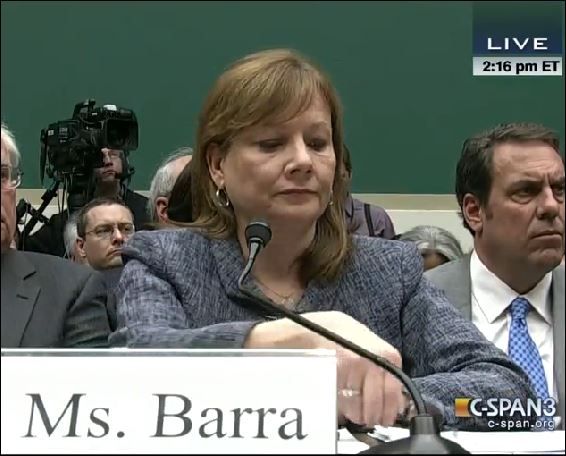
CEO Barra not having a
good day at a Congressional hearing
Today, the motoring Population Health Blog used its C-SPAN enabled car radio to listen in on the U.S. House Energy and Commerce Subcommittee's grilling of General Motor's CEO Mary Barra.  As the PHB understands it, GM allowed millions of its cars to stay on the road despite awareness among some of its executives of a faulty ignition switch that failed to "meet specifications."  It was deployed in seven GM models for over a decade.

The PHB can assure readers that when it comes to using "gotcha" yes or no questions on a humbled CEO to plumb the meaning of "specifications," Congressional bipartisanship is alive and well.

While GM is completing its internal investigation and the PHB is speculating, it's possible that GM's travails are ultimately the result of concentrated risk.  While standardization across automobile manufacturing is a no-brainer, it all came down to a weeny metal spring's inability to hold a plunger in place. That led to a loss in power in moving cars with a catastrophic failure of steering, brakes and airbags.

Which naturally brings the PHB to health care.

In a recent chat with a well-connected and savvy colleague, it was pointed out that some health leaders are predicting that, in the years to come, health care in the United States will be delivered by a network of dominant regional integrated delivery systems.  Many policymakers naturally welcome the prospect of "postindustrial care" that is replacing a highly variable and unmeasured cottage industry with guideline-driven science and standardized protocols.  Part of that standardization will almost certainly include uniform treatment pathways and medical devices.

The problem? 

Never mind that some guidelines may not work as well as intended.  They can actually cause harm. Medical devices, just like ignition switches, are also not perfect and can lead to (for example) broken pacemaker wires or premature artificial joint failures.  While guideline and device mishaps are infrequent, the rise of "systems" means they're more likely to involve many more people when they inevitably do happen.

That's because these large regional delivery systems will be favoring single processes and products across all patients and all settings.  Instead of a flawed ignition switch in seven models, think of flawed pacemaker in all seven hospitals serving three states.

What's more, it's possible that GM decided that a low rate of failure (ultimately only 31 accidents with 13 fatalities) represented an acceptable cost-risk ratio.  The PHB recalls GM was financially ailing during the period in question; could it have decided that retooling a manufacturing process was too expensive?  If future integrated delivery systems also turn out to be financially stressed, will they likewise be tempted to stick with an old pacemaker or metal joint, despite early indications of problems?

Oh, and if you think it's just a matter of better government oversight, tell that to Acting Administrator of National Highway Traffic Administration, David Friedman .  He was seated next to Ms. Barra and was asked about his decision not to act on switch complaints as far back as 2007.

Risk is unavoidable.  It's just a matter of anticipating it in all it's many forms.  Assuming these big regional systems turn out to have traction, this concentration of risk will be a feature of them. 

The PHB leaves it to its readers to decide if it's worth it.

Thursday, April 18, 2013

The Latest Cavalcade of Risk Is Up!

The latest Cavalcade of Risk is up at Jason Shafrin's Healthcare Economist.  As usual, the contributing writer-bloggers have done an outstanding job of examining the latest thinking surrounding the art and science of business and insurance risk.

Jason has an additional insight to share:

According to FindMyMarathon.com, in 2012, there were 658 marathons in the U.S. and Canada.  Thus, the probability of a bombing of a randomly selected marathon in the U.S. or Canada is about 0.2% if one assumes one bombing per year.

The Chicago Tribune reports that 100 people were injured and 3 people died.  In 2012, 528,375 individuals finished a marathon.  Thus, the probability of being injured at a marathon due to a bombing is 0.02% and the probability of being killed is 0.0006% or fewer than 1 in every 150,000 individuals.

About 1 in 100,000 marathon finishers die during or in the 24 hours immediately after a marathon, according to The New York Times.  Thus, marathoners are at higher risk of dying of a heart attack after a marathon than from a terrorist attack. 

Sunday, August 28, 2011

More On the Storminess of Medicare's Risk Transfer

Hurricane Disease Management Care Blog has made quite a splash with its Health Affairs Blog article that examines Uncle Sam's bipartisan and simultaneously sneaky solution to CMS' bankruptcy.  Its contrarian posting argues that liberal-progressives want to soak the providers with a transfer of under-monetized insurance risk in the form of ACOs, while conservatives want beneficiaries to sop the risk up with under-funded vouchers. 

Other bloggers are surging around the concept.  The Think Progress Health Blog dives into the DMCB's conclusions, while the Incidental Economist pours some additional thoughts on the topic by asking weather better information can make a difference.  In the meantime, the Care and Cost Blog showers the DMCB with admiration by posting the article's content its entirety.  Even Politico makes a mention.  In the meantime, emails from colleagues continue to flood the DMCB with supportive comments. 

Will the DMCB be able to rain in this torrent of self-congratulation?  The DMCB spouse, unable to reverse this indulgent tide, can only respond: "Now I'vreen it all."

Yet, while the DMCB was distracted by weather puns, storms wider than the European continent, 8 hour power outages, chain sawing downed branches and battling wind gusts up to 50 MPH, it still had a chance to ponder the derision that met Michele Bachmann's claim that her Presidency will lead to $2 a gallon gas prices.  "What's the big deal?" asks the DMCB: she's obviously relied on the same economic logic that was responsible for the passage of Mr. Obama's Affordable Care Act.

Tuesday, May 17, 2011

Risk Transfer: Cost Reduction in Drag for Medicare

Health policy titans debating the actuarial links between clinical quality and cost trends.  Presidential candidates struggling to find the best "gotcha" Medicare catch-phrase to use against their enemies.  Progressives and conservatives in a death struggle over competing health care "visions" on the role of government.  Yet, underlying all this political cacophony is general agreement that Washington DC's involvement in health care and insurance has increased.

Except, says the contrarian Disease Management Care Blog, that is less true than meets the eye.  That's because in one key respect, Federal involvement in the world's largest health insurance program called "Medicare" is actually decreasing. When viewed through the lens of "risk transfer," there is an ironic bipartisan agreement that Medicare's risk needs to be transferred elsewhere.  The only real disagreement is over where it should go.

Recall that insurance is a contractual agreement to exchange "risk" for "money" a.k.a. risk transfer.  Insurance is a business that accepts and "pools" risk and uses collected premiums to cover the cost of the bad events among the individual contract (or "policy") holders. As the likelihood or cost of a bad event (such as, for example, a death of a wage earner, a home fire, car accident or unexpected illness) increases, the cost of the insurance premium to fix, or "make whole" the bad event also increases. 

Basically, the Medicare program accepts risk in exchange for FICA taxes.  Medicare's problem is that both the likelihood and the cost of illness among its beneficiaries are turning out to be unaffordable.  Unable to increase the premium or decrease the cost of illness, the logical response is to transfer that risk (along with its inadequate levels of money) someplace else.

There are three non-exclusive risk-transfer options that the DMCB thinks are being proposed and implemented at the Federal level:

1) Transferring the risk (and the money) to commercial insurers.  That program is called "Medicare Advantage," which has been criticized for transferring proportionately too much money for the level of risk.  Another approach is Medicare's "secondary payer status," forcing any other active health insurers to pay first when there is any overlap in coverage.

2) Transferring the risk (and the money) back to the Medicare beneficiaries.  Variations of this is a recurring theme among the U.S. House of Representatives Republicans, who are proposing variations of a "defined benefit"  approach, such as capped premium support payments and vouchers.  If the cost of illness exceeds a threshold, it's ultimately up to the person, not the government to eat the economic difference.

3) Transferring the risk (and the money) to the heath care providers. This underlies the logic of the upside gainshare, ACO "two sided" risk, bundling and no-pay for "never events" as well as "hospital acquired conditions."  The logic here is that providers can mitigate risk through greater efficiency or quality.  By tying in the money that goes with it, Medicare is gambling that the physicians can ultimately "bend the curve."  The amazing thing here is that, following the debacle of HMO capitation in the 1990s, the providers are willing to go along with it.

All three options have the political advantage of obscuring cost reductions for Medicare with the patina of efficiency consumerism, quality and value.  The DMCB thinks of it as savings in drag.

What happens if Medicare's risk transfer legerdemain isn't successful?  Our politicians will have to return to the politically unpalatable options of increasing the premium or reducing costs through unilateral fee schedule reductions.  Alternatively, they can outsource that repugnant task that to a newly created animal called the Independent Payment Advisory Board.

That road could (see slide 36) ultimately lead to a single payer.  More on that in an upcoming post.

Tuesday, December 15, 2009

Putting the CAT Scanner Cancer Risk Into Perspective: Risk Compared to What?

After listening to and reading the news media's alarmist interpretations of an Archives of Internal Medicine report on the risk of 'yikes cancer!' from computerized (axial) tomography (CT or CAT) scans, the ever curious Disease Management Care Blog decided to take a look at the basis for all the fuss. Amy Berrington de Gonzales and colleagues used radiation and cancer data to project the future national incidence of additional cancers that can be expected from today's CAT scanners. The bottom line can be found in this table from the paper. Basically, the highest calculated risk of 'yikes cancer!' runs from a high of 7 per thousand CAT scans (or 0.7%) to 1 per ten thousand CAT scans (or 0.01%). There is a companion article that indicates that the dose of radiation may be even higher, suggesting there will be even more cancer down the road.

That all may sound awful, but the DMCB likes to keep the following factors in mind:

1) The lifetime risk of cancer from exposure to the radiation from a CAT scan is highest among children, but that pales compared to the more immediate risks that come from sedating children to keep them from moving. In the real world of clinical practice, this risk threshold is already considered so high that the added 0.7% risk from the radiation is not much of an additional consideration. Informed guardians already have a powerful incentive to keep CAT scan use to an absolute minimum - and they generally do.

2) As for the grown-ups, stumbling over the assessment of the real magnitude of risk may be a function of innumeracy, but the DMCB believes it can be managed by asking 'compared to what?' So while a CAT scan can present a lifetime risk of hundreths to tenths of one percent:

- having high blood pressure gives 40 year old men an additional 4-5% (one in twenty) chance developing heart failure over a lifetime. The DMCB says know your blood pressure, get it treated if it's high and then smile when they take your picture with the CAT scan.

- the risk of a brain hemorrhage from taking daily aspirin is 2 per 10,000 per year which is on the same order of magnitude every year as the lifetime cancer risk from a CAT scan. The DMCB doesn't recall any alarmist media reports on this risk. Hmmm. Once again, take two aspirins and smile for the scanner in the morning.

- the risk of a dying in a car accident during an average life time, according to this report, is 1 in 83, which works out to be more than 1% for every man, woman and child in the U.S. today. The DMCB recommends wearing a seat belt when you drive to your CAT scan appointment.

3) One way of gauging the risk of any health threat that is reported in the media is to examine the number of reports: the greater their number, stridency and alarm, the lower the real risk. The hubub over CAT scans suggests this inverse relationship is holding up.

4) Yet, Radiology Benefit Managers (or 'RBMs') have long regarded the cancer risk associated with CAT scans (example here) as one factor in controlling their utilization. If unecessary CAT scans are 'denied' for coverage by managed care oganizations, is that now no longer evidence of 'evil' managed care putting profits before patients? Were they right all along?

The DMCB has always been less worried about the radiation dose from CAT scanners than their far more dangerous tendency to find abnormalities in the absence of disease. Asymptomatic spots, densities, signals and other lesions of dubious significance have always bedeviled physicians and their patients, leading to ever more sophisticated imaging studies. If patient fear over CAT scan radiation exposure leads to fewer scans with fewer of their inevitable false positives, that may ultimately be a good thing.

Thursday, January 22, 2009

Insurance Risk & Performance Risk: An Alternative Payment Mechanism, Compliments of the Robert Wood Johnson Foundation

While readers and the Obama Adminstration search for better ways to pay for health care, the Disease Management Care Blog remains skeptical of basic fee-for-service, capitation (or 'global fees') and pay for performance. Like the Three Little Bears, the first is too hot (it promotes overuse), the second is too cold (it’s a disincentive for care) and the third is just… unproven.

That’s why it continues to like the ‘episode of care’ (EOC) reimbursement approach of having a single fee for a medical event that covers all subsequent services over a set period of time. An example would be paying for the hip surgery, the hospitalization(s), the physical therapy and all the follow-up physician visits with a single check. Think of EOC as capitation (which is supposed to cover all unrelated medical services over a period of time, typically a month) for a single condition, not a single patient.

There’s a very understandable discussion of the topic in a Robert Wood Johnson Foundation supported report from the Network for Regional Healthcare Improvement. The DMCB likes their notion of distinguishing between ‘insurance risk” (based on the numbers and types of diseases that occur in a population) and ‘performance risk’ (based on what is done to mitigate those diseases, which is a function of the numbers and types of treatments that are applied). The folks at the Network argue that while there is overlap of performance risk with insurance risk, the performance risk still can be measured, monetized and transferred to the providers.

Think of it in terms of automobile insurance. Insurers can sell policies that are designed to make you 'whole' if you have an accident (that’s the risk). They assess your age, gender, past driving record and zip code, which helps define much of the risk being priced. They collect your check (the premium) along with checks from thousands of others. However, they also have to pay attention to how much it would cost to fix the various cars in their book of business, such as parts and labor. In the Network world, the car insurers would collect your premium but then could cut a deal with the car repairmen and their body shops by negotiating a standard fee (which is functionally now an insurance premium that they ironically have to pay) to manage all the repairs that occur over the course of a year. Since the repairs occupy the lion’s share of the costs most of the money goes to the repairmen in the ‘network.’

Ahhh, but you correctly point out that diabetes and high blood pressure don’t work that way, because there is no end - like there is with hip surgery or a car that comes out of the repair shop. No problem, says the Network folks: there are cars out there that don’t necessarily need new fenders but burn oil, have threadbare tires, worn seats and cracked windshields. Since the drivers can’t give them up (they don’t like the alternative), their car needs lots of extra maintenance. For those cars, the insurers can still cut a global performance risk transfer deal with monthly payments that don’t end. That’s called ‘condition-specific capitation.’

The DMCB likes the concept because its ultimately rewards the services that are being provided for the condition at an EOC level. The payment is better targeted. That being said, it has several caveats to keep in mind while we think about paying providers a set monthly fee for a specific condition:

1) if the payment is to be done at a provider level, it requires a significant amount of physician/hospital/provider coordination, with good information transfer and ironclad hand offs. That is more likely to be present in smaller integrated healthcare systems but is tough to achieve in usual community settings with independent providers. Electronic health records are necessary but are not sufficient to pull this off.

2) while many physicians ‘get it’ and would do all the things necessary to mange their risk with higher levels of efficiency, using technology appropriately and keeping their costs to a minimum, many fine physicians would struggle in trying to adapt to this kind of arrangement. Between ‘here’ and ‘there,’ much work would need to be done. This is not a turnkey payment solution. A new fee schedule is necessary but not sufficient.

3) which is why performance risk transfer may be better thought of in terms of disease management. The DMCB thinks DM organizations understand risk (that's their pedigree) and can partner with providers in the absence of formally integrated networks to maximize coordination. Disease management, however, is also necessary but not sufficient to pull this off.

4) this would be a bear to administer, which makes it unsuited for large “mainframe” insurers like Medicare. Accordingly, the DMCB doesn’t expect this to see the light of day in national healthcare one-size-fits-all reform efforts. However, among the smaller innovative, nimble employer-based self-insured entities out there, the DMCB hopes to see this given a shot. Who knows, if a competing government sponsored insurance entity is created, the private insurers may be able to compete by offering novel payment systems like this.

5) finally, while the payment process described above transfers risk, it’s not ‘insurance’ from the point of the State or Federal regulators. Ultimately, only one party can be responsible for managing the total risk of health insurance for an individual policy holder who pays a single premium. In other words, if a hospital fails to meet its contractual obligation to provide timely and medically necessary care which, in turn, results in additional cost to the policy holder, the party ultimately responsible for fixing it is still the health insurer, not the provider.

Monday, April 28, 2008

Risk Beats Retail for Disease Management, Medical Home, P4P and The Electronic Medical Record

The Disease Management Care Blog has been thinking about the two healthcare R’s, risk and retail, from the consumer’s and insurer’s point of view.

Quantifying and pricing ‘risk’ is what insurance is all about. This intellectual achievement is described in Peter Bernstein’s marvelously written Against the Gods, the Remarkable Story of Risk. He describes how the business of risk really took off in England in the 1600s when shippers were willing to pay for financial protection against the unlikely but real possibility that a storm or other mishap would result in the expensive loss of a ship and all its cargo. The individuals willing to write their signature under the contract terms (hence ‘under’ ‘writers’) were shrewd businessmen who made a tidy profit by ‘pooling’ the payments (otherwise known as premiums) for multiple risks across many shippers for a defined period of time. Pooling (known as the law of large numbers) made the average risk narrowly quantifiable (‘X’ ships were known to go down every Y months) and bearable (a larger number of shippers paying the underwriter resulted in a ‘pool’ of money that was available pay for the one or two ships that would go down and later be used as props for the movie the Little Mermaid).

In the 400 years since then, ship insurance has been expanded to cover practically anything, including the risk of becoming sick. This is a great concept for the average consumer because the premium we pay today is far more tolerable than the individual risk of bankruptcy from a tumor, ulcer or a heart attack. As an aside, it's a powerful social good that warrants the oversight of a Department of Insurance in every state in the U.S.

On the other hand, consumers may find notions of retail to be much simpler. In this system, the insurance middleman is cut out. Goods and services can be packaged according to the market-based laws of supply and demand. Shippers and patients can shop and barter for the best service at the best price. Yet, when illness strikes, the market fails: quality and price are not transparent and there often is no time to make a good decision.

Of course, it’s not all black and white. Risk and retail are often mixed. Insurers feel they are being victimized by retail-style demand, while valuable retail health care is getting tired of being viewed as a cost by the insurer. While the insurer wants the best value for their dollar once they have to pay on a loss, it is still a loss.

Why is this important? In the opinion of the DMCB, the policy debate over many of the thorny issues surrounding the delivery of primary care services for the chronically ill have muddled the notions of risk and retail. On one side, altering the delivery of primary care with disease management support, chronic care model re-engineering, pay for performance or information technology is supposed to “pay for itself” thanks to the downstream mitigation of risk. On the retail side, these same services are supposed to increase efficiency (lower the price) or quality (at the same or higher price) or both, leading to a great deal for the consumer (and, by the way, a retail-based resuscitation of primary care). But it doesn’t stop there: most supporters of each of these primary care initiatives argue their merits lay in both risk and retail. As will be seen below, the difference is in what gets emphasized.

Unfortunately, the DMCB agrees the peer-review evidence of risk mitigation is inconclusive, making many underwriters leery about reducing the premium they charge consumers for the risk just because there’s disease management, a medical home, P4P or an electronic medical record (EMR). That leeriness is particularly understandable, because when you think about it, underwriters aren’t being asked to reduce the premium, they’re being asked to keep the premium at the same level and give a percent of it to support disease management, a medical home, P4P or an EMR.

The DMCB points out that while the ‘return on investment’ evidence may be less than perfect, the case for retail has gone mostly ignored and is probably weaker. ‘Concierge medicine’ and ‘minute clinics’ outside of chronic illness may provide some lessons, but to my knowledge no one has tested whether consumers with diabetes or heart failure would be willing to personally pay for remote coaching, the medical home, a lower A1c or an EMR-enabled practice. In the experience of the DMCB, patients want it if someone else pays for it.

So why so much blog? Because the DMCB believes the risk-retail distinction is less important in chronic illness care because the United States has already decided that risk beats retail. Like it or not, the vehicle for managing the expense of chronic illness care is not a financing issue, it’s predominantly an insurance issue:

  • Pooling risk remains a powerful if imperfect methodology for making all illness care affordable, including chronic illness.
  • It’s unlikely that much of a ‘retail space’ will be carved out just for chronic illness.
  • The three remaining candidates for U.S. president and their allies in Congress are emphasizing insurance-based mechanisms in their campaign promises.

In the opinion of the DMCB, this landscape is why disease management has achieved much of its success. While there are retail virtues, its supporters have emphasized its ability to mitigate risk in the commercial insurance sector by: 1) presenting credible if imperfect evidence of risk reduction not only in the peer review literature but in its proprietary business dealings, and 2) has been willing to accept financial performance guarantees (a.k.a risk transfer), in essence rebating a portion of its fees if too many 'ships' end up in the emergency room. In contrast, supporters of the medical home, P4P or EMR have even less to show in terms of proof of savings and are unlikely to even give the money back if things don’t work out.

This has important lessons for supporters of the medical home, physician P4P and office-based EMR. Among the reasons why uptake has not been as widespread as disease management is because in an insurance dominated world where risk beats retail, their emphasis on the ‘retail’ dimensions represents cost to the insurer and hasn’t gained much retail support from consumers.

The DMCB asks if they will be come to terms with the world of insurance and the risk-based 'coin of the realm?' Be able to demonstrate a beneficial impact on insuring the risk of persons with chronic illness? Provide performance guarantees? They will, once the struggle to define their role begins with understanding the role of risk in caring for persons with chronic illness.