Showing posts with label Shared Decision Making. Show all posts

Friday, September 12, 2014

Of Risk Stratification, Health System Variation and "Stupid" Decision-Making

A fly in the ointment
Years ago, a middle-aged Population Health Blog patient came in for a routine follow-up appointment.  Since his last visit, he had developed iron deficiency anemia. Since slow blood loss can be a sign of an early and curable cancer in the gastrointestinal tract, the PHB recommended a series of unpleasant tests. After a rather routine explanation of the time, expense and inconvenience of those tests, the patient surprised the PHB with a one-word answer: "No."

He went on to live for decades.

Which brings the PHB to this JAMA article on individually-tailored screening for another type of cancer. While even screening for prostate cancer is controversial, it's possible to stratify a man's risk of the condition with some questions, examination data and test results.  That risk can be portrayed in lay terms (there is a "42-in-100 chance" that cancer is present, but doing a biopsy has a "4-in-100 chance of causing an infection..."). 

The points of the well-written article is that 1) risk-stratification can be used to identify persons at high vs. low risk, 2) the decisions to screen, perform additional testing and embark on treatment can be, based on that risk, "tailored" to maximize a good outcome and 3) patients can use their level of risk to ultimately decide how they want testing and treatment to achieve the outcome they want.

Bravo, says the PHB.  While we're on the cusp of understanding whether a more sophisticated approach to screening ultimately leads to better outcomes than the standard all-or-none guideline (USPSTF "recommends against prostate-specific antigen (PSA)-based screening for prostate cancer"), there is enough face-validity to believe that patients will ultimately benefit.

But there is a fly in the ointment and a monkey in this wrench.

The fly? Variation will not go away. While health system bureaucrats everywhere would prefer that 0% of men undergo prostate screening, that 100% women over 50 get mammograms, and that 0% of us have a body mass index in excess of 25, individuals - after looking as the risk-benefit here, here and here, may choose otherwise.  We don't know what the "right" screening rates are.  In fact, we may not be asking the right questions.

The monkey?  Some "bad" decisions will occur. Once persons truly understand the benefits, risks and alternatives (including not dying prematurely of a preventable illness and side-effect risks that are less than driving in a car), they are allowed to make "stupid" decisions.  Physicians and bureaucrats may not like it when anemic patients, like the one described above, refuse no-brainer recommendations, but in a free country that's the price we pay. Our challenge is to make sure that our patients have all the information they need (which is apparently not the case here) to make a truly informed decision.

Image from Wikipedia

Monday, March 31, 2014

Obesity Surgery in Diabetes Mellitus: A Three Year Trial Shows High "Cure Rates." The Implications for Population Health

In case there is any doubt about the long-term efficacy of obesity surgery for diabetes, check out this three year study that was just published by the New England Journal of Medicine. 150 persons between the ages of 20 and 60 years with an A1c greater than the recommended target of 7% and a BMI greater than 27 were randomly assigned to either gastric bypass, sleeve gastrectomy or intensive medical therapy. 8 persons dropped out after being assigned to medical therapy and one patient had their surgery cancelled. Over the next 3 years, 4 persons were lost to follow up.

Of the remaining participants, two thirds were women and three quarters were white. The mean age was 48 years, the average BMI was a prodigious 36 and the mean A1c was a poor 9.3%, with an average duration of diabetes of just over 8 years. 

Of the 40 medical patients, 5% ended up with an A1c of 6%, versus 38% of the 48 bypass and 24% of the 49 sleeve patients.  The average weight loss was 4.3 kg in the medical patients vs. 26 and 21 kg in the bypass and sleeve patients. While only 2% of medically treated patients were able to stop their diabetes medications, 69% and 43% of the bypass and sleeve patients were able to do so. Only four patients in the surgery groups required additional surgery for the treatment of complications.  None died.

The Population Health Blog finds the results compelling enough to believe that the surgical option for obesity-related diabetes mellitus may be turning out to be a first line option.  The complication rate is acceptably low and the "cure" rate of up to 70% (if defined as not having to take medications) is likely to be welcomed by patients facing a lifetime of otherwise chronic illness.

Criticisms?

Critics may worry that any long-term economic benefits at a population-based level may be cancelled by the cost of surgery.  The PHB understands that, but doesn't believe that obesity surgery should be viewed through a "return-on-investment" lens.  Rather, the value assessment of "outcome" (in terms of diabetes and obesity cure) per unit of cost (dollars spent) is a as good as an investment compared to, say, coronary artery bypass grafting or a knee replacement.

Critics may also worry that obesity surgery is more of a symptom of an overfed society and that our national treasure would be better spent on understanding our dietary dysfunctions.  The Population Health Blog cannot disagree, but doubts that our national health spending can be wired so that every dollar spent on the promotion of nutritional wisdom will reduce the near-term health care cost crisis from diabetes.  We need to be prepared to invest in both.

Implications for Population Health

It appears to the PHB that this was a single site "efficacy" study involving an academic medical center.  We don't know if the low complication rate observed here is typical of other hospitals that offer obesity surgery.  In addition, this study did not examine the impact of the more popular approach of banding surgery.  That being said, this three year trial suggests that bariatric surgery should be offered in the suite of options for persons meeting the criteria above.

The good news is that shared decision making has already been evaluated in this setting.  While the majority of participants are more likely to chose conservative treatment, the point is that a 40-70% chance of cure over three years should be raised in the course of patient-centric coaching.  Population health vendors in the diabetes-obesity "space" should be prepared to engage patients on this treatment option and help them decide if surgery is the right choice for them.

Image from Wikipedia

Monday, December 16, 2013

"Simulation Learning Experiences"

This is an engine. Now you're ready to drive!
Just when the Disease Management Care Blog thinks it has mastered the jargon of population health management, along comes another term that reminds it of how quickly the science is evolving.  "Simulation learning experiences" is a new addition to PHM parlance, thanks to this just-published JAMA article by the University of Colorado's Eric Coleman.

While the phrase may be new, the underlying science isn't. As DMCB readers are aware, it's one thing to transfer information to patients, it's another thing to transfer skills. 

Dr. Coleman points out that a patient with diabetes, heart failure or asthma is not unlike a person just learning to drive.  While some classroom work on how an internal combustion engine works is a good idea early-on in the process, it's not until the student takes "the wheel" of their glucometer, diuretic meds or peakflow meter that you can really know that they won't end up in a hospital (a.k.a. having an "avoidable admission").

Accordingly, individuals with chronic illnesses (and their layperson caregivers) need practice, rehearsal and role playing.  They need to test the care plan and make sure it comports, to any degree possible, with the home environment and the skills of the involved individuals.  Better to find out early about any obstacles, such as poor vision, low health literacy, cognitive impairment or low self-confidence.

Naturally, the traditional health system is ill-equipped to provide simulation learning experiences. There has to be dedicated space and the personnel who offer it to patients have to role-play, which can be very time consuming. Since each patient is ultimately unique with very different home circumstances, there is no one-size-fits-all approach

That being said, the DMCB suspects that as ACOs, integrated systems, provider networks, medical neighborhoods, managed care organizations and payers continue to evolve toward high value health systems, their hospital discharge planners, rehab-center case managers and transitions care managers will find that the "return on investment" from avoided re-hospitalizations, fewer unplanned ER visits and decreased redundant specialist visits will be more than enough to justify the cost.

And then there's the added bonus of the jargon that may warrant its own acronym of "SLE." The DMCB coyly suggests readers spring the term on an unsuspecting or clueless co-worker, boss, policymaker or doc who is all about "patient education."

Monday, October 28, 2013

Taking Patient Preferences Into Account When It Comes to Pursuing and Measuring Quality

Here's a thought: ask them what they want
One of the intellectual underpinnings of population health management is that the biopsychosocial dimensions of care is a huge determinant of real-world outcomes. As any doctor who takes care of flesh-and-blood patients knows, national treatment guidelines like these typically fall short of taking the human dimension into account. While there are plenty of good and bad reasons why docs are failing to take advantage of guidelines, one is their sterile one-size-fits-all approach that often fails to account for physician awareness of their patients' risk tolerances and economic circumstances. What's more, many widely promoted treatments only offer a small absolute benefit.

Fortunately, this disconnect is bubbling up into the mainstream scientific literature. The latest example is this Viewpoint that appears in the October 28 issue of JAMA. The authors point out that the perspectives of expert physicians who develop guidelines are typically different than the general public, caregivers or persons with a disease. For example, while the NCQA promotes an A1c threshold as a important measure of diabetes care quality, a compelling survey of patients with diabetes suggests that that emphasis may be displaced.

Where to from here? The JAMA authors offer three commonsense recommendations. Future guidelines should:

1. be developed with the input of patients and frontline clinicians.

2. encompass the full range of patient experiences, not outcomes. This means accounting for the  burden, impact on quality of life and role function dimensions of any treatment recommendations.

3. avoid strong recommendations when the best course of action depends on the patients' context, goals, values and preferences.. Lacking a clearly advantageous outcome with minimal side effects, guidelines should offer a conditional suggestions.

The DMCB modestly offers up three additional suggestions for the population health community and other stakeholders:

1) Absent a satisfactory guideline process from the usual national organizations, it would not be a bad idea to take this bull by the horns and develop a parallel set of guidelines that meet the principles outlined in this JAMA article.

2) Organizations like the NCQA and NQF need to be more flexible in promoting evidence-based guideline-based metrics by moving away from a reliance on their monodimensional clinical measures and toward more nuanced measures of meeting patient preferences.

3) Finally, while national variation in health care delivery is a huge challenge as we continue to build a coherent health system, it may be time to reconsider the notion that all variation is bad. Human beings are variation, and the likelihood of imposing local "best practices" across the U.S. will not be in the best interest of patients with different views of what it best for them.

Image from Wikipedia

Monday, September 2, 2013

What the White House's Diffidence Over Syria Teaches Us About Complex Medical Decision Making

Talk about a no win situation.  After seeing his "red line" go rudely unheeded, the President is facing the prospect of appearing weak if he does nothing or warmongering if he launches an attack.

Medical decision scientists ask: how did it come to this?

Mr. Obama is correctly admired for his "no-drama' informed style of decision-making.  And good physicians, says medical science, should operate the same way.  According to this recent New England Journal article, consciously deliberative and logical approaches to diagnosis and treatment selection are far more reliable than the intuitive shoot-from-the-hip pattern recognition that used to rule the bedside.

Psychologists describe the latter as "Type 1" processing while the former is "Type 2."   Think George W. Bush's gut instincts over Iraq's weapons of mass destruction versus Barack Obama's disciplined rationality when he decided to attack the Bin Laden compound. He undoubtedly used the same methodology when he was pondering Syria.

But, thinks the Disease Management Care Blog, there are limits to brainy decision-making when the choices are overwhelmingly numerous.  In this retail business-oriented TEDTalk, Sheena Iyengar points out that dozens of options lead to procrastination followed by bad choices followed by low satisfaction. 

It can also apply to foreign policy. Given the vast array of pieces and potential moves on the Middle East chess board, little wonder that Mr. Obama would procrastinate for days saying he has "not made a decision," then apparently select an attack option disdained by even the New York Times and then engender even more second guessing by the very Congress that the President has repeatedly criticized as unreliable.

Ditto health care.  The downside to shared decision making is that an overwhelming number of testing and treatment options can lead befuddled patients to a "you decide, doc" mentality that leads the physician to regress to "Type 1" decision-making.

The DMCB isn't too sure how TEDTalk's Dr. Iyengar's suggested solutions can help the folks in the White House Situation Room, but the DMCB wonders if the national security staff shouldn't have done a better job of presenting the Commander in Chief with 1) a limited number of choices that were 2) more "concrete," as well as 3) arranged into categories with the 4) low complexity options offered first. 

That 4-fold approach could help docs and patients too.  The DMCB looks forward to additional research in the area.

In the meantime, there is one additional medical rule that has withstood the test of time that may also be useful in dealing with Syria. The DMCB offers it up to business and politicians alike: primum non nocere.

Tuesday, May 14, 2013

The Politicizing of Preventive Health Care: Whither the US Preventive Health Services Task Force?

Here comes the camel nose!
Kudos to JAMA for tackling what the Disease Management Care Blog has been saying for years: now that the Washington DC's camel nose is under the tent, there is no way health insurance coverage - and the care it pays for - isn't going to become politicized.

That's the bigger issue in this just-published article by Steven Wolf and Doug Campos-Outcalt. They're focusing on the political pressure that is being brought to bear on US Preventive Services Task Force (USPSTF). As readers may recall, the Affordable Care Act requires health insurers to fully cover screening services that are deemed effective by the USPSTF. Drs. Wolf and Campos-Outcalt point out that politics rudely intruded on the USPSTF's determination that the evidence supporting mammography for women under age 50 years was lacking. The resulting firestorm not only prompted Congress to not only waive the USPHSTF recommendation, but led some of its members to question the Task Force's integrity.

As academics writing in peer-reviewed journals are wont to do, the authors suggest that this can be remedied by another layer of bureaucracy. They want a new "firewall" committee to be inserted between the "pure" evidence-based USPHSTF and the "political" fisticuffs of the public square.  It'd be the job of this a new entity to insulate USPHSTF by reconciling the proof and the politics prior to the upload of the final recommendations to the mandarins that are running CMS.

"Another committee?" asks the dismayed DMCB. While that would end the Obamacare fiction that health reform was ever going to be truly "based on science," the real Achilles heel of the JAMA proposal is that it literally doubles the opportunity for political meddling. The smartest political operatives will see this as a target-rich environment and naturally seek to influence all of the committees with any jurisdiction over the medical-industrial complex of laboratory medicine, radiological imaging and medical devices.

The DMCB has bad news for its colleagues who thought that they could have the Washington DC "cake" of enlightened government involvement along with the "icing" of scientific independence. Uncle Sam's been given a clinical inch and now he'll take a political mile to influence clinical guidelines and define standards of care with a one-size-fits-all mentality sprinkled with a healthy dose of cronyism.  Surprise!

The DMCB has an alternative solution: CMS should tread very carefully when it comes to insurance design.  Congress needs to reengineer the preventive health part of the ACA. Instead of building new infrastructure to make up for the emerging failures of the old infrastructure, Washington should be pushing benefit design down, not up, to the local level. It can partner with commercial health insurers to assure that the USPSTF recommendations are considered, but with local committee assessments of market demand, provider opinion and community input to determine what's best for its covered population. It should do this while simultaneously promoting the use of shared decision making to help every patient ponder for themselves when testing is in their best interest.
 
Let a thousand flowers bloom.

Image from Wikipedia
Tuesday, February 12, 2013

The Rise of the Non-Physician Expert and Implications for Care Management

The Disease Management Care Blog remembers when one of its patients with coronary artery disease suggested that he be given a course of an antibiotic to lower his future risk of a heart attack. The patient had done his homework, quoting literature that pointed to a possible infectious link to atherosclerosis. He also was aware of the theory that aspirin's benefit had less to do with blood thinning than reducing underlying inflammation.

Fast forward to the Feb 2-8 Economist that has an editorial pointing out that U.S. legal expertise may not require the completion of three years of law school. Why not, it asks, cut the requirement back to two years or, even better, skip the school requirement entirely and license anyone who can pass the bar exam?

And then there's the Feb. 11 Wall Street Journal, where "Notable and Quotable" refers to the "BA Bubble." Charles Murray argues that a looming oversupply of college graduates may portend a decline in the employment value of a liberal education. Work careers may consist of serving as "apprentices" and "journeymen" before becoming "craftsmen."

All of which makes the DMCB wonder if the vaunted Doctor of Medicine degree may be vulnerable.

Why should physician education be immune from a perfect storm of over-priced graduate education, "alternative" web-enabled learning with on-the-job-training? The declining value of the formal credential may be less about the university degree and more about competency, turbocharged by flexible licensing and a discerning consumer.
 
Non-physician health care professionals are arguing that their expertise is enough to enable them to deliver babies, administer anesthesia, prescribe drugs and perform surgery. The DMCB's traditionalist colleagues argue that patient safety is at stake and that lay persons may not be able to discern all of the possible risks, benefits and alternatives. When things go occasionally wrong in the delivery suit, operating room or with a drug, they say a credentialed and experienced doc can make the difference between life and death.

The DMCB also remains impressed by the ready availability of medical information in the public domain that is enabling some laypersons to become astonishingly expert.  In addition to the patient above, think about the self-taught parent of a child with a rare condition or the plucky cancer patient who guides the oncologist toward choosing the right life-saving therapy.  Imagine what happens when IBM's Watson is fully commercialized and available to anyone at anytime.

The physician DMCB understands all the perspectives above, but given the decline of the BA and the law degree, it worries that the medical traditionalists may ultimately end up being on the wrong side of history.

While regulators and the markets sort all this out, this may open another business proposition for care management. As patients with chronic conditions continue to seek ways to better share in their self care, they'll also be seeking providers that best suit their needs and expectations.  In other words, the population health vendors can not only help with shared decision making, but provider selection making. 

More on this in a future post.

Image from Wikipedia
Monday, February 4, 2013

Implementing Shared Decision Making In The Real World

You read the Disease Management Care Blog and use its literature-based links.  As a result, you know a lot about shared decision making (SDM).   Based on the randomized control clinical trial data that are regularly linked by the DMCB, you're ready to implement it in your network of primary care clinics.  You call your physicians together for a meeting, explain SDM is the best thing since the invention of the Woods lamp and ask them to refer patients to the program.

Except for the part about the DMCB, that's what basically happened at the eight highly regarded medical institutions: Dartmouth-Hitchcock Medical Center, MaineHealth, Massachusetts General Hospital, Mercy Clinics in Iowa, the Oregon Rural Practice–Based Research Network, the Palo Alto Medical Foundation, the Stillwater Medical Group in Minnesota and the University of North Carolina at Chapel Hill.  The decision aids covered approximately 50 common conditions such as knee arthritis and prostate enlargement

And it didn't work out.

To investigate what happened, investigators at RAND interviewed 23 "key informants" from the 34 primary care sites that had implemented the Informed Medical Decision Foundation's shared decision making program. The interviews were conducted between December 2010 and March 2011.  Their study is published in the February issue of Health Affairs.

Three barriers were identified:

Overworked physicians: given all the other health care needs of their patients, it was difficult to count on physicians to distribute the decision aids.  As a result, only 10%-30% of eligible patients participated.

Overconfident physicians: many doctors felt that they were already providing sufficient patient education or that their patients would not benefit from the decision aids.  Just telling the docs that this worked was not enough.

Underperforming EHRs: the state-of-the-art information technology could not flag potential patents, remember which individuals had been exposed to the decision aids or record the patients' preferences.

The answers?

Well, if the someone from the eight institutions had simply called the DMCB and asked, it would have told them about the many times it explained stuff to a roomful of physicians and had zero impact.  There also good peer-reviewed literature on why it's so difficult to change physician behavior. 

The DMCB ultimately found the answer is to take physicians out of the work flow.

That's what the RAND researchers found.  Based on their interviews, they recommend that if you're going to implement SDM in your clinics:

 Automate the process as much as possible and remove human decision-making from the process the triggered the decision aid.  That could be done on the basis of pre-existing clinical criteria or when a specialist referral had been arranged.

 If automation was not feasible, rely on non-physicians to trigger the decision-aid.  For example, office assistants could offer SDM to patients in the course of check-out.

Image from Wikipedia

Monday, January 7, 2013

The Centers for Medicare & Medicaid Services (CMS) Gets Nudged to Do Something About Shared Decision Making (SDM)

Medicare tackles the shared decision
making requirement in the ACA
In a recent New England Journal of Medicine article, Emily Lee and Ezekiel Emanuel point out that it's high time for the Centers for Medicare and Medicaid Services (CMS) to wake up and do something about Section 3506 of the Affordable Care Act.

That's the section of the law that deals with "shared decision making" (SDM):

"The Secretary shall establish a program to provide for the phased-in development, implementation, and evaluation of shared decision making using patient decision aids to meet the objective of improving the understanding of patients of their medical treatment options...."

In particular, they argue that CMS should expedite the creation of an independent entity that would certify and implement patient decision aids and begin piloting SDM among Medicare beneficiaries who are contemplating having one of the 20 most frequently performed procedures (a list can be found on page 3).

And they don't stop there. 

They recommend that Medicare's coverage for the "top 20" should be made contingent on the documented delivery of SDM to the beneficiary

"To give such a requirement teeth, full Medicare reimbursement could be made contingent on having documentation in the patient's file of the proper use of a decision aid for these 20 procedures. Providers who did not document the shared-decision-making process could face a 10% reduction in Medicare payment for claims related to the procedure in year 1, with reductions gradually increasing to 20% over 10 years. This payment scheme is similar to that currently tied to hospital-readmissions metrics."

In contrast to the NEJM readership, the thousands of regular visitors to the Disease Management Care Blog aren't surprised. They've known all along that "shared decision making was an important if unknown part of the Affordable Care Act.  To them it's not news that SDM is an evidence based approach that combines patient engagement with physician participation to optimize the utilization of potentially harmful therapies.

Pity that CMS leadership isn't regularly reading the DMCB.  Whether a NEJM article by one of D.C. health care mandarins spurs CMS to action remains to be seen.

Stay tuned!

Monday, November 26, 2012

A One-Size-Fits-All Approach to Determining Clinical Effectiveness Versus Shared Decision Making


The Disease Management Care Blog recently attended a physician meeting that keynoted a U.S. Senator.  In his prepared comments, he admitted that he knew little about controlling health care costs.  Unfortunately, that didn't stop him from humbly paraphrasing the testimony of a famous economist:

"Find out what works," said the expert, "and do that."

Maybe some of the physicians' silence that followed was an "aha!" reaction to the Senator's insightful nostrum.  Some of it may have also been out of respect. 

The DMCB is sure, however, that most of the docs in the room were quietly thinking "You must be kidding me."

Such is the approach of the mandarins leading our federal health care institutions.  "Science and existing literature" says HHS Secretary Sebelius.  "Effectiveness" is the mantra of the Center for Medicare and Medicaid Innovation.  "Improving health care" is now part and parcel of CMS. 

Unfortunately, applying scientific evidence to the economics of health care delivery sounds easy enough until you get down into the weeds.  For a perfect example of that, consider the common condition of painful spinal stenosis among Medicare beneficiaries. According to this JAMA article, there were over 37,000 operations in this population at a national cost of $1.65 billion. 

Which begs the question: does spinal surgery "work," is "effective" and "improves health care?" Can the "science and existing literature" help us decide?

To get an idea of just how complicated the answer is, check out this Agency for Healthcare Research and Quality (AHRQ) research review on Spinal Fusion for Treating Painful Lumbar Degenerated Discs or Joints.  The conclusions from the abstract are:

Overall, limited evidence suggests that spinal fusion compared with physical therapy improves pain and function for adults undergoing fusion for low back pain due to disc degeneration. Because of insufficient reporting and variation in surgical methods used in the different studies, the incidence of adverse events (serious and minor) associated with fusion could not be determined conclusively. The evidence was insufficient to draw evidence-based conclusions for the benefits and harms of spinal fusion for patients with degenerative stenosis or degenerative spondylolisthesis of the lumbar spine. The evidence was also largely insufficient to draw conclusions about the benefits and harms of fusion compared with other invasive treatments or different fusion approaches or techniques.

In other words, there is some evidence that, compared to conservative treatment, surgery helps.  After that, it's the stuff of caveats, statistics, evolving technique and myriad study limitations.

In fact, it's so complicated that the only way it can be applied is by helping patients understand how the science applies to their unique circumstances and values.  Once the patient understands things, it's a matter of letting that patient and doctor jointly decide on the best course of action.

That approach - in contrast to U.S. Senators musing on how we need a one-size-fits-all approach to what works - is called shared decision making and it can be applied to back surgery with considerable cost savings.


"What works?" asks the Senator?  The answer is for you to consider staying out of the way.

Wednesday, September 5, 2012

Shared Decision Making for Hip and Knee Replacement Candidates


Osteoarthritis (a.k.a "degenerative arthritis) of the hip and knee just... sucks. Characterized by activity-related pain in the affected joint, many otherwise physically fit persons have to resort to pills, injections and, finally, an appointment with an orthopedic surgeon to talk about joint replacement surgery.

What is less appreciated is that osteoarthritis can have a waxing and waning course with periods of relative remissions. What's more, conservative treatment options can lessen or delay the need for surgery. Last but not least, the surgery itself involves months of recovery and the possibility of a nasty complication.

The primary care physician Disease Management Care Blog presided over this many times with its arthritis patients.  It was generally reluctant to refer a patient to an orthopedic surgeon because it knew that the patients would be more interested in the potential benefits and pay less attention to the downsides of surgery.

Enter shared decision making (SDM). Defined as care that is respectful of and responsive to individual patient preferences, needs, and values and ensures that patient values guide all clinical decisions, the premise is that by giving patients the information they need, they'll be able to ultimately determine the course of their care.  That would include patients with severe hip or knee osteoarthritis who are thinking about surgery but who also need to consider the option of conservative management.

That's why this just-published Health Affairs study is noteworthy. All the 27 orthopedic surgeons in the 5 Group Health Cooperative clinics introduced shared decision making (SDM) for patients who were being evaluated with knee or hip osteoarthritis.  The intervention consisted of DVDs and booklets (from this company) that were ordered by the surgeon prior to an appointment.  The materials could also be viewed on Group Health's website at any time.

The study itself was quasi-experimental.  To be included in the study, patients had to 1) have knee or hip arthritis, 2) ) be continuously enrolled in the Group Health Plan for 12 months prior to the orthopedic clinic visit and 3) have a visit itself that was first index visit by the patient for that problem being evaluated by that particular specialty.

Outcomes from the 18 months of the SDM intervention period (January 2009 through July of 2010) were compared to the observation period of January 2007 through July of 2008.

Recall that the surgeon had to proactively order the SDM prior to the visit.  As a result, only 41% of the hip patients and 28% of the knee patients received the DVD, pamphlet or viewed the on-line materials.
 
Nonetheless, during the 6 months after the initial visit, the SDM patient population had 0.34 hip operations per 180 person-days (your DMCB offers an explanation of this counter-intuitive metric below*), compared to the control population of 0.46.  The difference was statistically significant. 

There was also a statistically significant reduction in knee operations: 0.09 per 180 person-days vs 0.16 per 180 person-days. 

All the differences held up after the authors statistically adjusted for differences in age, sex, obesity, co-morbid conditions, use of prior x-rays, joint injections, insurance factors and the clinic site.

Like all good authors writing in a high quality journal, they point out that this research was not pristine. The comparison period may not have been a representative baseline and, from 2008 to 2009, other factors may have caused a drop in hip and knee surgeries.

Nonetheless, this is an example of a "real world" study that credibly demonstrates that when osteoarthritis patients are exposed to SDM, more will opt for conservative management.  While that helps decrease health care utilization and ultimately costs, that's not the most important point: the patients who really wanted surgery got it and the patients who were less sure about the benefits of surgery chose not to have it.  What's more, this didn't involve a lot of expensive face-to-face care management, it involved some DVDs.

The DMCB cautions that this successful study was carried out in a highly integrated delivery system and may not be transferable to other practice settings.  That being said, as Accountable Care Organizations struggle to meet their patients' expectations and save money, this application of SDM may represent an important option.

*The DMCB interprets "180 patient days" as one patient being followed for the entire 6 months of the study.  If that's correct, the average SDM knee patient referred to a Group Health orthopedist had a 34% chance of getting surgery versus a 46% chance in the prior control group.  For the knee patients, it was 9% vs. 16%

Wednesday, February 15, 2012

ePatients: The Disruptive Innovation for Shared Decision Making?

As readers may recall, the Disease Management Care Blog is a big fan of shared decision making (SDM). Using unbiased, state-of-the-art and interactive media that presents a set of treatment options, patients with the help of their doctors are surprisingly able to input their values, make trade-offs and come up with the best choice. Research suggests that patients tend, in aggregate, to be both reasonable and conservative.

The DMCB is also a fan of the ePatient movement.  Based social media, this is the networked and two-way sharing of medical information in a virtual community of like-minded patients that also facilitates informed patient decision-making. Compared to SDM, ePatients have been less well studied, but there is some good research that suggests that these on-line communities are remarkably disciplined and accurate. In fact, advocates argue that ePatient communities, compared to physicians, are better able to alert its members about the latest medical updates.

Which makes the DMCB wonder if the ePatient movement represents a classic disruptive innovation that is threatening the SDM business model.  Commercial SDM typically is made up of video content (much like a DVD) that is developed by credentialed experts and has to be updated periodically. Contrast that approach with the ePatient community (on-line, on demand whenever you want it) that harnesses the wisdom of crowds and is so organic, it really never stops being updated.

Think music CDs vs. iTunes. Or DVD movies vs. on-line streaming.

But the most important distinction? The former is being sold by physicians or content developers, while the latter is being given away.

The DMCB speculates:

The shortage of primary care services, increased cost sharing, spreading consumerism, the explosion of medical information, distrust of authority, ease of use for social media, less concern about privacy, the rise of self-educated experts and a curious immunity from actually having to make money all make the DMCB think that the ePatient movement is here to stay.  It's value will trump the inevitable anecdotes of waylaid web users, e-mistakes and death by internet.

In order to stay relevant, commercial shared decision support tools will begin to direct users to medical e-communities. Physicians will "outsource" their own SDM to online ePatients. This will give IBM's Watson a run for its money. Architects of clinical guidelines, point of care decision support, EHR portals and health information exchanges will successfully ignore the ePatient movement - for now.

On-line bulletin boards will be the first stop for any new symptom and to second guess physician advice. The doctor-patient relationship will turn into a menage a trois.

"eApps" will appear for the persons with diabetes, mothers of leukemics and the children of persons with Alzheimer's.

Health insurer preferred provider networks will have one more reason to die off.

e-Communities will add value in helping its ePatients figure out how to get insurers to cover services that would otherwise be denied.

Some mainstream health organizations will host ePatient communities.  Authentic and trustworthy ones will learn from them. None will successfully commercialize them.

Researchers will tap into e-communities to recruit patients for research. The pooling of users' data for observational research studies will grow.

Unfortunately, this will exacerbate the medical digital divide for persons without reliable access to the internet.

Tuesday, October 11, 2011

An Unbalanced and Harmful Approach to Quality Measurement: Is Life Expectancy Enough?

Sei Lee and Louise Walter, in this Commentary published in the Oct 5 issue of JAMA, argue that the current  approach to measuring health care quality often leads to unintended harm for many older adults.  That's because the guidelines-driven and evidence-based measures are "unbalanced."

The Disease Management Care Blog agrees that the state-of-the-art is unbalanced, but it's even worse than Drs. Lee and Walter describe. 

First, the Commentary.....

Right now, standard methods for assessing the degree of blood pressure control (typically defined as being less than 140/90) doesn't account for some elders being prone to getting low blood pressure and dizzy when they're upright. Blood sugar control is a good idea among most persons with diabetes, but for many reasons, older persons are more prone to having dangerously low dips in their glucose levels.  Last but not least, there's also the questionable wisdom of screening for cancer when the likelihood of death from other causes is far greater.

Most nationally recognized clinical guidelines usually have a disclaimer that they are not intended to be used as an inflexible and one-size-fits-all standard of care (for example, read the 4th paragraph of the high blood pressure guideline here).  Yet, in contrast to the flexible guidelines, the all-or-none quality approach to measurement (for example) are inflexible and fail to give "credit" when testing or treating in individual patients are unwarranted. 

Drs. Lee and Walter propose to fix this by reconciling the measures with life expectancy.  If better blood pressure, diabetes or cancer screening can mathematically be expected to result in more years of life, then they should be implemented and only then should credit be given.  While this could get complicated (think life expectancy tables being used during a visit with your doctor or, egads, politically underhanded accusations of ageism and death panels), the authors point out that electronic health records' decision support - despite its disappointing track record - could enable life expectancy awareness during physician office visits. What's more, doctors wouldn't necessarily have to follow the decision support recommendations, but the fact that they were considered could be also be rolled into quality measurement.

What does the DMCB think?

It salutes the authors and JAMA for raising an important point. The idea of accounting for clinical benefit in quality measures is intriguing.  Yet, the DMCB doesn't think the authors go far enough in addressing the imbalance.  It would go one step further and make the measures depend on the on a rather radical patient-centered approach: if the patient was engaged and became aware of the risks, benefits and alternatives to the guidelines-based testing and treatment, was allowed to make an independent, educated and reasoned judgement and gave either active consent or refusal, only then is credit given.  Life expectancy can be part of that shared decision making, but it's not the only ingredient.

Novel thought hm?  It's not up to any utilitarian calculation of life expectancy.  It's not up to some buggy computerized decision support algorithm.  It's not up to any expert guidelines.  It's not up to national quality setting organizations.  Heck, it's not even up to the physician.  That's all unbalanced.

Want true balance? Once all the above inputs are understood, it's up to the patient.

Wednesday, October 5, 2011

The American Medical Association Recognizes Shared Decision Making

Readers of the Disease Management Care Blog may be surprised to learn that the American Medical Association "recognizes" shared decision making.  A document recommending precisely that is available for your reading pleasure here.

It's a good review of the topic and makes for interesting reading. While the DMCB knew that the term "shared decision making" was specifically mentioned in the Affordable Care Act, it didn't know that there was an group called the International Patient Decision Aids Standards (IPDAS) Collaboration that is developing and piloting standards.  It also didn't know that there is an academic entity in Canada called the Ottawa Health Research Institute (OHRI) that is devoted to research on the topic.  The one area in which the Americans seem to still be leading, however, is commercializing the concept.

The AMA also recognizes that shared decision making can make the physician-patient relationship stronger, opposes any effort to link it to insurance coverage and supports more pilot programs.

This makes the DMCB happy to be an AMA member.

Thursday, February 17, 2011

Provider versus Payer Centric Shared Decision Making Support: There's A Big Difference

By Bob Tavares

In its post “What Can A Hockey Game Tell Us About Shared Decision Making?”, the Disease Management Care Blog may have missed the important difference between physician-centric versus payer-centric models for patient decision support. While efforts to support shared decision making (SDM) have largely been driven by payers in the past, it is now possible for physicians to “prescribe” patient decision aids and track patient compliance directly from their electronic health record.

This brings up three important questions:

1) Can traditional disease management firms re-invent themselves to support provider groups (including Accountable Care Organizations) as they assume more risk? If the answer is “yes,” that will probably mean moving from 30 mega payer contracts to 300 small provider contracts - just to keep revenue flat with smaller margins.

2) Can providers who want to build shared decision making themselves really cobble together all of the pieces? The most advanced medical homes have EMRs, registries, and patient portals but many are still very crude as it relates to population health management (PHM).

3) Will a new class of population health management (PHM) firm emerge that doesn't have the baggage of the legacy firms? That's my bet. There are new PHM companies that have traditional disease management execs at the helm who are building a provider centric solution from the ground up. Business rules are being built to ensure that every patient is connected to the appropriate level of decision support across the continuum of care.

My company is working with over 100 hospitals, many of whom are embracing SDM and positioning themselves to be ACOs. We have a long way to go before SDM becomes the standard of care, but providers are further along than you may think. We estimate we’ll be providing decision support programs to approximately 1 million patients this year.

Monday, October 4, 2010

Shared Decision Making to Aid in the Purchase of Health Insurance? Why Not?

The Disease Management Care Blog thought some more about the healthcare.gov site and yesterday's post. It looks forward to eventually reading a news release not unlike the one below in the not too distant future.....

HHS.gov
FOR IMMEDIATE RELEASE
Tuesday, Oct 4, 2014

HHS Announces Unique Three-Way Public-Private Partnership To Better Serve Purchasers of Health Insurance

The U.S Department of Health and Human Services (HHS) today announced that it has contracted with the National Committee for Quality Assurance (NCQA) and Amazon (AMZN) to help individuals and businesses make truly informed decisions about buying health insurance.

Thanks to relying on the NCQA's highly respected approach to the measurement of health insurer performance and using Amazon's track record of giving consumers tailored personalized purchasing choices, HHS has revamped its healthcare.gov site to aid consumers with shared decision making (SDM) when they are assessing their health insurance options.

"When the U.S. Congress demanded that HHS be subject to the same rigorous standards of health care outcomes measurement as doctors and hospitals, we quickly determined that the original http://www.healthcare.gov/ website was not exceeding the American people's expectations," said CMS Director Carolyn Clancy, formerly of AHRQ. "Consumers are interested in a host of complex features that include network physicians, keeping hassles to a minimum, time to answer a phone with a knowledgeable person, programs that promote wellness and prevention, web site usability and consumer satisfaction rates, among others. We decided it was time to let the experts discover what those interests are and get out of the way."

"I'm proud of CMS' efforts to meet the original intent of the Affordable Care Act of 2010" added HHS Secretary Donald Berwick. "Thanks to the leadership of President Meghan McCain, we are making important strides in combining the best features of federal and state oversight while simultaneously letting consumers reward the better insurers with their business in a fully transparent marketplace."

Shared decision making (SDM) is a process that relies on state-of-the-art and consumer-friendly media formats to provide unbiased information that allows consumers to rely on their own values and needs to make complex health care choices. Research funded by the newly named Agency for Healthcare Consumerist Research and Quality (AHCRQ) determined that if patients can use this to make informed choices about cancer treatment options, they could also use it in purchasing insurance.

According to the widely read and oft-quoted Disease Management Care Blog, once the NCQA announced the methodologies to isolate, measure and audit the key consumerist attributes of quality health insurance, it was a "no-brainer" to turn to Amazon's expertise in efficiently guiding consumers to find options to match their particular preferences. "Hit" rates from web-enabled cells phones on the HealthCare.gov site skyrocketed and taxpayers finally knew they were getting their money's worth.

For more information, visit our Facebook page at Facebook.com/HealthCare.gov, or the @HealthCareGov Twitter account.

To download a www.HealthCare.gov Insurance Finder widget – so that visitors to your website can easily start searching for health coverage options – visit www.HealthCare.gov/stay_connected.html.

The DMCB made several calls to the office of former HHS Secretary Kathleen Sebelius for comment at the headquarters of the National Coalition to Establish the Swedish Republic of Vermont. They went unanswered.

Thursday, September 9, 2010

So What Exactly Do You Mean By "Shared Decision Making?" It Turns Out It May Be More Complicated

Just what is medical "shared decision making" (SDM)? Is it when the doctor explains and the patient decides? Or, is it when the doctor decides after the patient explains? Something in between? Neither? Well, thanks to Alexander Kon writing about the topic in the Aug. 25 JAMA, the Disease Management Care Blog has a better appreciation of how complex the issue can be.

Dr. Kon notes that definitions of SDM seem to span a continuum between two extremes. On one end is the patient calling all the shots, while on one end, the physician is doing so. In between are various degrees of sharing that can be categorized as a) "physician recommendation," b) true equal partners and c) "informed non-dissent."

In physician recommendation, the patient ultimately makes the decision, but it's up to the doctor to try to objectively list all the options in a neutral manner. On the other end, in informed non-dissent, the physician ascertains the patient's values, lists the options but makes the decision while allowing the patient to veto it. When there are true equal partners, both parties work together to reach a mutually satisfactory decision.

Good point, says the DMCB. Next time you hear the term "shared decision making" from a colleague, co-worker, supervisor, boss or speaker, you may need to ask them if they're talking about the variants that tilted toward the doc (informed non-dissent) or toward the patient (physician recommendation) or truly in the middle. You may be surprised at the answer.

Monday, March 29, 2010

Shared Decision Making and Health Reform

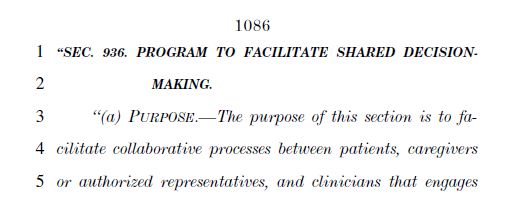
Tucked away in health reform's Patient Protection and Affordable Care Act is Section 3506 on the topic of 'shared decision making.' It's on page 1086 and establishes 'collaborative processes' that 'engage' patients and providers 'with trade-offs among treatment options' with the 'incorporation of patient preferences and values into the medical plan." As the Disease Management Care Blog understands it, this directs the Secretary of HHS to establish standards and decision aids that are used in shared decision making and develop a certification process. Grants are to then be made available to assist providers in using certified shared decision making with the help of 'Shared Decisionmaking Resource Centers.'

Google the term 'Shared Decision Making" and guess what turns up: Dartmouth Hitchcock Medical Center's Center for Shared Decision Making which is made possible by a grant from the Foundation for Informed Medical Decision Making and Health Dialog, which was built "in collaboration" with the same Foundation to sell programs that reduce the variation described in the Dartmouth Institute and at the Dartmouth Atlas.

The DMCB discerns a pattern here. While the term "shared decision making" is not owned by any particular entity, many of us in the business of population-based care programs associate it with both Dartmouth and Health Dialog. It appears that the newly passed health reform bill is recognizing Dartmouth's extensive work in this area and, indirectly, has also boosted Health Dialog's market presence. Care to guess which institution(s) will be weighing in on the creation of federal standards on shared decision making, helping to promote their use and helping with the Centers?

The DMCB wishes its Senators had written it into Federal law by establishing standards, certification and promotion of policy and health care blogging based on its topics and style. It comforts itself by figuring the Dartmouth and Health Dialog had a head start. The DMCB reminds the spouse that its time will come and, like shared decision making, will not settle for a pilot or a demo. No sir.

To read more on the topic of shared decision making, check out two articles this one and this one from Health Affairs. Based on the statute, looks like we're all going to become more familiar with the concept.

Sunday, July 13, 2008

Shared Decision Making via the Archives of Internal Medicine: Are the Physicians Responsible for Doing It or Making Sure It's Done?

In a previous post, the Disease Management Care Blog alerted readers to a study demonstrating that the open access dimensions of the ‘patient centered medical home’ (PCMH) was not easy to implement and may have little impact on patient perception of quality.

The DMCB wants to alert readers to the arrival of another study that addresses the assumption that doctors – because, well, they’re doctors – are intuitively inclined provide to another element of the PCMH. This one had to do with shared decision making, or helping ‘patients actively participate in decision-making [bolding mine].’

In the July 14 Archives of Internal Medicine [not online yet at the time of this posting] Young and colleagues1 looked at the ‘shared decision making’ behaviors among 152 primary care providers in three U.S. cities who were surreptitiously visited by one or two ‘standardized patients’ (i.e., actors) feigning the classic symptoms of depression. Shared decision making was defined by the authors of this study as a ‘collaborative effort between physician and patient, who share information, preferences and concerns as they negotiate a course of action.’ The authors used an internally contrived scale based on 12 shared decision making dimensions on a 0-4 scale (zero none, 4 a lot) to analyze recorded conversations between the physicians and ‘patients.’ 12 x 4 = 48 is the maximum score. The mean score in this study was just over 11, which isn’t too good.

The paper was accompanied by an editorial2 in which 8 ‘myths’ were explored:

1. 'Everyone knows what shared decision making is.'

2. 'There is only 1 approach to shared decision making.'

3. 'Physicians [as opposed to patients] alone drive shared decision making.'

4. 'Most physicians engage in shared decision making – at least, they would if they had the time.'

5. 'Physicians do not have the time for shared decision making.'

6. 'Most patients would rather the physician tell them what to do.'

7. 'Patients who do not want shared decision making want their physicians to decide for them.'

8. 'Shared decision making, informed decision making and participatory decision making are the same thing.'

Neither the original study authors nor the editorialist explored the implications of their findings for the PCMH, but the DMCB thinks they are significant. While it’s been recognized that 'physician and practice behavior change’ will be necessary to implement the medical home using, for example, ‘web-based instruments and patient simulation,’ these data from the Archives suggest that mainstream primary care providers have a long way to go before they’ll be able to offer shared decision making in day-to-day clinical practice.

While we await that yet to be discovered secret physician-behavior-change sauce, the DMCB would like to point out that there are other approaches that depend less on the physician and more on other strategies. They are not only very effective but ready to go. In fact, they're already being implemented.

The Disease Management Care Blog suggests there is a myth number 9: ‘It is up to the physicians to provide shared decision making in their day to day clinical practices.’ The DMCB suggests they should be responsible but can rely on other professionals and/or systems to implement it more effectively.

Here are the references:

1. Young HN, Bell RA, Epstein RM, Feldman MD, Kravitz RL: Physician’ shared decision-making behaviors in depression care. Arch Int Med 2008;168(13):1404-1408

2. Hansen J: Shared Decision Making. Have we missed the obvious? Arch Int Med 2008;168(13):1368-1369