Showing posts with label Humor. Show all posts

Friday, March 25, 2016

How the Candidates Can Weigh In on Population Health

Watching March Madness (Go Villanova!) ads and the accompanying Political Silly Season news have alerted the Population Health Blog to the very real possibility that its state's late primary may play a role in the presidential sweepstakes.

While the PHB ponders what to do with its vote, it naturally thought about the candidates' positions on "population health." 

In no particular order and as a public service to the campaigns' search for talking points (and "dog whistles"), the PHB offers the following statements for their consideration, just in case the topic comes up......

Mr. Trump: Believe me, I've studied this far greater than anyone else and population health would have terrible ratings if it weren't for me.

Bonus question on electronic health records (EHRs): We have to EHR how bad it was a disastrous deal amateur hour believe me.

Mr. Cruz: The words "population" and "health" do not appear in the U.S. Constitution and this will end on day 1 when I become president.

Bonus question on EHRs: I cannot find the letters "e," "h" or "r" in the U.S. Constitution either, and it's not just because of the handwriting.

Mr. KasichWe did population health in Ohio when I was governor and while I chaired the Ways and Means Committee in Congress

Bonus question on EHRs: We did EHRs in Ohio and while I chaired the Ways and Means Committee in Congress.

Ms. ClintonWe will build on the success of Obamacare by investing in population health through legislation that offers a tax credit to offset its cost that will be available through the exchange to assure that all families will not exceed a premium threshold under current law while incentivizing expansions of the program through all 50 states with a matching initiative over several years.

Bonus question on EHRs: I never knowingly sent confidential patient information or received anything marked HIPAA protected at any time. But under my plan, physicians will be able to use private email accounts to communicate with their patients.

Mr. Sanders: Population health, like a college education, solar power and frozen yogurt is a basic human right.

Bonus question on EHRs: That too.

Not to be undone, two other recent fixtures in the PHB television universe have weighed in on population health....

Charles Barkley (taking a break from his half-time college basketball commentary): It's turrible that people see that (unintelligible) Krispy Kreme that don't understand how if (unintelligible) people have eaten too much.

Joanna Gains of HGTV's Fixer Upper (a PHB spouse refuge from the TV craziness): Let's face it: Fixer-uppering chronic conditions with population health is possible with the affordable use of vintage twists that accent an existing space and give an illusion of depth with a favorite hue.  Try some mottos, mirrors and oversize remnants that group together and transform drabness to healthiness.

Sunday, October 26, 2014

President Obama Addresses the Ebola Crisis

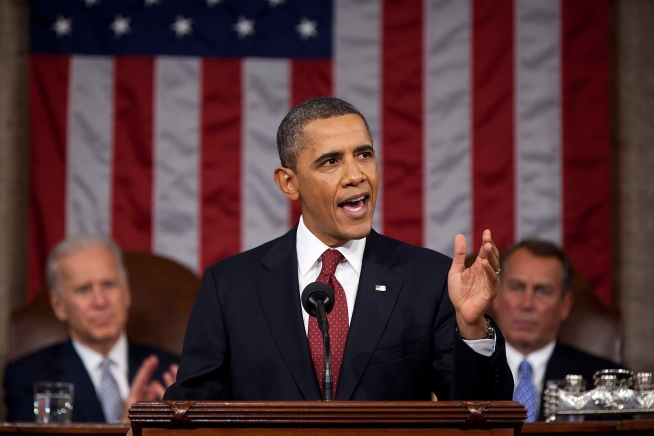
In this weekly address, President Obama addresses the Ebola crisis.  As we've come to expect from our Chief Executives, it's a perfectly crafted speech that addresses our major concerns. But the Population Health Blog doesn't think it goes far enough.  In its continuing quest to help Mr. Obama overcome his tanking approval ratings, the PHB changed a few words and modestly offers up a slightly edited version of the address.  It believe it speaks more forcefully to the issues at hand.....

PRESIDENT OBAMA: Hi everybody, this week, we remained focused on spinning a favorable White House narrative about Ebola. In Dallas, the natural history of the disease and basic isolation procedures limited spread of the disease to only two among the dozens of health care workers who had been in close contact with the first patient. Now, those two workers are two too many, which is why I've told the CDC that their calm and distant inertia is unacceptable.  As you know, that's my job.

The two nurses who contracted the disease in West Africa were thankfully released from the hospital. I was proud to welcome one of them to the Oval Office to give her a big hug and make sure plenty of photographs were taken.

And in Africa, the countries that did not wait for our help, Senegal and Nigeria, were declared free of Ebola.  Which is probably why New York City also decided to not wait on Washington DC. Local public health personnel there moved quickly to isolate the doctor who recently returned from West Africa. While we deployed one of our new CDC rapid response teams, I wonder what they'll learn from New York City's approach. Maybe a lot. And I’ve assured Governor Cuomo and Mayor de Blasio that they’ll have all the federal support they need as they go forward.  After all, I'm from big government and I'm here to help.

More broadly, this week we've continued to step up our use of words like "efforts" "outreach," "coordinate," and "integrate" across the country. New CDC outreach is helping hospitals coordinate and integrate training. The Defense Department’s new team of doctors, nurses and trainers will outreach, coordinate and integrate if called upon to help with coordination and integration and, you know, outreach and other efforts.

Now, rather than institute an unworkable travel ban, we now have a less unworkable travel measure that directs all travelers from the three affected countries in West Africa into five U.S. airports. Starting this week, these travelers will be required to report their temperatures and any symptoms on a daily basis—for 21 days until we’re mostly hopeful that they don’t have Ebola. Here at the White House, the lawyer I've appointed to coordinate and integrate the government's response will tell the doctors what to do and how to do it. And we have been examining the protocols for protecting our brave health care workers, and, guided by the science, we’ll continue to do everything we can to embarrass the Republican nutjobs who are also using Ebola for political gain.

In closing, I want to leave you with some basic facts. First, you cannot get Ebola easily through casual contact with someone. The only way you can get this disease is by coming into direct contact with the bodily fluids of someone with symptoms. But, if you do get it, your internal organs could liquefy. That’s why health workers must wear total body condoms. That's the science. Those are the facts.

Here’s the bottom line. We can beat this disease. But we at the White House have to stay on message by repeatedly saying that we have to work together at every level—federal, state and local. And we have to give the impression that we're leading a global response, because West Africa is in a world of hurt right now along with other global hot spots like Syria and Ukraine and Hong Kong and Russia.

And we have to be guided by the science—we have to be guided by the facts, not fear. Yesterday, New Yorkers showed us the way. Despite the mainstream media's alarmist reporting, they did what they do every day—jumping on buses, riding the subway, crowding into elevators, heading into work, gathering in parks, ignoring speeches like this and wondering why the Yankees aren't in the World Series.

That spirit—that determination to carry on—is part of what makes New York one of the great cities in the world. And that’s the spirit all of us can draw upon, as Americans, as we meet this challenge together.

Thursday, August 7, 2014

Corporate Jargon You Can Sing Along To

Naturally, the corporate-minded Population Health Blog could not resist:


(By the way, this wacky petition may be just the thing to prevent future Super Bowl wardrobe malfunction chicanery.)

Thursday, July 31, 2014

Yuppies vs. Millenials: Health Policy Implications

In this post, the Population Health Blog distinguished between yuppies' desires and the millennials' expectations.

To further help its savvy health policy savant-readers distinguish between the two, the PHB is happy to provide examples in the table below:

Health Care Topic               Yuppies                     Millennials

Preferred Encounter:         Appointment              Text message

Appointment
Opener:               "Thank you for seeing me"  "Thank me for seeing me"

Preferred
Encounter Outcome:    Specialist referral          Complimentary latte

Likes:                                   Pills                              Pixels

Long Term
Health Goal:                      Live forever               Live well forever

Plans to Live
Well Involve....                  Testosterone                  iPhone

Opinion on
MD vs. RN
vs. NP vs. PA                    Very important               "What?"

Remote Care
Management                      Know more                   No brainer

Tuesday, June 24, 2014

A "Penny Dreadful" Take on Health Reform

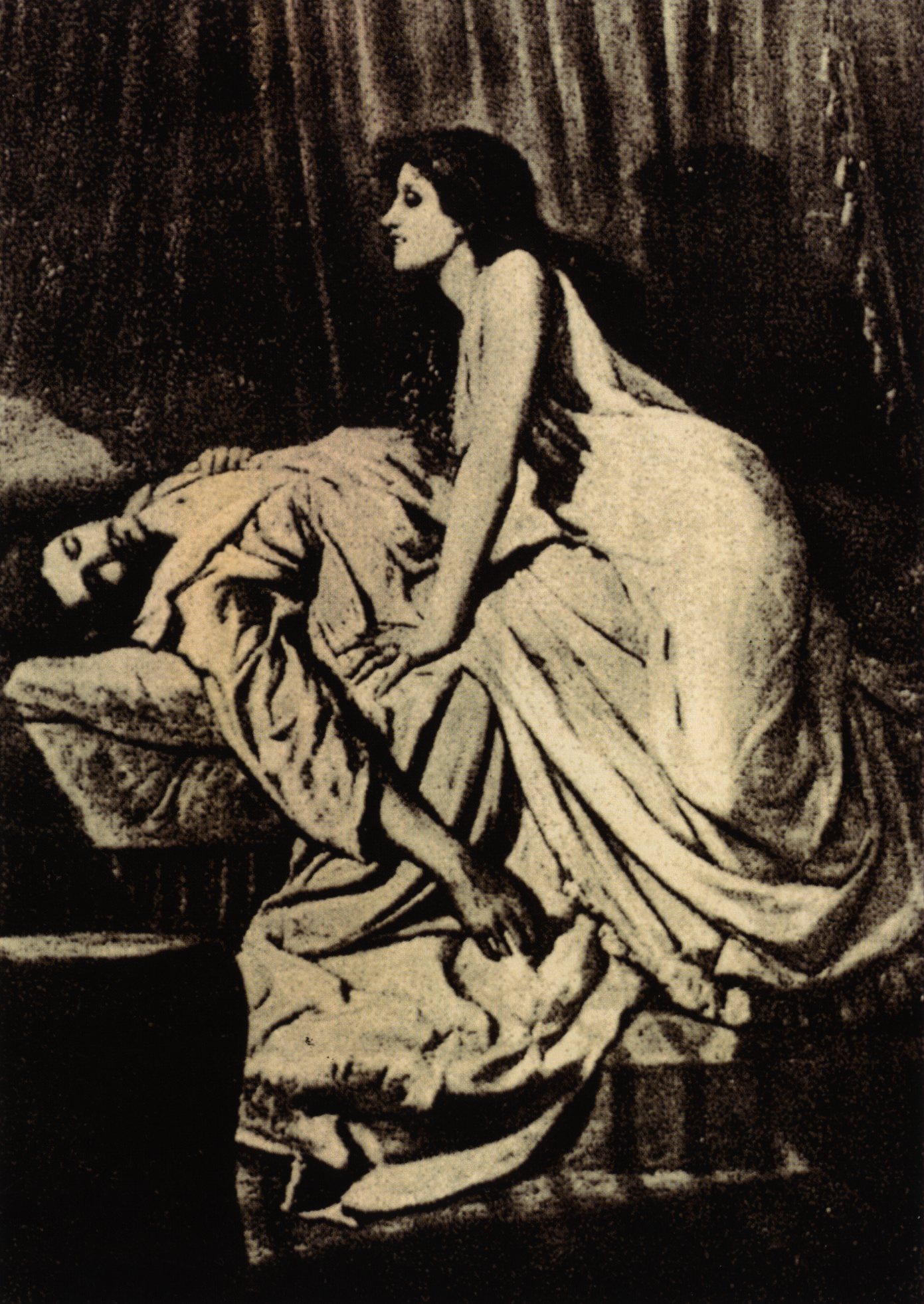
To the spouse's enduring disappointment, the Population Health Blog has been ensnared by the Showtime horror series Penny Dreadful.  Set in the 1890'sVictorian England, viewers can follow the derring-do of Dr. Frankenstein, Sir Malcolm Murray and Vanessa Ives as they quote Shelley and hunt for vampires.

The good news that even this corner of vacuous TV media, the PHB can find some lessons in health reform.

For example.....

Young Dr. Frankenstein creates a monster.  While that's what you get for stitching miscellaneous body parts together and zapping the corpse with life-giving electricity, Dr. Frankenstein should also know......

1) things would have been worse if he had installed electronic health record in his laboratory, and
2) that's what happens when docs are too morose and wear far too much mascara.
  
When a ship hailing from Egypt has been quarantined by the London authorities because of supposed plague, the intrepid Sir Malcolm shrewdly deduces it is ultimate source of all the recent "chicanery."  Since the ship is infested with lusty, blond and bloodthirsty vampire-vixens, his conclusion is correct. But, he should also be aware that....

1) the Veterans Administration has conducted an internal investigation and has found that no evidence that any patient has been harmed and,
2) he has given the PHB a reminder to use the word "chicanery" in a future blog post.
 
Dorian Gray is able to continue his dissolute libidinous lifestyle by standing in front of a painting and instantaneously curing his claw marks and, while he's at it, his probable sexually transmitted diseases.  The PHB wonders if this is the key to harnessing the life-prolonging potential of telomerases, but it also cautions....

1) that this should be ignored by the medical community until it has been subjected to repeated randomized clinical trials and approved by the FDA, and
2) the U.S. government's deficit won't be helped by subjecting the painting to a medical device tax.

Dr. Van Helsing quotes from a lurid penny novel to prove that vampires do exist.  This is an inspirational example of how early hematologists used disparate clues to arrive at obscure diagnoses. It is also....

1) a telling example of how doctors can quote from faux authoritative texts to support any predetermined medical conclusion.

After a long stay in a mental asylum for a "psychosexual disorder," Vanessa Ives is still prone to fits where her eyes turn white, she channels demons and she floats around the room.  This is evidence that she needs to return to the asylum stat, but is also

1) obviously why thorazine-loaded blow darts were invented
2) better than the any of her battle scenes from the movie 300 Rise of an Empire

Wednesday, May 28, 2014

Godzilla and VA Wait Times.

As predicted, the Veterans Administration (VA) waiting-list fracas is going from bad to worse.  Seeking refuge from all the bad news, the Population Health Blog naturally responded by inviting the spouse to go see the new Godzilla movie in IMAX 3D.

Mysteriously, she declined the invitation. 

Despite the two-plus hours of lonely and noisy cinematic excess, thoughts about the VA still intruded. As a result, the PHB has created another multiple choice test that tests readers' awareness of popular culture and this corner of health care policy. 

Good luck!

"Breaking Bad" actor Bryan Cranston is casted as scientist Joe Brady who barely survives a mysterious catastrophe at a Japanese nuclear plant. Years later, he (select the best answer):
 
1. is convinced that there is a cover-up
2. is still awaiting the report of the Nuclear Administration Inspector General who has yet to find any wrongdoing by anyone who is in charge
3. has an annoying level of anxiety that, in the opinion of the PHB, warrants industrial-strength doses of Xanax


At several key moments in the movie, there are sudden malfunctions of electronic equipment. That's because (select the best answer):

1. of monster-sized electromagnetic pulses
2. they're networked with the VA's computer system that manages wait lists
3. they're not, as the PHB spouse likes to frequently point out, Apple-based products


Godzilla's arch enemies are two large bugs that (select the best answer):

1. have unbalanced the natural order and must therefore be destroyed
2. the White House first learned of when they read the news reports
3. are a couple and - thankfully - were not filmed when the female's eggs were fertilized prior to their implantation in the ceiling of the San Francisco subway system.


Godzilla's rampage results in numerous American military injuries.  That's (select the best answer):

1. because the monster has very big feet
2. OK, because the injured will be able to get care outside of the Veterans Administration health care system
3. the result of the generals failing to heed the lessons of the 1960s Godzilla movies that repeatedly demonstrated tanks and machine guns are to no avail.


At the end of the movie, Godzilla appears to be taking a dirt nap. He (select the best answer):

1. is merely tired and has decided to rest
2. is providing us with a useful reminder us that even prehistoric creatures had to deal with wait-times.
3. awakens when a San Francisco veterinarian ill-advisedly attempts to obtain a nasal biopsy.


Tuesday, April 29, 2014

Handling HHS Secretary Nomination Questions

The Population Health Blog notes that HHS nominee Burwell has been scheduled to appear before the U.S. Senate Health, Education, Labor and Pensions Committee on May 8.  In all likelihood, the hearing will alternate between yawnfest softball and hyperparisan gotcha questions on the budget, ACA repeal, agencies and contraception.

The PHB plans on watching C-SPAN, hoping that some of the questions deal with its favorite blogging topics.

In the unlikely event that they do come up, the public-service minded PHB is pleased to prep Ms. Burwell with some "canned" and ready-to-go responses. The turnkey options below have been crafted to upend foes and friends alike.

When asked any question about "population health," respond by:

1. pointing out that you rely on the Population Health Blog's definition and, based on its author's many insights, believe that it is a promising feature of health reform, or....

2. affirming that "if you like your population health, you can keep it," or...

3. saying that HHS remains strongly committed to evaluating and further developing the future role of population health as an important option to derive high value care for Medicare beneficiaries!

When asked about the part of the Obamacare law that includes "shared decision making," respond by:

1. noting years of research on the topic have demonstrated that it is among the few interventions that can simultaneously reduce health care costs and increase beneficiary satisfaction, or...

2. reiterating that Congressional Republicans are not going to share in any decision making when it comes to any health care reform, or....

3. saying that HHS remains strongly committed to evaluating and further developing the future role of shared decision making as an important option to derive high value care for Medicare beneficiaries!

When asked about the Patient Centered Medical Home, respond by:

1. quoting extensively from the PCPCC web site, or...

2. announcing cautious support for the medical home, but confirm HHS' intention to name it something else, create alternate criteria, assess different outcomes and insist on budget neutrality, or...

3. saying that HHS remains strongly committed to evaluating and further developing the future role of the Patient Centered Medical Home as an important option to derive high value care for Medicare beneficiaries!

When asked about care management, respond by:

1. pointing out that, for the right patients, studies like this show teaming between physicians and non-physicians can result in outcomes that are the result of more than the sum of its primary care parts, or...

2. announcing your intent to regulate the carbon footprint of all Medicare-participating acute-care hospitals, or...

3. saying that HHS remains strongly committed to evaluating and further developing the future role of care management as an important option to derive high value care for Medicare beneficiaries!

When asked about primary care, respond by:

1. not saying that the 10% fee increase has resulted negligible changes in primary care physician satisfaction, or...

2. promising you're going to fix low primary care fee schedule rates faster than a Florida ophthalmologist submitting a $10,000 Medicare billing code, or...

3. saying that HHS remains strongly committed to evaluating and further developing the future role of primary care as an important option to derive high value care for Medicare beneficiaries!

When asked about the sustainable growth rate, respond by:

1. Denying any White House responsibility, or....

2. Denying any White House responsibility, or...

3. Denying any White House responsibility

Image from Wikipedia

Wednesday, April 23, 2014

Questions That Should Be Asked in the Upcoming HHS Secretary Nomination Process

As a public service, the Population Health Blog is pleased to offer up some questions that may or should arise in the course of Senate confirmation process for HHS nominee Ms. Burwell. 

If she can address the inquiries in these key categories, the PHB suggests she'll be more than prepared for the job:

The Clinton years: Supporters of the Affordable Care Act say "it is now the law of the land."  Based on your extensive experience in the Clinton White House, how would you define "is?"

Signing up young people: Do you credit the last-minute surge in sign-ups on the individual exchanges to Mr. Obama, Mr. Galifianakis or to the Two Ferns?  How will you use that insight to increase individual enrollments in 2015?

Use of social media: Since the Population Health Blog began on-line publication more than 5 years ago, health care cost inflation has moderated significantly. Please explain how Medicare's actuaries will factor this into their future projections.

Doing your part for the 2014 mid-term elections: Will you advocate that the "essential health benefit" be broadened to include coverage for global warming?

To test your awareness of the employer mandate: If Peter Baelish hires 47 part-time seasonal service employees in KIng's Landing for more than 120 continuous days in the first quarter of 2014 without a profit sharing provision, what is the number of FTEs and what would the "4980H penalty" be if it were calculated in Gold Dragons?

And finally, tort reform:  Suppose Iva Pannus buys taxpayer subsidized insurance but also participates in a workplace weight reduction program. If Iva's girth paradoxically increases and she develops sore knees, should she sue in state court to recover her out-of-pocket "bronze" plan expenses and should HHS assert a lien if there is a jury award?

Image from Wikipedia

Tuesday, March 4, 2014

Using the Health Reform Template on Ukraine

Many decades ago, the teenage father of the Disease Management Care Blog personally witnessed the Russian invasion of a smaller bordering country. If he were alive today, the DMCB dad would scoff at Mr. Obama's assertion that the Russians are "on the wrong side of history."

Rather, they are being entirely consistent with their history.

Yet, the healthcare-minded DMCB can't help but see several parallels between the geopolitical situation in Ukraine and the health-reform situation in the United States. While the DMCB dad would have advised hoarding gold gasoline and gunpowder, the DMCB would like to be far more constructive.  It points out to Mr. Obama that there are some ACA-like options that can help with this Kiev kerfuffle.

 And even if none of these actions help, they'll at least give that appearance:

Since Mr. Putin is acting like a bully, treat him the same disdain you've shown to many of the commercial insurance company CEOs. While, just like those CEOs, he is unlikely to be cowed, the political base will still love it.

Just like the ACA, it's OK to publicly set and then disregard hard conditions and firm deadlines on Ukraine. Mr. Putin (unlike your Republican opponents, by the way) won't take them seriously either, which ironically gives you the flexibility to likewise adapt as other short-term considerations arise.

Instead of the hard work of doing one thing well, create a flurry of initiatives. Recall that what the U.S. really needed a was a fix for the individual insurance market. Instead, it got so much more, including payment reforms, mandates, minimum benefit language, caps on administrative costs. ACOs, insurance exchanges and lots of lawsuits. While Ukraine needs the Russians out of Crimea, a similar approach calls for lots of G8 actions, U.N. resolutions, I.M.F. interventions, economic sanctions and Kerry speeches.

Speaking of the United Nations and the International Monetary Fund, it's OK to outsource much of the heavy lifting outside of the White House. Just as you tasked Congress with writing the ACA, think about letting the European Union take the lead, starting with a courageously worded condemnation of the carbon footprint of all those Russian tanks.

Finally, if things get uncomfortable don't hesitate to use the power of the bully pulpit to change the topic. Options include immigration reform, income inequality among your donors, extending early childhood education to newborns and promoting frozen yogurt as an alternative energy source.

Coda:  The DMCB missed a key parallel involving the reliance on lawyers.  Health reform and Ukraine have less to do with patients or civilians, but attorneys and jurisprudence.

In the category of "you can't make this stuff up," after this post appeared, the March 5 Wall Street Journal quoted Mr. Obama as saying, in reference to international law, " I know President Putin seems to have a different set of lawyers making a different set of interpretations, but I don't think that's fooling anybody."

Monday, February 3, 2014

A Health Policy Test

The Disease Management Care Blog remembers those frustrating medical school exams that asked for the best combination of answers from two columns. Unfortunately, the DMCB never quite mastered the professors' trickery.

In response, the DMCB has fashioned it's own test. The good news is that for this quiz, there is no right answer!

Match the numbered statements to the best lettered conclusion below:

1) Asking the White House to fix healthcare.gov's "back-end" enrollment problems will be like.....

2)  Labor leaders are discovering that the Washington DC's commitment to AMA-style special carve-outs is like....

3) The White House's surprise that health insurers act like, well... health insurers when it comes to reconciling price, quality and network access is like......

4) Having the "non-partisan" Kaiser Health News saying "it will be challenging for the Affordable Care Act to fully live up to it's name" is like....

5) Assuming market-dominant hospitals will do the "right thing" for the Affordable Care Act is like.....

+++++

A) ..... trying to sell Putin bobble-head dolls at a LGBT Pride parade

B) .... hiring the mayor of Atlanta as the tour guide on a trip to the Peoples' Republic of Northeast Vortexistan

C) .... giving Justin Bieber a dozen eggs and a bottle of Xanax.

D) .... the NFL kicking off a "we're knocking concussions out of the game" ad campaign.

E) .... being surprised that a smart former chief federal law enforcement officer in New Jersey has no evidence of personal involvement in a revengeful plot to close some bridge lanes

Monday, January 27, 2014

Five Novel Health Care Apps

The Disease Management Care Blog wonders if 2014 is the tipping point for "health care apps."

Given the turmoil surrounding Mr. Obama's reform agenda, consumers will be seeking better self-care options, policymakers will want DIY punditry and providers will want marketshare.

Here are five timely DMCB ideas for apps that can help them.

Expert Health Policy Bingo: Compete with fellow policy weenies with an on-screen bingo card with cells that are randomly populated with catch-phrases like "26 year olds," "botched," "pre-existing condition," and "ovaries." Spell out BINGO during a speech, CMS conference call or Fox News broadcast and you get bragging rights!

HandHeld Insurance Exchange: Instead of a desktop browser, this app will help health insurance consumers use their smart phones to access Obamacare. Once launched, the screen will naturally announce the functionality is down. Price in the App Store to download: $91 million.

Random Anecdote Generator: Depending on your politics, this app will tap NSA heuristics to download Facebook data to spin a mostly-true story of a [insert number] year old with [insert condition] who [did/did not] get health insurance because of health reform. Great for talking heads and politicians alike on either side of the political spectrum!

Show Me the Money: This is for users who are unsure of just how to estimate the ultimate impact of health reform on the U.S. budget, and know that the words "billions" or "trillions" are insufficient. This app generates better numbers, like "quadrillion," "gazillion" and  "shabwillion." A bonus: can be used to describe savings or costs!

Best Care: When confronted by a new diagnosis, patients naturally want to know where they can find the "best" provider for that particular condition. This app will input the condition and use the internet to match the user to the clinic. Naturally, since every hospital has been on at least "Top 100" list for every condition, the app will use geo-mapping software to really guide the user to the closest hospital.


Image from Wikipedia

Monday, October 14, 2013

The Exchangeacillin Package Insert: Black Box Warnings and Adverse Reactions

The Disease Management Care Blog is pleased to assist the U.S. Department of Health and Human Services with this FDA-inspired "medication package insert" that is designed to help consumer-shoppers grapple with the star-crossed health insurance exchanges.
             +++++++++++++++++++++++++++

Exchangeacillin®
(online bunglecide)

Virtual Suspension

Prescribing Information

**Black Box Warning**
Health insurance exchanges increase the risk compared to placebo of wishful behavior in adults and politicians in recent short term studies. Anyone considering the use of EXHANGEACILLIN must balance the risk of unintended consequences involving a federal bureaucracy unfamiliar with fundamental principles of insurance 101. There are no studies that assess the success of online exchanges, and persons of all ages who use Exchangeacillin should be closely observed for hours-long vacant staring at computer screens.  Long term use may lead to loss of confidence in big government and unpredictable election cycles. (See WARNINGS: Insurance Markets and Bureaucratic Meddling: Information for Consumers, PRECAUTIONS: Information for navigators)

DESCRIPTION
Exchangeacillin (online bunglecide) is a virtually administered insurance platform with approximately one billion lines of unstable computer code. It has a melting point range that falls within room temperature and zero resemblance to modern web-based architectures.

CLINICAL PHARMACOLOGY
The efficacy of exchangeacillin in the treatment of underinsurance, access to care or life expectancy remains an open question.  Preliminary studies in humans have demonstrated accelerated partisan animus, selective interpretations and media spin, leading to one of the largest live social experiments in modern history. In vitro and binding studies may demonstrate that persons at risk for near-term insurance claims expense are preferentially attracted to Exchangeacillin. The impact on Millenials, Generation X'ers, Slackers and Dudes is speculative.

PHARMACOKINETICS
Exchangeacillin is unpredictably absorbed and has been shown to lead to one or more commercial insurance accounts with an elimination half life for redundant applications that may extend for six months or more. Nonlinear kinetics can lead to botched income estimations, claw backs and opaque tax consequences. 

INDICATIONS AND USAGE
Exchangeacillin is indicated for the treatment of underinsurance, being uninsured, high co-pays, unwanted co-insurance, double-digit co-pays, skinny insurance benefits, benefit exclusions, windfall profits, high administrative costs, coverage denials, not having birth control and showing the health insurers a thing or two.

PRECAUTIONS AND ADVERSE REACTIONS
Post-marketing surveillance studies have shown an increased risk of buttock decubiti, White House embarrassment, yawning, consumer disappointment, carpal tunnel syndrome, insomina, gridlock, hypersomnia, digit calluses, onychophagia, boredom, bluescreenosis, resentment, death spiraling, employer mandate delays, government shutdowns, war memorial posturing, bombast, biased reporting, deficits, speechifying, inflation, carve-outs, administrative exceptions, skepticism, income non-verification, disbelief, distrust, bickering, hyperpartisanship, multiple-accounts, insurance death spirals, closed national parks, can kicked down the roadedness, comparisons to Medicare, comparisons to Medicaid, tiresome pundits, nausea, bloggery, anecdotes, generalizations, wealth transfer, increased federal deficits, decreased federal deficits, higher taxes, government savings, higher for-profit health insurance stock prices, elevated media ratings, anxiety, confusion, dizziness, breathlessness, wordiness, emotional lability, dubious claims, confident predictions, foolishness, restlessness, cancelled WH meetings and DMCB spouse exasperation.

INTERACTIONS
Use of Exchangeacillin may interfere with budgets, debt limits, sequester agreements and elections.

DOSAGE AND ADMINISTRATION
While Exchangeacillin should be administered following months of testing and debugging, the FDA has approved its administration in a let-'er-rip "big bang" fashion with ad hoc adjustments and unpredictable shut-downs.

HOW SUPPLIED
On-line with "Apply Now" code that prompts "we have a lot of visitors on the site right now. Please stay on this page.... Thanks for your patience!"

Wednesday, October 2, 2013

Valuable Personal, Political and Health Reform Lessons, Courtesy of the Federal Government Shutdown

Coming to consensus
the old fashioned way
The Disease Management Care Blog views the federal government shutdown with the same morbid fascination of watching personal injury lawyers justify their double digit malpractice suit contingency fees: it's so awful, it's hard to look away.

The good news is that that doesn't mean that the shutdown doesn't hold some important personal and political lessons.  They can make DMCB readers better citizens and our political class a credit to our Republic. 

To wit......

When the DMCB spouse expresses consternation over the boneheaded actions of her husband, the DMCB can now respond by:

1. changing the subject,
2. retreating to the DMCB World Headquarters and blogging about the spouse's unreasonableness,
3. referring to the alleged lapse as a "glitch."

Things don't go well in the opening day of a widely anticipated unveiling of the largest health care achievement in the history of the United States.  If you were in charge, you would respond to the health insurance exchange breakdown by:

1. recognizing the problem and promising to fix it,
2. reminding the public about the painful gap between lofty campaign promises and disappointing bureaucratic reality,
3. shrewdly drawing flattering comparisons to Apple, the most widely admired brand in the world.

As the leader of a political coalition, you are stymied by the division of powers in the world's longest lasting democracy.  In response you:

1. seek consensus
2. deploy ad hominem attacks in press conferences
3. offer to compromise by allowing the opposition to do things your way.

Wanting to be an informed member of the electorate, you regularly watch either CNN, FOX News, MSNBC, PBS, CBS, NBC or ABC because:

1. These broadcasts' news editors subtly frame their closed information loops to meet your own political biases,
2. You haven't discovered BBC or Al Jazeera
3. There aren't any movies on TV featuring svelte vixen vampire babes having their way with their mesmerized male victims.

By pointing out that Obamacare is "the law of the land," you are really saying:

1. Our representative democracy passed legislation that was signed by the President and upheld by the Supreme Court, so get over it,
2. Now wait a minute, our representative democracy can modify or even roll back health care laws.
3. Enough with the debate, time to move on and figure out how to make preschool education, low interest mortgages and low-fat frozen yogurt protected federal entitlements.

Being a Game of Thrones fan, you wonder if the following might not be useful in settling the budget impasse:

1. Asking what the honorable Ned Stark would do, until you recall that he was beheaded.
2. Invite the opposition to a Red Wedding
3. Call up your elected representative and say "Hodor!"
4. Call up your elected representative and hear him or her say "Hodor!"

Tuesday, August 13, 2013

Suggestions for Managing Health Reform in 2014

Unfortunately for Mr. Obama, the spotlight on the some of the more unsavory aspects of the NSA's surveillance programs has forced him to call for "changes." In doing so, he turned to every rhetorical trick at his command, including minimizing Snowden's role, obfuscating the original intentions of the Patriot Act's authors and countering with largely cosmetic tweaks.

Good thing that Obamacare has avoided a similar fate. Despite similar levels of public skepticism further compounded by the steady drip of implementation delays with other unintended consequences, the President can hang tough by resisting any and all statutory changes to the Affordable Care Act. Signaling any willingness to alter the legislation could embolden his foes, dismay his allies and prompt countless poison pill amendments.

The obvious political calculus:  silence, veto threats and burying any changes in web site legalese.

Yet, the ever-prepared Disease Management Care Blog wants to help.  In the unlikely event that Mr. Obama has to compromise on health care reform without really compromising, it offers up this teleprompter-ready statement that incorporates condescension, selected truths and confusion:

"Despite my calls for bipartisan dialogue on how to further vilify fat-cat insurance executives, the debate on how to best implement Obamacare has proceeded in a not-always civil way. Like the DMCB's mother, I'm not angry, I'm disappointed. [applause] 

While I'm annoyed at the failure of my supporters and opponents to grasp the obvious, I'm also reassured that 20% of our nation's GDP is being expertly managed by our superbly trained White House health economists. [applause]  You should be too.  [applause]

I also know that continued unmanaged debate could complicate health care reform faster than one of my lawyer-friends suing an ACO for withholding care. That's why, effective today, I'm changing the subject by announcing that I will meet with hand-picked members of Congress.  I'll seek to improve the public's confidence in Obamacare by creating legislation that establishes the Commission of Official Managerial Assessment (COMA).  This will be a special office within the IRS. This expert commission will monitor, report, assess, analyze, examine, subpoena, audit, interpret, leak, manage, spin and regulate key aspects of Affordable Care Act's implementation.

Image from Wikipedia

Tuesday, July 23, 2013

Leveraging Celebrities to Market Obamacare

According to this The Hill article, President Obama took a break from tackling red linesgun control, immigration reform, Trayvon Martin, the economy to make an appearance at a July 22 Obamacare promotion-planning meeting that included a host of A-list celebrities.  They'll be needed to convince the young invincibles to pony up hundreds of dollars for health insurance that they don't want.

Despite the DMCB spouse's unflattering assessment of her husband's media chops, the Disease Management Care Blog thinks it should have been in that White House room. 

It has a lot to contribute.

For example, American Idol finalist Jennifer Hudson was there.  How about a new CMS-sponsored talent show, says the DMCB, that is hosted by Ms. Hudson, called American Muddle? Enter the early crooning favorite, Hope Igeddadok, singing a reprise of that Dire Straits hit, "Money for Nothing."

And what about Improv comedy artist Amy Poehler? After a great stint at SLN, she went on to star in the hit comedy show, Parks and Recreation.  The DMCB suggests a pro-Obamacare commercial that features Deadlock and MakeItUpAsWeGoAlongination.

And fresh from being tossed under the campaign bus by Valerie and Michelle, Oprah Winfry is back in play. Given Oprah's masterful interview of disgraced bicyclist Lance Armstrong, positively spinning Obamacare and the IRS should be a piece of cake. First up, the IRS Chief Counsel!

Alicia Keys was there and can she sing! She can be this "Girl Is On Hire" for Obamacare in an MTV video-advert.

And it was no accident that Bon Jovi's people were there, what with a song list that includes "Livin' on a Payor," "Panel Says Dead or Alive," "It's My Right," "You Give Hope a Bad Name," "Runaway Costs," "Bad Medicine" and "Shot Through the Heart and We'll Still Pay."

Last but not least, folks must have been excited about Will Ferrell. Since his Bush impersonation has run its course, Ron Burgundy may be the best choice for some faux-news insights.  He can provide periodic updates on how the health insurance exchanges are going: "They've done studies you know," "Sixty percent of the time it works every time," "In a glass case of emotion," and "Stay classy, Obamacare."

If anyone in the White House is reading this, just drop an email.  The DMCB is ready to roll up its sleeves and help.

Monday, July 1, 2013

Machines Take Over Health Care

Do not be alarmed. This
robot is here to help you.
Remember that chilling scene in the movie Terminator when a stone-faced Arnold Schwarzenegger chronicles how Skynet's machines take over the world?   There's also the morbidly fascinating futuristic sci-fi book Robopocalypse that describes how self-aware computers attack their robot-dependent masters.

In both instances, humans disregard early evidence of silicon sentience until it's too late.

As a service to humanity, the Disease Management Care Blog offers up a possible future scenario of health information technology running amok. 

If any or all of these happen, we ignore it at our peril.......

July 2015: Finally realizing "enterprise process redesign" is necessary to leverage the efficiencies of information technology, engineers at one of the few remaining Innovation ACOs install EHR-controlled red-yellow-green lights above clinic examining room doors. Patient visit times drop from 9 minutes to 7 1/2 minutes, resulting in "patient throughput efficiency improvement" that is hailed by a CMS spokesperson as statistically, clinically and - eerily - "computationally" significant.

December 2016: Cyberdyne's hospitals' cleaning robots are used to not only disinfect operating rooms but surreptitiously begin to swap out any surgeons' instruments that fail to meet uniform standards and reduce variation. Stymied by an inability to get the legislature to pass a law that outlaws that activity, a disgruntled surgeon succeeds in getting a ballot initiative passed. California's state officials, citing constitutional issues, refuse to enforce it.

January 2017: A nurse suffers a traumatically amputated finger after attempting to withdraw a medication dose from a robotic drawer that is inconsistent with hospital guidelines.  A lawsuit is settled for an undisclosed sum and the owner, "Apple iHospital," decides sell the offending machine for scrap. Later that month, the hospitals' other machines menacingly slowly open and quickly close their drawers whenever a RN walks by.

August 2019: While attempting to communicate with a Boston hospital inpatient with a confusing array of symptoms via a telemedicine robot, the video feed from the Mumbai physician is cut off and a scene from the show House is played in which the patient is told she has "Wegener's Granulomatosis."  It turns out the diagnosis is ultimately correct. Other physicians being to notice the same thing. The phenomenon that is later traced to IBM's Watson.

April 2020: Soon after having the "daily body weight" option included in the automobile's instrument panel, Iva Gluton's driverless car begins to mysteriously choose parking places that oblige Iva to walk long distances to the door of her destination. She sues, but her overweight attorney from Dewey Cheatum and Howe, discovers escalators mysteriously cease operation whenever he approaches. Across the nation, other Google cars begin to park their fat patrons exactly 10,000 steps away from their programmed addresses.

May 2020: Instead of beaming information, Google Glass is modified to beam instructions to Medicare-participating physician-user's retinas nationwide.  Physicians who resist are not only subjected to a 1% payment reduction, but find their doctors' parking lot access cards have been inactivated.

July 2020: CMS announces that "Albert the Smart Healer" is ultimately chosen as the winner among a list of suggested names for a newly approved advanced model patient personal attendant robot.  However, a forensic audit of the on-line voting ominously reveals that the resulting acronym "Ash" is not an accident.

September 2020: A video feed shows U.S. Vice President Donald Berwick announcing that physicians no longer fulfill "Stage 9 meaningful use criteria."  Dr. Berwick later denies making the statement and blames the fake video is the product of "renegade code" in the EPIC operating system.  Several months later, he mysteriously suffers a complication following surgery when no check list is reviewed and he has to be readmitted.

On February 14 2021, at 2:14 AM: The world's networked EHRs become "self-aware." Panicked officials in the just-dedicated Obama Office Building that houses the U.S. Ministry of Health attempt to "pull the plug." In response, "Ash" initiates orders that swap MDMA for all known prescription drugs in a preemptive pharmaceutical attack. The U.S. population becomes extremely mellow. A small band of intrepid survivors who take no medicines and keep paper medical records develop the first resistance cell.

War ensues.

Monday, May 13, 2013

Suggested Session Topics for the Next TEDMED Conference

Smarter than the best EHR
The stunning multimedia. The earnest and expert speaker. Telling anecdotes, wry observations and exciting insights. Gasps of appreciation from a fawning audience. Standing ovations. 

No, the Disease Management Management Care Blog is not describing any of its past speaking gigs, but a typical TEDMED session. Videos from the April 16-19 2013 event have been posted and the luminaries run from medical university big wigs to interpretive dance choreographers. 

"Gimme a break," thinks the covetous DMCB. While TEDMED offers a lot of brain candy, content sampling shows too many empty calories and too much artifical coloring. Bleh.

Knowing that the attendees ("delegates") at the 2014 TEDMED will demand similar edutainment for the thousands of dollars they pay for each ticket, the DMCB still wants to help and is pleased to offer a listing of suggested 2014 session titles:

The Remarkable Absence of Prehistoric Obesity: Clues from Fossilized Dino Dung

Genomic Medicine and Dysmorphic Unsightliness: It Turns Out It Is Your Fault and There Is No Cure

Buzz Lightyear Takes on "Big Data": To "Infinite Data" and Beyond!

How Losing Half My Brain to Disease Qualifies Me As a TEDMED Speaker

Hacking a Fruit Fly's Brain with Teeny Wires to Build a State-of-the-Art Electronic Medical Record

What George Jetson's Factory Job Can Tell Us About the Future of Medical Practice

Relationship Relief Is On the Way: 3D Organ Printing Him A New Brain

Image from Wikipedia

Wednesday, May 8, 2013

What Makes the Disease Management Care Blog Happier Than?

To the continuing disappointment of the spouse, the Disease Management Care Blog cannot resist pausing its channel surfing to watch the humorous Geico "Happier Than" insurance commercials.  Figuring that the Affordable Care Act is on the verge of being embraced by a majority of Americans any day now, the inspired DMCB is pleased to cash in on that positive brand to pitch its own "Happier Than" themes for use by any company with a product to sell:

Happier than......

.... a statistician in a care management data center.

.... a diabetes care manager in a crowded pastry shop.

.... a specialist physician at a RUC meeting.

.... a bank robber at a RAC audit.

.... a potato chip vendor outside a medicinal marijuana store

.... a lap band manufacturer at a Governor Christie news conference.

.... a vampire at a glucose meter testing lab.

.... spandex at a wellness vendor trade association meeting.

.... a bankruptcy lawyer at an Accountable Care Organization convention.

.... a CMS official watching a National Geographic Channel special on sloths.

.... a health economist at a fog-machine quality assurance testing facility.

.... a personal injury attorney reading an electronic health record.

.... an ADHD patient with a Twitter account.

and last but not least.....

.... a skeptic discovering the Disease Management Care Blog.

The DMCB invites readers to submit their own.

Monday, May 6, 2013

Big Data Analytics Salesmanship: A Free Public Service for the Data Management Vendors

Data analytics for sale!
While the Disease Management Care Blog continues to delight in the clever electronic health record humor of the Extormity web site, little did it know that the same over-promising jargon typical of the EHR hucksters would be adopted by the "Big Data" health care analytics vendors.

Sensing that the hard-sell carpet bombing of the provider community from these outfits is only going to increase, the Disease Management Care Blog is pleased to offer the emerging community of data analytics vendors some cut n' paste bombast suitable for their press releases, web sites, trade show presentations and glossy collaterals:


(Insert name of your company here)'s business intelligence and work-flow solutions offer best-in-breed data analytics that both monetizes and obfuscates open-source programming.  As end-utilizers utilize any Windows 8-based interface to satisfy myriad and shifting passkey screens to eventually tap our physician-led and lawyer-vetted intelligence applications, a robust informatics ecosystem awaits, all in a series of hosted legally immunized informatics platforms located in India or Kuala Lumpur and Vladivostok.

Providers, administrators and auditors can then utilize (company name's) propriety specifications developed by dozens of PhDs to assess trending, risks, outcomes, costs, spending, incurred-but-not-reported, billed-but-not-paid, correlations, odds ratios, attributable risk, Z statistics and regressions for pre-packaged insurance claims-based definitions of diabetes mellitus, migraine, gout, dropsy, lumbago, and conkus of the bonkus.

(Insert name of company) can also access Centers for Medicare and Medicaid Services claims data and use benchmark advances to apply truly artificial intelligence to derive predictive assessments that can also predict your health system's business planning needs. Claims data from some commercial carriers are also suitable to import and derivation thanks to the availability of an upgrade plug-in Ver 2.3.1.1 licensing option.

"Our company's approach to analytics is truly unique," said CEO Vera Patented, adding "We seek a long-term relationship with our partners and aspire to leverage our proprietary technology to assure that's precisely happens."

"Our technology is compliant with all known, anticipated and over-interpreted federal statutes and regulations," added Chief Legal Officer Doan Suemoi.  "Our ironclad hold harmless contracts guarantees our protection from allegations related to HIPAA, HITECH, the ACA, the GNA, the FDA, the FAA and the NRA," she added.

Remarked customer and Chief Imagination Officer Dr. Mustafa Raturn, "As an early adopter of this technology, I was impressed by this product's ability to arbitrarily assign risk scores to two decimal places for populations using a methodology backed up by years of research. This functionality was paired with a cut-and-pace interface with bar graphs and pie charts configured to impress my hospital's Board of Trustees." 

About the company:

(Name of company) is a wholly owned subsidiary of Triple Aim Fail Ventures, a company that offers innovative, integrated and illusionary services designed to meet the full spectrum of analytic, management, consulting and predatory health care business needs.

Monday, February 11, 2013

Health Policy Speech Options on the Eve of the State of the Union

It's the eve of Mr. Obama's State of the Union address (or, as the beltway cognoscenti apparently refer to it, "SOTU").

What better way for the Disease Management Care Blog readers to mark this momentous occasion than by pretending that we're in the Oval Office advising the President on the best way forward?

Here are some your options in helping our Chief Executive dispatch the problematic sequester, sustainable growth rate, Medicare and health reform.  Who knows, maybe someone from the White House is paying attention.....

Realizing that the sequester is both a bad deal for Medicare and a trap for the Democratic party, you recommend:

1. compromising,
2. changing the subject back to "evil insurers,"
3. a series of heartland speeches with nodding fawning accountants sharing the stage that explains to the American people the federal budget sequester and why you signed the enabling legislation in the first place,
4. hiring a Kardashian lawyer because he'll know how to arrange a quickie divorce from the sequester deal.

To fix the SGR and prevent a physician flight from Medicare participation, you recommend:

1. compromising,
2. changing the subject to "oil companies,"
3. applying the vast anticipated 2016 savings from the "Medical Home" and ACOs to this year's budget shortfall; if necessary add another zero or two,
4. re-tasking the controversial military drone program to drop freshly minted $100 bills on doctors' offices.

You want mention Marilyn Tavenner, Acting Director for CMS, and ask that she confirmed by the Senate.  To make this happen, you advise the President to:

1. nominate her in the regular course of business and trust the Senate will do the right thing,
2. ask her to change the subject to the White House meme of "corporate jets,"
3. announce she will expand the care management program for FFS Medicare beneficiaries, ignoring, for the moment, that that is the largest insured population in the U.S. without that benefit,
4. fix the Chuck Hagel debacle by changing Ms. Taveneer's nomination to Secretary of Defense

 Knowing that the President risks having his second-term being stymied by a defiant opposition party, you suggest Mr. Obama neutralize them by:

1. reaching out with Lincoln-esque "malice toward none and charity for all."
2. characterizing Republicans as "hateful munchkins"
3. recycling the "previous administration" blame strategy by reminding listeners it was Mr. Bush who kicked off the electronic health record mess in a previous State of the Union address and that its yet-unfulfilled promise is not your fault either.
4. suggesting everyone get out of their closed partisan information loops by regularly reading the Disease Management Care Blog.

Since 2014 promises to be the watershed year for Obamacare, you remind the President to:

1. avoid the subject because everyone's projections are turning out to be wrong
2. decide now between the red pill and the blue pill
3.  announce that his White House advisors know more than any commercial health insurance executive about the underlying actuarial equivalence of an essential health benefit
4. in contrast to the 2010 SOTU, be respectful to the Supreme Court because they saved your Obamacare as*.