Showing posts with label Chronic Heart Failure. Show all posts

Monday, June 16, 2014

The Evidence Supporting Heart Failure Care Management

"Yawn!"
In the earliest days of the national trade association "disease management" meetings, the Population Health Blog encountered so many sessions and abstracts on heart failure rehospitalization-reduction programs, that it was almost boring

They all involved some version of risk stratification and a combination of telephonic and in-person nurse-based care management. 

And they all worked.

Which is why the Annals of Internal Medicine could have saved itself a lot of time and effort by simply asking the PHB for a summary.  Instead, it did the next best thing and published this meta-analysis by Feltner et al.  The authors pooled the data from 47 randomized clinical trials and found that both in-person and telephonic nurse-led disease care management reduced readmissions to a statistically significant degree.

Takeaways:

1. This is another example of old news not making reaching the elite ruling classes of Academikstan until well after the fact.

2. For my colleagues in the medical home movement, take note: achieving financially relevant outcomes will depend on focusing care management where it will have greatest impact. Instead of managing all patients with heart failure (for example), start by managing the patients at risk of (re) hospitalization.  That's where the return-on-investment gold can be mined.

Image from Wikipedia

Monday, August 12, 2013

Should Patients in Population Health Management Programs Have Access to Lay Care Coaches?

Based on prior posts like this, the Disease Management Care Blog thinks the answer is yes

That being said, this hot-off-the-presses research paper shows just much we need to learn about this emerging approach to the care of persons with chronic conditions like diabetes, high blood pressure and chronic heart failure.

Lay Persons Educating Persons With Chronic Conditions in Primary Care Clinics

The paper was just published in the Annals of Internal Medicine. It was a one year randomized study involving the patients at six Allina Health primary care clinics. 

Twelve lay "care guides" had at least 2 years of college education and "strong interpersonal skills." They received two weeks of education that included setting goals, identifying and overcoming care barriers, behavior change techniques, the limits of scope of practice and how to use the electronic records to message physicians.  It was up to the care guides and the patients to decide on how often they needed to meet in face or by telephone. The guides were supervised by two RNs.

Active (i.e. seen in the clinics within 6 months) patients who agreed to be in the study with high blood pressure, diabetes or heart failure were allocated in a 2:1 ratio to either a "care guide" or usual care. Goals were proscribed and were the usual HEDIS-style outcomes, such as achieving blood pressure control, reaching an A1c level, getting an echocardiogram, being on beta-blocker medications or getting a pneumovax immunization.
 
The study was not "blinded," in that they and their providers were aware of the assignment. Recruitment began in July of 2010 and the study was completed in April of 2012. 6168 patients were screened, 2135 patients agreed to participate and 1423 and 702 completed the study from the care guide and usual care study arms.

Results?

One year later, 82.6% of the care guide patients achieved their selected care goals vs. 79.1% of the usual care patients. That 3.5% increase was statistically significant.

Most of that improvement was accounted by a higher rates of tobacco cessation, pneumovax immunization, getting persons with diabetes to get an eye exam as well as urine protein testing, and getting persons with heart failure to go through an echocardiogram.  There were no statistically significant impacts on blood pressure control, diabetes control, cholesterol control or medication prescribing.

The care guides interacted with their patients on average 7 times (2 face-to-face and 5 by telephone).  They messaged physicians an average of 4 times.  There was no difference between the two groups in primary care office visits. Estimated cost was $286 per patient per year.

The Disease Management Care Blog's take:

There is increasing interest in incorporating lay-persons in the outpatient care of persons with chronic conditions.  That makes sense, because much of the educational "payload" may be deliverable using far cheaper and more engaging "peer" members of the community who - literally - speak the patients' language.  This is a nicely done randomized clinical trial done in a real world setting that adds to our understanding of this care option. The bottom line is that this study showed that the care guides had a real impact.

When the DMCB looks at the actual numbers, it is also clear that the study had an uphill climb.  Many of the baseline measures of blood pressure, diabetes and heart failure quality relatively high to begin with. The impact of the care guides may have been much greater in a population with a lower baseline (such as in this study) with more "room" to move.

Problems to think about for the next study.....

Not all outcomes are created equally: Unfortunately, this study was something of a disappointment because the improvements were spotty, relatively small and limited to lightweight "testing" outcomes vs. more -hard-to-achieve disease control outcomes.  It may one thing for a peer patient to talk a patient into a urine test or a heart scan, it's another getting a patient to take more pills.  That may take a professional educator, a pharmacist or nurse.

What do the patients want: In addition, the goals were based on a one-size-fits-all HEDIS approach.  They were not adaptable, negotiable or subject to shared decision-making.  If that had been in the mix, patient engagement may have been an additional ingredient that could have pushed other outcome measures toward statistical significance.

What do the docs think: The DMCB notes that provider office visits did not go down among the care guide patients compared to the usual care patients. This makes the DMCB wonder if there wasn't enough physician buy-in: if there had been higher trust in the care guides' ability to manage these patients, it would have been reflected in less need to see the patients for a separate appointment.

Predictive modeling to the rescue: Finally, there is the problem of treating all chronic illness patients the same. Not all patients with high blood pressure, diabetes or heart failure are as susceptible to behavior change, and not all patients who engage in behavior change achieve better outcomes.  The trick is to use risk stratification to find the patients with the greatest chance at benefit.  This study may have benefited from a more focused approach.

Monday, July 8, 2013

Population Health Management to Screen and Treat Patients with Elevated BNP at Risk for Heart Failure

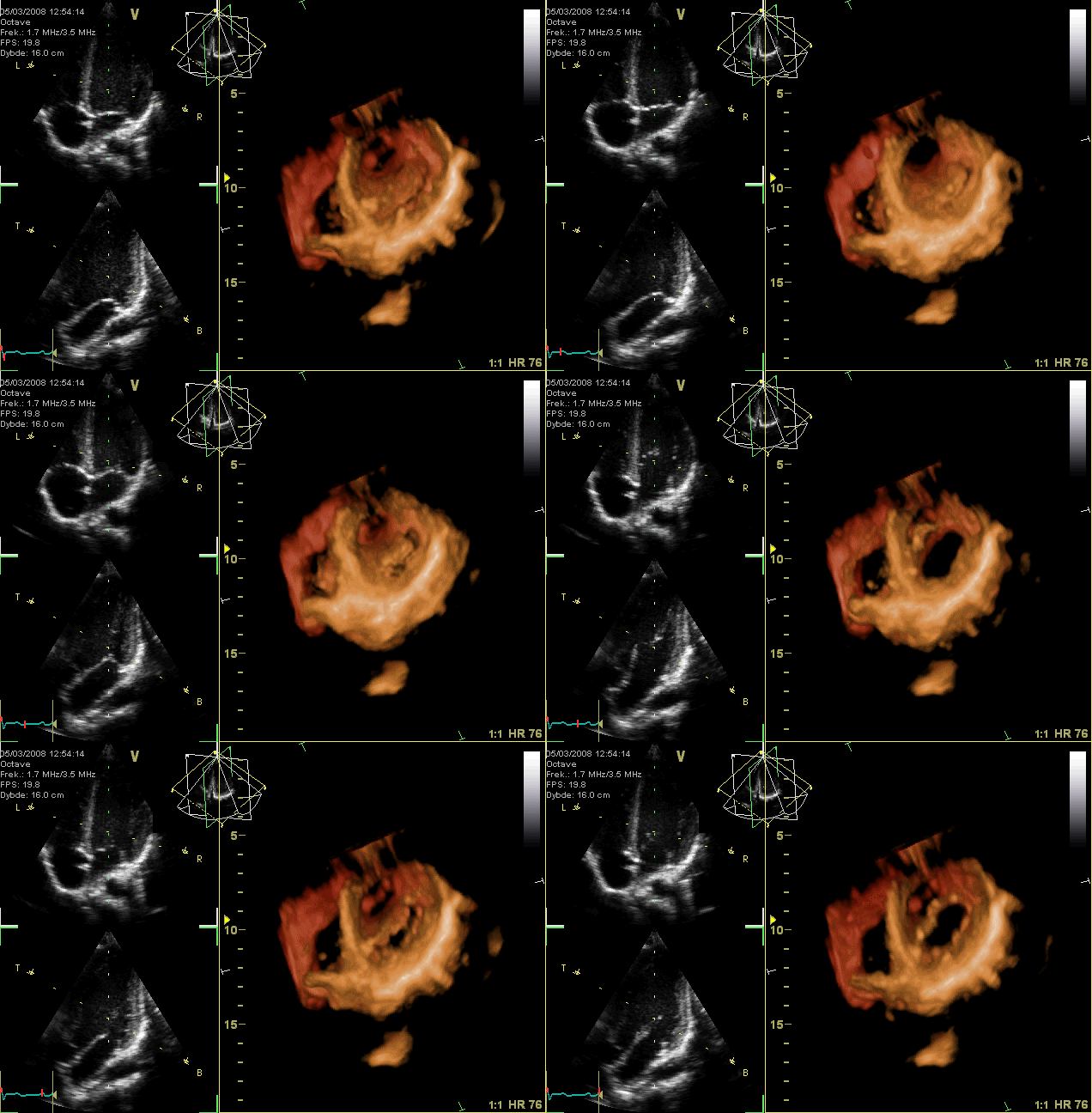
An echocardiogram of the heart
The shortness of breath just wasn't going away.

After years of being treated for persistent asthma, Dr. Smith (name changed) found his usual mix of inhalers and pills was no longer working.  Unable to comfortably sleep at night and finding he couldn't hustle as quickly up and down his clinic's hallways, he decided it was time to see the Disease Management Care Blog.  After a quick look and a listen to his heart and lungs, the DMCB tapped its heuristics and made a shortcut bet that this wasn't asthma.  The echocardiogram that was obtained that afternoon proved that it was right: Dr. Smith had heart failure.

Heart failure is the leading cause of hospitalizations in the elderly and is a huge cost to the U.S. health care system.  Therefore, if docs like the DMCB on an individual basis - or the U.S. on a health care policy basis - could prevent heart failure, that would be a big deal.

"Natriuretic Peptide–Based Screening and Collaborative Care for Heart Failure - The STOP-HF Randomized Trial" that was just reported in JAMA may be a step in that direction.

The DMCB explains.

First off, there is a hormone that is made by a stressed heart (yes, the human heart secretes hormones) called "naturetic peptide" (or NP) that signals the kidneys to excrete more salt and water. "BNP" is one type of naturetic peptide that can be detected using a simple blood test.

The STOP-HF trial set out to examine whether BNP levels could identify otherwise well-appearing persons with stressed hearts who were at future risk for the development of clinically evident heart failure.  By catching these persons early and getting them into treatment, the hope was that these patients wouldn't turn out like Dr. Smith.

39 practices in the catchment area of Dublin Ireland's St Vincent's Hospital referred patients who were older than 40 years and had one of the following cardiovascular risk factors: high blood pressure, high cholesterol, an obese body mass index, documented (by an angiogram or a known heart attack) coronary artery disease, history of stroke, peripheral vascular disease, diabetes, arrythmia or heart valve disease.  Persons with known heart failure were excluded from the study.

After entry into the study, patients had a BNP level drawn and were then referred to either a "control" (observation only) group or to an intervention group.

In the intervention group, patients with an elevated BNP level of 50 pg/ml or more were referred to a cardiology service and had a cardiac function study using echocardiography. In addition, any of the cardiovascular risk factors were aggressively managed with medications and a specialist nurse-coach.

In the control group, physicians and patient were not told about the BNP level and were cared for on a routine basis.  Patients were not referred for any cardiology care unless another reason supervened.

1374 patients were randomized, 697 in the intervention groups and 677 in the control group. High blood pressure was the most prevalent risk factor and most patients had two risk factors. 263 (38%) and 235 (35%), in the two groups respectively, had BNP levels greater than 50 pg/ml.  Average follow-up was 4.2 years and all patients eventually had an echocardiogram to assess their heart function

During follow-up, 8.9% of the control group patients and 5.3% of the intervention patients developed heart failure as determined by echocardiography.  That difference was statistically significant and was due to a higher level of treatment with drugs that help control risk factors and prevent heart failure. When the DMCB uses a number needed to treat analysis, the works out to 28 patients needing to be screened and treated for an elevated BNP to avoid one case of heart failure.  That's not bad, even if you compare it to aspirin and heart attacks.  There were also fewer emergency room visits and hospitalizations in the intervention group.

The DMCB's take:

1. This is classic population health management: This study was not only about using BNP to find patients at risk for heart failure, it was about relying on nurse coaches to manage the underlying clinical drivers, such as high blood pressure or underlying coronary artery disease.  If the DMCB suggests a better title for this article would have been "Population Health Management to Screen and Treat Patients with Elevated BNP at Risk for Heart Failure."

2. An appealing value proposition with a return on investment: Given a NNT of 28 and the future costs of heart failure, combined with statistically significant reductions in emergency room use and hospitalizations, the DMCB expects population health management service providers as well as medical homes to use BNP and non-physicians to screen and treat patients to prevent heart failure.

3. Still imperfect: Despite aggressive management by a specialized team, 5% of patients in the intervention groups went on to develop disease.  We have a ways to go. 

Image from Wikipedia

Monday, October 24, 2011

Another Reason Why There Was A Decline In U.S. Hospitalizations for Heart Failure

By now, many Disease Management Care Blog readers have become aware of this JAMA research study that used Medicare fee-for-service claims data to examine the nationwide rate of hospitalizations for chronic heart failure.  From 1998 to 2008, there was a counterintuitive 30% decline in the U.S. from a baseline rate of 2845 to a new rate of 2007 admissions per 100,000 person-years. 

The authors credit better care of heart attacks (damage from a heart attack to can lead to a flabby dilated heart), better prevention (such as more aggressive treatment of high blood pressure, which also causes heart damage) and a more "effective" medical system (such as better outpatient follow-up, use of alternate levels of care, flu shots prescriptions of ACE inhibitors and beta blocker medications).  The authors of the study think the numbers are remarkable because the U.S. population is getting older and healthier persons (without heart failure) seem to be signing up for managed care Medicare Advantage.

The DMCB is wondering about another possibility that has nothing to do with epidemiology or quality.  Rather, it could be the impact of Medicare payment rates on billing patterns.  After all, if heart failure is the leading Medicare inpatient diagnosis, shouldn't a decrease there have an impact on the overall hospitalization rate?

The DMCB explains:

When beneficiaries are discharged from a hospital, the bill (or the claim) submitted to Medicare is based on a "Diagnosis Related Group."  While the invention and logic of DRGs complicated, they're important because the principal diagnosis determines the amount of the global payment for that hospitalization. While this may be overly simplistic, a discharge with a diagnosis of "heart failure" prompts Medicare to pay a hospital "X" dollars, while a diagnosis of pneumonia or kidney failure will render payments of "Y" and "Z" dollars, respectively.  In general, the more complicated the diagnosis, the greater the payment.

All well and good, but suppose the hospital has a patient with several concurrent problems and has a choice on which DRG to use?  As anyone who has taken care of hospitalized patients knows, there are usually multiple diagnoses present in any patient at one time.  Pneumonia may or may not have provoked the heart attack that led to the kidney failure that led to the leg swelling and the shortness of breath.  Given three simultaneous diagnoses, Medicare billing guidelines state that the hospital should use their best judgement to determine which DRG to bill. All things being equal, smart hospitals will probably use the DRG that renders the greatest payment.

The DMCB isn't saying that fraudulent billing (for example) accounts for the decrease in heart failure hospitalizations for Medicare. However, it knows some diagnosis related groups can be less remunerative than others and that in the last ten years, DRG payment rates have evolved and that hospitals have learned how to "code" more accurately and aggressively.  Based on the example at the bottom of this page, the DMCB wonders if some patients that were diagnosed with heart failure in 1988 would have been diagnosed with something more remunerative in 2007. 

In other words, there may have been the same number of hospitalizations involving the same patients with the same disease burden.  It was the case mix that changed?

The authors of the study to their credit can't discount the possibility:  They argue that if coding had changed there would have been a shift in the mortality rate of patients with heart failure:

"We were unable to determine whether the observed changes were due to changes by hospitals in medical coding; however, substantial up-coding or down-coding would likely result in changes to the coefficients of the CMS HF mortality model, and these coefficients remained stable from 2005 to 2008."

The authors may have a point, but that assumes the modeling - also based on claims - is trustworthy.

Of course, there is no way, based on Medicare billing claims alone, to determine whether measurement also played a role in the decline in heart failure admissions.  That would take an audit of the medical records themselves.

Wednesday, November 17, 2010

Health Technology Is Not Sufficient When It Comes to Disease Management

The Disease Management Care Blog has always been suspicious of the health information technology (HIT) community's claims that their stand-alone and dehumanized robo-calls, passive monitoring systems, web-based learning offerings and computer-generated patient "messagings" are a population-based quality and cost panacea. While the DMCB may be old fashioned, it's always thought that HIT can add value and can be necessary but will never be completely sufficient. This HIT hubris contrasts with disease management programs, which package an array of high tech and high touch interventions into a mutually supporting whole that is greater than the sum of its parts.

Case in point is this study that was just published in the New England Journal of Medicine. Authored by Sarwat Chaudhry et al, the "Telemonitoring to Improve Heart Failure Outcomes Trial" (Tele-HF) randomly assigned recently discharged heart failure patients to one of two treatment arms: 1) an intervention group, that was asked to make daily call into a computer controlled system that generated an automated series of questions about health status, such as the presence of shortness of breath or fluid gain; if there was a decline, the patient's physician's office was alerted, or 2) usual care without any patient calls.

826 patients were in the telemonitoring arm and 827 were in the usual care arm. Over the 180 days following entry into the study, the number of readmissions, days in the hospital and death rates were compared. Since not all patients used the system as prescribed (14% didn't use the phone even once and toward the end of the study, about 55% were calling in at least three times a week), the analysis was correctly performed on an "intention to treat" basis.

There was no difference in outcomes. About 49% and 47% of the patients in the intervention and treatment arms, respectively, ended up being admitted. 27% of both arms were admitted for treatment of their heart failure. 11% of the patients in both arms died.

The DMCB is not surprised at the shortcoming of heart failure telemonitoring. Years ago, it agreed to implement a similar stand-alone program and came away very unimpressed. The DMCB thought that much more was needed, sch as nurse-based patient coaching, promulgation of evidence-based guidelines, identification and triage of patients with different levels of risk and facilitated access to an array of specialist and community-based programs.

In fact, the authors of the study would seem to agree with the DMCB. In the Discussion section of the paper, the DMCB found this very telling quote that couldn't have said it better:

In a previous, small, single-site trial of remote monitoring of patients, our group found a 44-percentage-point reduction in the rate of readmission, which was associated with significant cost savings. However, we were concerned that, in that trial, reliance on a single, highly skilled and motivated nurse case-manager who deployed an intervention developed by the investigative team limited the generalizability and scalability of the findings (bolding DMCB).

The DMCB says that's the point. Interventions like telemonitoring only add value when they are mixed with other population-based interventions, such as motivated nurse care coaches and coordinators.

However, the authors - as is generally typical of the mainstream academic community - also got it wrong. There is a sector of the health care industry that has figured out how to overcome the limited "generalizable and scalability" that is mentioned above.

It's called disease management. The DMCB thinks the failure to recognize that by not including that principle in the study design took an otherwise very promising intervention and made it look unnecessarily bad.

Patients with heart failure deserve better.

Sunday, November 14, 2010

The Aldosterone Antagonist Eplerenone in Populations with Heart Failure: Another Task for Disease Management Programs

After the Disease Management Care Blog read this New England Journal of Medicine report back in 1999, it began to prescribe the aldosterone antagonist "spironolactone" for its patients with low ejection fraction chronic heart failure. Aldosterone is one of many normal human hormones that increase in response to a struggling heart. High levels of aldosterone contribute to a downward spiral of additional heart damage and impaired blood flow.

Unhappily, some of the DMCB patients developed dangerously high blood potassium levels. At the same time, reports of that side effect began to appear, for example here and also discussed here. Convinced that this was another example of the gulf between notions of academic efficacy and real world clinic effectiveness, the DMCB decided to return to the basic principle of "first, do no harm." It dropped spironolactone from its heart failure tool box.

With time, however, other reports like this began to appear, suggesting that if physicians were careful, spironolactone was still a good option. What's more, recommendations in favor of spironolactone appeared in the American Heart Association guidelines for the treatment of heart failure:

Recommendations Concerning Aldosterone Antagonists. The addition of low-dose aldosterone antagonists is recommended in carefully selected patients...based on the strong data demonstrating reduced death and rehospitalization in 2 clinical trial populations... For both of these major trials, patients were excluded for a serum creatinine level in excess of 2.5 mg per dL, but few patients were actually enrolled with serum creatinine levels over 1.5 mg per dL.... The average serum creatinine of enrolled patients was 1.1 mg per dL, above which there was no demonstrable benefit for survival. To minimize the risk of life-threatening hyperkalemia... patients should have initial serum creatinine less than 2.0 to 2.5 mg per dL without recent worsening and serum potassium less than 5.0 (page 1987).

And now the results from this huge international multi-site study have just been released. Over 2700 patients with heart failure who were already on aggressive state-of-the-art treatment for their heart failure were randomly assigned to another aldosterone antagonist called "eplerenone" or placebo. After 21 months, there was an absolute 7 % risk reduction for the combined end points along with statistically significant drops in deaths and hospitalizations. According to the accompanying editorial, the number-needed-to-treat (NNT) is an impressive 19. As expected, there were an increased number of patients who developed potentially dangerous increases in potassium levels in the treatment (11.8%) group vs. the placebo group 7.2%), but compared to the survival benefit, it seemed worth it.

This is noteworthy publication for the science of population health/disease management community. This report gives reason to advocate for the use of "aldosterone antagonists" in populations defined by the presence of dilated cardiomyopathy/low ejection fraction heart failure. Patients should be alerted about this treatment option, helped to understand it's risks, benefits and alternatives and coached to ask their docs about this. Since changes in kidney function can lead to high potassium levels, physicians in the real world may be understandably reluctant to start this therapy. Disease management can help by providing an important extra margin of safety by helping to make sure that patients have as well as keep any and all scheduled laboratory testing appointments. If the disease management program can get the lab test results, it can work with the physician to contact the patient to stop the medicine if there are any problems.

Tuesday, August 18, 2009

Heart Failure: JAMA Helps Us Understand Counting Measures and Measuring What Counts. Implications for CMS and Disease Management

Most population-based care afficionados will recognize these: measuring left sided heart function if there is a diagnosis of heart failure, using angiotensin converting enzyme inhibitors (ACEi) drugs among patients with low left-sided heart function, providing complete diagnosis-specific patient discharge instructions and giving tobacco cessation counseling when needed. That's right, these are the four state-of-the-art performance measures used by Medicare and the Joint Commission (thanks to recommendations from the National Quality Forum or NQF) to assess the quality of care for recently discharged patients with chronic heart failure.

JAMA has published (Aug 19, 2007;302(7):792) an important article on lingering quality-improvement disconnect between what is measured and what matters. Titled 'Heart failure performance measures and outcomes. Real or illusory gains' Drs. Gregg Fonarow and Eric Peterson of UCLA and Duke, respectively, point to the persistent gap between the gains in all four of the areas mentioned above versus the stubborn and persistently flat U.S. heart failure 30-day rehospitalization (about 20%) and one year mortality rates (close to 40%) over the last five years.

What is going on? The authors point out that the patients themselves may have changed: better care may have led to a relatively higher percent of sicker patients being left among those who make up the statistics in the latter part of the measure periods. Alternatively, the hospitals that are reporting these statistics may simply be doing a better job of documenting care that was really being given all along. Finally, the processes themselves may have limited impact. After all, only ACEi's have been definitively shown to slow the progression of heart failure.

It turns out that CMS is already looking at measures that matter, like readmission and mortality rates. Drs. Fonarow and Peterson point out that's a step in the right direction, but also suggest that future quality metrics should be linked to 'outcomes of interest' like tobacco cessation rates (not counseling), better statistical risk adjustment, developing registries that go beyond simple administrative claims and working with independent physicians and hospitals to create better buy-in.

This has implications for CMS' recent self-congratulations over the updated results from the MCMP and PGP demonstrations. The DMCB notes the demos included additional measures that could have accounted for the improvements, such as flu shots and use of beta blockers. On the other hand, much of what CMS is up to is still heavily laden with process instead of outcome measures. What's more, how well CMS can translate their promising successes among voluntary organized systems into the mainstream of its FFS payment environment remains to be seen.

Finally, there are important implications for other stakeholders in population-based management. The physicians from UCLA and Duke should know better and think about the track record of disease management in managing heart failure, including its endorsement by the American College of Cardiology/American Heart Association (check out p. e448) and its wide use by the participants in the very demos named above. Furthermore, they need to consider the emerging role of the medical home in better coordinating care once patients get discharged. These two (and soon to be one says the DMCB) systems of care may be just the ticket that pulls together all the resources it takes to reduce re-hospitalizations and decrease mortality rates. They can credibly apply their information technology, EHRs, registries and richer data bases to measure the progress really matters.

The DMCB thinks the population-based care approaches have a much better chance of success than a bureaucracy like CMS, no matter how much they read JAMA or try to follow the author's well-intentioned recommendations.

Wednesday, April 8, 2009

Should Patients with Heart Failure Receive Exercise Therapy? Implications for Disease Management Organizations with Heart Failure Programs

O’Conner and colleagues asked that question in an April 8 JAMA article titled “Efficacy and safety of exercise training in patients with chronic heart failure.’ You’d think exercise is good, because it increases stamina, promotes well being and should decrease the likelihood of the heart getting worse.

Maybe, maybe not.

The Disease Management Care Blog is going to share its four conclusions first. Readers who find them interesting may want to read the rest of this lengthy post. Even if you don’t want to read all of this, the conclusions alone should enable you to confidently quote from JAMA on an important issue in disease management - to the amazement of your colleagues and boss. That's because you regularly read the DMCB:

1. Among this ambulatory population with chronic heart failure, the overall event rate was striking: over the 30 months, there was a 15% mortality rate and about 2/3 ended up dying or being hospitalized. Chronic heart failure is a bad disease.

2. If a population of patients with a mean age of 59 years and on maximal medical therapy is assigned exercise, a simple assessment of utilization (hospitalizations, ER visits and the like) won’t show any impact. Your fees will be at risk.

3. This paper suggests baseline exercise tolerance, the level of heart function, mood, history of atrial rhythm problems and the cause of heart failure can have an impact on outcomes. Predictive modeling keying on these factors may be necessary to identify patients with a clinical profile that suggests exercise therapy is helpful. Good luck trying to convince your customers after the fact that these clinical factors helped or hindered your results. Adjusting for co-variates after the fact is a luxury for the academics, not you.

4. Even if the disease management organization does everything right in the promotion of exercise for persons with heart failure, the impact won’t be seen for about 2 years. A single year reconciliation may miss the impact of exercise in this population.

Recall ‘chronic heart failure’ typically describes a condition in which the heart muscle is weak and the heart chambers dilate. Interestingly, ‘forward’ (or downstream) flow (into the arteries of the body) is preserved. It’s ‘behind’ (or upstream) where the blood flow dams up. This leads to fluid retention (swollen legs) and shortness of breath (from fluid buildup in the lungs). Think of that sump pump downstairs: as that begins to fail, the hose leading outside still has lots of flow. It’s the basement that’s filling up with water.

This 82 site study randomized 2331 patients with weakened hearts to either 1) usual care with advice to exercise or 2) three supervised 15-35 minute group sessions of walking, treadmill or stationary cycling per week for a total of 36 sessions (over 3 months) aimed at getting to 70% of maximum heart rate. The duration was increased over the next 4-6 months and then slightly decreased with an ultimate target of continuing to exercise for a total of 120 minutes per week. The average age was 59 years, 40% were non-white and the median ejection fraction (a test of just how flabby the heart is) was 25% (compared to the normal measure of more than 50%, that’s low).

Key results?

All cause mortality 17% (usual care or EC) vs. 16% (exercise group or EG). Not statistically significantly different (NS).

All cause mortality or being hospitalized 68% (UC) vs. 65% (EG), not significant (NS).

All cause mortality or being hospitalized or having an emergency room visit or urgent clinic visit for heart failure problems 77% (UC) vs. 76% (EG), not significant (NS).

Cardiovascular mortality of hospitalization: 58% (UC) vs. 55% (EG), not significant (NS)

The Disease Management Care Blog was ready to conclude that heart failure exercise was destined for the comparative effectiveness research dumpster. Then it ran into this statement:

“Four baseline characteristics (duration of the… [baseline] exercise test, ventricular ejection fraction, Beck Depression… score and history of atrial fibrillation or flutter) were identified as highly prognostic. After adjusting for these covariates and heart failure etiology, exercise training was found to reduce the incidence of all-cause mortality or hospitalization by 11%.”

This 11% effect (by looking at the figures) was not readily apparent for about two years.

Huh? The DMCB recalls that this study involved randomization. That’s supposed to assure that all the conditions that might favor one group over the other are evenly distributed. If the baseline prevalence of exercise tolerance, heart function, mood, atrial rhythm disturbances and heart failure cause were the same in both groups (and it looks like they were), why would the authors make this statement?

The answer is because adjusting for covariates in randomized trials is not unusual . The ‘adjustment’ is a statistical approach that helps neutralize the persistent impact of these factors once the trial is concluded. As their impact was dampened, the difference in all cause mortality and hospitalization became more apparent.

Monday, May 19, 2008

Read the Disease Management Blog and Keep Up with the Peer-Reviewed Literature on Diabetes and Chronic Heart Failure

Holmes AM, Ackermann RD, Zillich AJ, Katz BP, Downs SM, Inui TS: The net fiscal impact of a chronic disease management program: Indiana Medicaid. Health Affairs 2008;27(3):855-64

The Disease Management Care Blog would expect nothing less than a prospective randomized trial on disease management from one of the Gods of General Internal Medicine. Thomas S Inui is among the authors of such a study recently published in Health Affairs. His prodigious biosketch can be found here. Note that he is a former President of the very academic Society of General Internal Medicine (SGIM), which has been curiously mute on the exciting and controversial developments in real world population-based health care. More on this in a future blog.

But let’s turn our attention to the study at hand. It was about the economic impact on disease management (DM) in an Indiana Medicaid population. Indiana has been looking at the role of DM for quite awhile. As patients were randomly enrolled in the program, they were followed over time and compared to patients who had not yet been enrolled, otherwise known as a staggered implementation. Over 800 persons with either diabetes or chronic heart failure were studied with an average of 21 months’ worth of data. Cost of the program (excluding start up) ranged from about $20 per member per month (PMPM) for telephonic care up to about $57 PMPM for nurse care management. High risk persons were assigned to the nurse care management, while low risk patients were assigned to telephonic care.

AmeriChoice ran the call center. The Indiana Primary Health Care Association provided the nurse care management

For CHF:

High risk PMPM savings vs. controls: $150 – not statistically significant

Low risk PMPM savings: $247 – statistically significant

For Diabetes:

High risk PMPM savings: - $144 (more expensive in the intervention group) not statistically significant

Low risk PMPM savings: $3.80 – not statistically significant

The authors concluded that disease management was cost saving for the low risk heart failure group. They were unable to show savings in the high risk heart failure group or in either group with diabetes.

What does the DMCB think?

Once again, it’s possible to do credible research outside of research settings.

What’s true in Medicaid doesn’t necessarily apply to populations with other types of insurance. For example, a similar study in a commercial population showed diabetes disease management was associated with savings, while in an integrated delivery system, low risk heart failure disease management seemed to not result in savings. Go figure.

In their discussion, the authors expressed surprise that there were savings for low risk persons with CHF. For the DMCB, that’s still not that counterintuitive. Moderate amounts of disease may be more amenable to intervention. Persons with mild disease will do well no matter what you do, while those with advanced disease will have problems despite the best of care.

The authors also noted that the baseline characteristics of the control and intervention patients were imperfectly matched, which could have skewed the results. It’s also possible that higher numbers of participants may have achieved statistical significance. The DMCB also wonders if the protocols used to identify the 'high risk' versus 'low risk' patients could have been responsible or if the nurse protocols to manage the high risk heart failure patients or the diabetes patients weren’t up to snuff.

Wednesday, May 7, 2008

Healthways and CMS Shakes Hands. Is a Phase II Next?

Healthways and CMS have signed an "Amendment" which 'changes the financial performance target for both its Initial Cohort and Refresh Cohort to budget neutrality from 5.0% net savings and 2.5% net savings, respectively.' The Disease Management Care Blog checked the CMS web site for more info. Finding none, it listened in on a recording of the May 6 Healthways Investor Relations web cast.

As the DMCB understands it, a new analysis of a 'refresh cohort' consisting of approximately 4000 enrollees with just chronic heart failure shows the company is within reach of achieving budget neutrality. They feel it is possible that in the remaining months, they can demonstrate an additional $3-$4 hundred thousand in savings and get from 93% of fees to 100%. If they reach it, they note that the original legislation requires the Secretary of HHS to launch Phase II because (and this was read out loud during the call):

"With respect to chronic care improvement programs conducted under subsection (b), if the Secretary finds that the results of the independent evaluation conducted under subsection (b)(6) indicate that the conditions specified in paragraph (2) have been met by a program (or components of such program), the Secretary shall enter into agreements consistent with subsection (f) to expand the implementation of the program (or components) to additional geographic areas not covered under the program as conducted under subsection (b), which may include the implementation of the program on a national basis.

special emphasis on 'a program' not all programs.

Because of the budget neutrality agreement, Healthways has been able to recognize $5.2 million of revenue that was otherwise tied up in its Medicare Health Support pilot. Guess what they are doing with this money? Instead of letting it flow into the company's bottom line, they are using it to disperse bonuses to the 'colleague' employees who are working in the MHS Program.

Does anyone have any doubt that the colleagues are going to work hard in the coming months to achieve the neutrality? Einstein has been quoted as saying the two most powerful forces in the Universe are gravity and compounding interest. From previous experience, the DMCB knows a 3rd force is nurses. It also knows of all the chronic illnesses, heart failure is probably the most amenable to efforts to decrease inpatient utilization.

Wednesday, February 13, 2008

Commentary on Heart Failure & the Medical Home, plus News about Healthways and the Merits of Carve-In-Out-Outs

"Ruh roh," thought the Disease Management Blog, "another negative disease management program report." Grimly steeling himself, he traced down the reference. Its Jaarsma et al: Effect of moderate or intensive disease management program on outcome [sic] in patients with heart failure. Arch Intern Med 2008;168(3):316-324. The entire article is available for viewing (thanks, Archives!)

Over a thousand persons discharged from a hospital with chronic heart failure (HF) were randomly assigned to one of three groups: usual care, basic support (additional outpatient visits with a specialist nurse) or intensive support (visits plus weekly telephone calls, home visits, support from other non-physicians). About 50% were NYHA II and the other 50% were III or IV. During the 18 months of prospective follow-up, there was no statistically significant difference in death rates or hospitalizations across the three groups.

What should readers be aware of?

In the 3rd paragraph of their own published "Comment" about their data, the authors point out that there are two explanations for their negative study: either the intervention didn't work, or the comparison control group did much better than expected. The authors explicitly noted that the surprisingly good control group data "in particular may have an important role." Note that the all of the study subjects received intense coordination from cardiologists in Heart Failure Clinics. Adding a "disease management" program to that mix did little.

The Disease Management Blog also notes this study was conducted in The Netherlands. Issues of culture, access to care and the scope of the insurance benefit make generalizing these results to the U.S. doubtful. Just because it doesn't work across the pond doesn't mean it won't work here.

But, there are two other thoughts I'd like to offer, one methodological and the other about the true nature of the study.

There seemed to be lots of patients with NYHA Class IV disease in this study. Class IV is a sick group and many physicians will tell you that individuals with this burden of disease are extremely fragile and very prone not only to exacerbations of their heart failure but are highly vulnerable thanks to other co-morbidities. They are destined to be high cost no matter what is done. Accordingly, I doubt if usual disease management interventions directed at this segment of a heart failure population are able to garner much of a "return on investment" in mortality rates, hospitalizations, quality of life or claims expense. The same may be true at the other end of the spectrum of disease, where it is not unusual for patients with very mild heart failure to do well for years at a time. The types of interventions described in this article will only "bend the trend" in the mid-spectrum of disease. That's the point of my crudely constructed image.

While I wish I could take credit for this insight about the spectrum of disease, it belongs to Ed Wagner, thanks to his 2004 Annals article.

From a methodological standpoint, the authors were destined to have trouble demonstrating any impact from basic or intensive support because the patient population wasn't ideal: it included patients who were destined to do very well and patients who were destined to do very poorly in all three treatment arms.

Last but not least, who says this was "disease management?" While it meets the commonly held view of a "typical" disease management program, this was really a physician-owned program in a network of hospital-based specialist clinics using an approach much more akin to the Medical Home. Too bad the authors didn't substitute those two words in the title in lieu of "disease management." Now THAT would have been interesting and probably generated a lot more media attention.

And speaking of disease management, some additional bad news for Healthways. The disease management blog recalls the happier times described in this article in Managed Care Magazine. Nothing like an activist State Attorney General to rain on the parade of a state-of-the-art program, even if Minnesota Blue Cross Blue Shield had compelling data showing a beneficial impact on claims expense that was in excess of the high fees. No matter: the AG was on a search and destroy mission thanks to BCBS' other questionable uses of their enrollees' hard earned premium dollars.

Note that this health plan is considering bringing its disease management programs "in-house," not abandon them. They seem to still believe in the concept, and so do the health care analysts quoted in the bad news article linked above. As for going in-house, the disease management blog wishes them good luck. I believe that while there are some good reasons to do that, cost isn't one of them. The ultimate cost of well run "carve in" programs are not that different from the "carve outs." Instead, you get (or rather, the enrollees get) what you pay for.

Instead, I believe the real opportunities for savings in population care will turn out to be blended approaches that use the best of both "carve in and out." The well run disease management organizations are so good at what they do and are unmatched in their delivery of high value, industrial strength, telephonic-based patient engagement. For many patients with some conditions at some stages of disease, that may a perfect intervention.

On the other hand, health insurers may be better able to marshal the kind of local resources necessary for high touch care coordination and case management. For other patients (especially those outside of the Netherlands and without NYHA Class IV heart failure), that may be the perfect intervention. Even better, Health Plans could stand aside and carve this function out ("carve out and out") to the real "on-the-ground"experts in a network of Medical Homes.

The disease management blog suspects the "vendors" understand the potential of "carve out and outs" and are keenly interested in figuring out how meaningfully integrate their telephonic-based programs with the physician community's Medical Home approach. For more on pros and cons of that interesting vision, check out 1) what Vince Kuraitis has to say about the complimentary potential of Medical Homes and disease management and 2) what the DMAA has to say about it.