Showing posts with label Medical Homes. Show all posts

Tuesday, March 25, 2014

More JAMA Drama: The Medical Home Reduces Costs, But Only For High Risk Patients

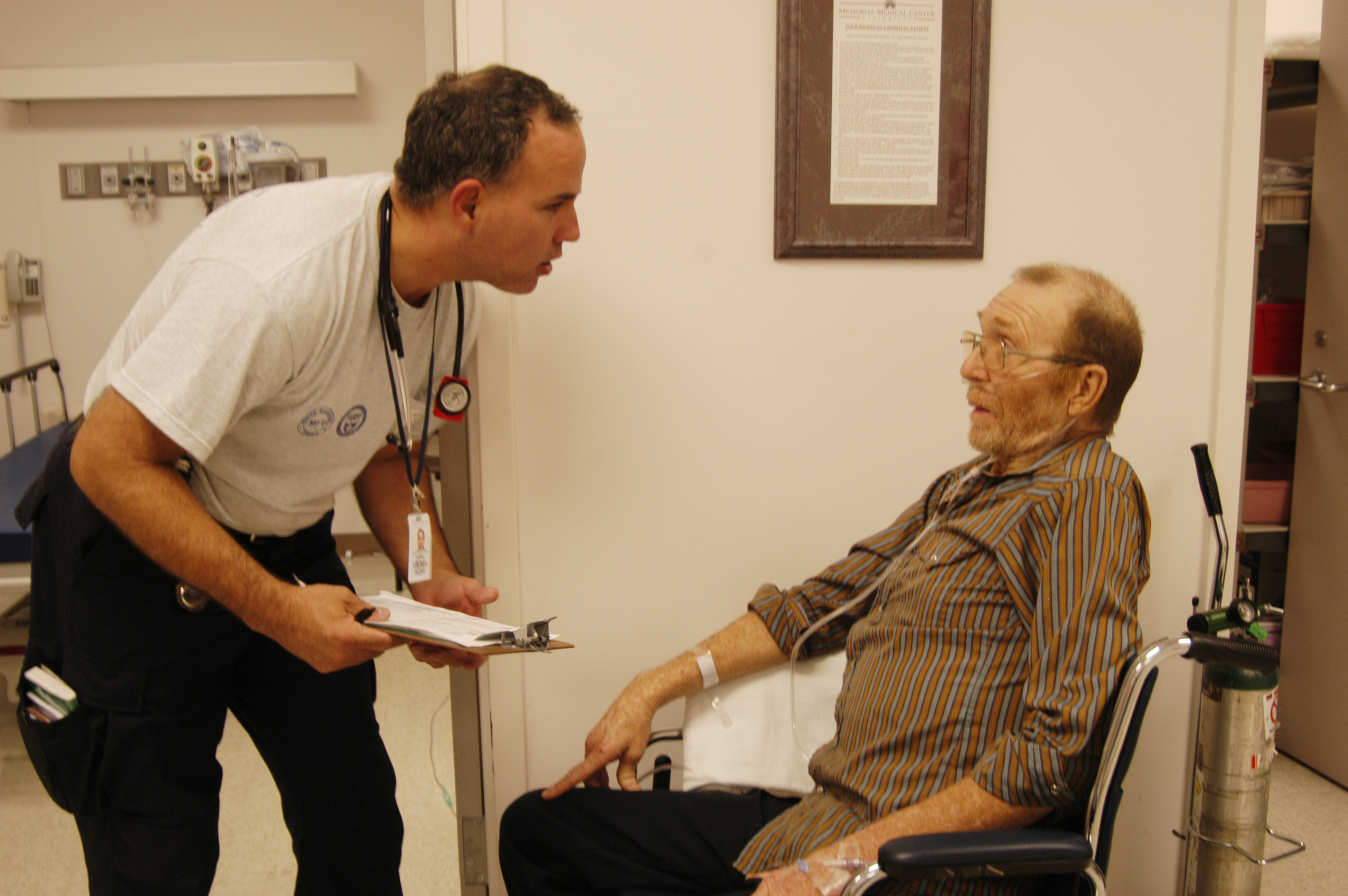
A medical home
candidate?
Just when the Population Health Blog decided to take a break from all the JAMA drama, along comes this study "Medical Homes and Cost and Utilization Among High-Risk Patients" that was just published in American Journal of Managed Care (AJMC).

It cannot resist.

As readers will recall, the offending JAMA article described how a large three year-long Patient Centered Medical Home (PCMH) multi-payer pilot involving approximately 64,000 patients failed to reduce health care costs or increase quality. The pilot program was called the "Chronic Care Initiative" (CCI), and was the brainchild of then Governor Rendell's reform-minded "Prescription for Pennsylvania."

In the AMJC study, 6940 "intervention" patients with a) at least 3 months of primary care physician follow-up, plus b) at least 6 months of assignment to one of the medical home practices were retrospectively compared to 6940 similar "control" patients from a single non-participating practice. The control patients were matched using "DxCG" risk adjustment software* that was combined with propensity matching.

Pediatric practices were excluded, as were outlier patients with more than $100,000 in medical expenses.

In addition to looking at those patients, the top 10% of risk DxCG patients from the medical home (654 patients) were compared to matched high-risk non-medical home practices (734 patients). 

The analysis was complicated by the later attainment of NCQA medical home recognition among some clinics that were taking some of the control patients.  This limited the pool of patients in the 3rd year to just over a thousand in both arms, and just over 100 patients in the high risk groups.

Results?

There was no difference in the evolution of health care costs among all patients included in the analysis.  This confirmed the JAMA drama.

But......

For the top 10% high-risk patients, there were reductions of 61, 48 and 94 hospitalizations per thousand over each of the three years study. This was accompanied by a difference of the per member per month (PMPM) inpatient costs of $115 and $62 in years 1 and 2.  While there was also an increase in outpatient specialist visits, the downward change in inpatient utilization drove the difference in combined overall costs in years 1 and 2 of $107 and $75 PMPM. 

All these differences were statistically significant.  The 3rd year was not because there were too few patients to achieve statistical significance.

While the study was retrospective, the matching methodology is credible enough for the peer reviewers of AJMC and for the PHB. Using control patients from just one clinic is problematic, but no study is perfect. 

Which brings us to the punchlines:

1. Two years ago, the prescient Population Health Blog described how modern Ver. 2.0 "disease" (better described as "population") health management can financially succeed.  It said that one key ingredient is risk segmenting the population and targeting services at the highest risk patients. This AJMC article says it was right.  Most patients won't benefit, but vulnerable patients will.  They are the PCMH's customer.

2. The AMJC article also comports with an accompanying JAMA editorial that is discussed here.  As the PHB quoted, the JAMA drama....

".... has done a great service for the advocates of the Patient Centered Medical Home by effectively ending promotion of this care model as a generic, low-level, unselective approach to health care delivery for all.  The next critical phase of PCMH development should focus on its strategic deployment for the care of high-utilization patients...."

* This uses "linear additive formulas obtained from ordinary least squares regression to combine expenses associated with clinical groups and demographic factors to generate predictions." Wasn't that easy?

Wednesday, March 19, 2014

A Generic Keyword "Pitch" to Better Sell the Medical Home

Applause!
While the just concluded 2014 Medical Home Summit was a wonderful learning and networking confab, it did have it's moments of jargon-laced salesmanship.

Think mixing two parts suspect data with one part dubious claims and a helping of preordained conclusions, bake with PowerPoint and serve to a fawning audience with a garnish of sweeping generalizations. And the dessert?  Applause.

Naturally, some of the Population Health Blog's evidence-based colleagues fussed over the occasional spills of snake oil. The PHB isn't at all concerned, because it was taught years ago by the old disease management industry that even the most pristine research in the most elite journals gets spun.

And let's face it: we collectively crossed that Rubicon when the Mr. Obama sold us a health insurance reform program that promised we could keep our doctors.

Since we all gotta make a living, the PHB is pleased to offer a free service to its more honest, non-for-profit and spin-challenged colleagues. It has combined its trove of disease management nostrums with a list of medical home keywords (underlined) that appeared in many of the Summit's presentations and huckstered over cheese and wine during the Exhibit Hall receptions:

Our (insert name of your medical home program) is a transformative and population-based initiative that shifts health care delivery from volume to value that proves that that JAMA article (link here) was wrong. Our transparency is only matched by our EHR registry and teaming of physicians, nurse practitioners, social workers, office staff, clerks, temps and janitorial service workers and we (pick one: have been, will be or should be) the subject of a (pick one: grant or report) by (pick one or more: PCPCC, the Commonwealth Fund, AHRQ, Medical Home News) that further shows why JAMA was woefully mistaken.

By proactively focusing on impactful care coordination and reducing care gaps, engagement of both patients and primary care providers drives triple-aim outcomes that include (insert percent numbers here without p values), which further demonstrates the JAMA article is a despicable outlier.

Our savings, enhanced clinical outcomes, decreases in readmissions, improved patient care experience and betterment of the community show that (name of medical home program) is foundational to the success of accountable care, which is why JAMA sucks.

As a result, we conclude that (pick one or more: politicians, employers) (pick one: wisely have or definitely should) require commercial and government insurers to pay (pick one or more: millions, specialists less, or through the nose) to save primary care despite what JAMA says.

Tuesday, March 11, 2014

Smart MedPAC Wonks Think Out Loud About the Medical Home

If you spend a lot of time building, administering, expanding, marketing, promoting or networking "medical homes," it might be a good idea for you to read this MedPAC meeting transcript.

As Population Health Blog readers know, the Medicare Payment Advisory Commission advises Congress on how to best run Medicare, which includes the thorny issue of how to pay physicians who care for Medicare beneficiaries. During their March 6 meeting, the Commissioners discussed how to replace the primary care bonus program that is set to expire at the end of 2015.

By the way: The 10% bonus in 2012 amounted to $664 million for approximately 200,000 providers caring for 21 million beneficiaries.  That means, thanks to Uncle Sam, average participating docs got another $3400 in yearly income.  For PHB readers who are familiar with the per-member-per-month metric, that amounts to $2.60 PMPM.  As of 2014, there is still no hard information on whether the bonus resulted in any improvement in access, quality or outcomes.  In fact, despite the bonus, there is preliminary data that 28% of Medicare beneficiaries have had trouble finding a primary care provider.

As the PHB understands it, the bonus program was funded with additional fee-for-service money for primary care services.  Since that's going away at the end of next year, the Commission considered whether to continue it as is, or to reengineer it as a medical home payment system.

The transcript on whether to pay for medical homes reflects a wandering discussion with no final consensus. That being said, there were some interesting takeaways from a group of policy wonks who've spent a lot of time thinking about this approach to care:

Budget Neutral Bad News: While you may argue that the medical home "saves money" in excess of the fees used to pay for it, no one at MedPAC believes the additional funding will continue.  That means the $664 million after 2015 will likely have to come from budget-neutral reductions in payments for other medical services.  In zero-sum terms, that means someone (specialists?) has to lose in order for the medical home to win.

Definition: While there was admiration for the National Committee on Quality Assurance recognition program for medical homes, Commission members wondered whether that recognition translates into value. Would a "leaner" model be more cost effective?  And, if Medicare favored a non-NCQA leaner medical home structure, how would it be implemented?  It providers had to apply for it, should they subject to an audit?

Attribution: Figuring out which doc among several should be paid for medical home services isn't easy.  There was little appetite for having beneficiaries sign an attestation, while a claims analysis would have to be done using a "look-back" based on Medicare billing patterns.  That would result in a one year payment delay.

Whither Primary Care: There was doubt that an additional income stream of $2.60 PMPM would be enough to incent medical students to shun higher paying specialty careers.

Generalizability: There was some doubt on whether the medical home works outside of integrated delivery settings. 

More Bad News On The Way?: One Commissioner also works as an editor at a top tier medical journal, and he hinted that more negative manuscripts on the medical home are being submitted for publication.

What Wasn't Said: The Population Health Blog was surprised that MedPAC did not address:

1) the concept that the medical home should be directed at a subpopulation of patients most likely to benefit (raised in this "one size does not fit all" editorial), or

2) that getting the Medicare bureaucracy to introduce a new complex payment mechanism may be far more easier said than done (and that's according to White House insider Dr. Emanuel)


Wednesday, February 26, 2014

More on the Failure of a Huge Medical Home Initiative to Reduce Health Care Costs

Getting the medical home back on the road
In this JAMA editorial, Thomas Schwenk agrees with the Disease Management/ Population Health Blog that the recent negative report on the medical home may have been the result of the lack of any risk stratification.

Recall that this negative report, Association Between Participation in a Multipayer Medical Home intervention and changes in Quality, Utilization and Costs of Care, compared three years' worth of clinical and economic outcomes for 32 community-based medical home clinics vs. those from 29 similar non-medical home clinics.  Claims expense, ER visit frequency, hospitalization rates and 10 out of 11 HEDIS measures were no different between the two groups.

He points out that this study....

.... has done a great service for the advocates of the Patient Centered Medical Home by effectively ending promotion of this care model as a generic, low-level, unselective approach to health care delivery for all.  The next critical phase of PCMH development should focus on its strategic deployment for the care of high-utilization patients...."

The DMCB couldn't have said it better.  The medical home should be "aimed" at patients who are most likely to benefit.

Upon further reflection, it would add two other comments:

1. Another under-recognized feature of successful population health systems is the central administration (and employment) of the non-physician care managers who are peripherally distributed throughout the primary care network.  Here's one example as well as another that suggests the central model has a better track record.

In other words, this study showed multiple independently functioning "stand-alone" medical homes is equal to the sum of its parts.

2. The study also, by the way, calls into question the return on investment of achieving NCQA Medical Home recognition.  While it's possible that it's ultimately necessary, it would appear that just having it doesn't mean a health system will save money or improve quality.

Image from Wikipedia

Tuesday, February 25, 2014

A Huge Medical Home Pilot Fails: the Pennsylvania Chronic Care Initiative

Back in 2007, Pennsylvania Governor Ed Rendell created the "Chronic Care Management Reimbursement and Cost Reduction Commission."  Months later, the Commission presented its strategic plan to the Governor, which then led to the Pennsylvania Chronic Care Initiative (PACCI). The "Rx for PA" was launched, promoting the medical home as a means of increasing quality and lowering costs for Pennsylvanians with diabetes and pediatric asthma.

The Commission recognized that one of the problems with the medical home was that not all health insurers covered its services the same way.  That left the primary care practices with the dilemma of having to offer different services to different patients depending on insurance status.  As only big Ed Rendell could do in his "discussions" with the Commonwealth's health insurers, the PACCI "leveled" the playing field by getting Medicaid and the dominant Pennsylvania health insurers to similarly "cover" the medical home. This minimized - outside of Medicare - the impact of multiple insurers with different benefit and coverage standards.

The PACCI was a statewide, multipayer medical home pilot that was started in southeast portion of the state.  It started in June of 2008 involved six health plans (3 commercial and 3 Medicaid) that agreed to give NCQA-recognized clinics additional yearly practice support payments and other bonuses.

Three years later, 32 out of 34 of the originally selected southeast Pennsylvania practices completed the pilot, of which 6 were independently managed by nurse practitioners; at the end, about half had achieved high "Level 3: NCQA status. 

The PACCI clinics and their approximately 64,000 patients were compared to a parallel group of 29 comparison practices that were similar in size, specialty and patient mix; they had approximately 56,000 patients.  Of the six health plans, only four could supply claims data that went back to 2007.

Results?  The article is here, but the short version is as follows:

Using 2007 as the baseline, there was no difference in any change in hospitalization rates, ED visit rates, primary care visits, visits to specialists or overall costs of care. In fact, the medical home clinics had MORE "ambulatory sensitive" hospitalizations. 

Ouch.

Of 11 HEDIS® quality measures (blood sugar testing and control, cholesterol testing and control, monitoring for kidney or eye disease in diabetes, childhood asthma treatment, plus the health maintenance chlamydia screening and breast, cervical and colon cancer testing) only the kidney monitoring was statistically significantly improved compared to the non-pilot clinic populations.

Double ouch.

The DMCB's take:

This is bad news for the medical home community. While the methodology is not pristine (the clinics were not randomly assigned, opening the possibility of bias and some of the data were not available), this is a real world study that should have detected some cost savings or quality improvement. Instead, none were found. 

The DMCB and AHRQ have worried about this before, but the DMCB remains open minded:

Medical home is necessary but not sufficient? The authors points out that there were no other economic incentives to reduce costs and that there was no feedback on performance.  The DMCB agrees that had the practices known which patients were at greatest risk, they might have been able to better target their services.  In other words, medical homes may be more likely to succeed if they are paired with predictive modeling to proactively identify and intervene on their patients who were most likely to have ambulatory-sensitive hospitalizations

Not really "all payer." As the DMCB understands it, Medicare was not a participant in PACCI, and its failure to cover medical home services could have repressed its complete adoption throughout the practice.  Small wonder, since Medicare can account for half of a doctor's income.

Generalizability to small physician-owned practices? Medical homes arguably work in "closed" integrated or Medicaid care systems.  It may be that the sum of smaller independent practices is equal to all its uncoordinated parts.

Nurse practitioners? It sure would be nice to know how the nurse practitioner-led PACCI practices fared vs. physicians.

Image from Wikipedia

Monday, July 22, 2013

Inconvenient Facts Get In the Way: Blue Cross Blue Shield of Michigan's Patient Centered Medical Home (PCMH) Program Savings Claims Are Not Based on Statistical Significance

Welcome to your medical home!
The Patient Centered Primary Care Collaborative announced:

"Blue Cross Blue Shield of Michigan saved an estimated $155 million in preventative claim costs over the first three years of its Patient Centered Medical Home program, based on calculations made from an analysis published this month in the Health Services Research Journal".

According to the Blue Cross Blue Shield of Michigan web site:

"'Blue Cross’ Patient-Centered Medical Home is transforming health care delivery, saving millions of dollars and improving lives,' said Daniel J. Loepp, president and CEO of Blue Cross Blue Shield of Michigan."

HIT Consultant's insightful coverage of healthcare innovation said:

"According to the analysis, 'Partial and Incremental PCMH Practice Transformation: Implications for Quality and Costs,' researchers found that its Patient Centered Medical Home model, when fully implemented, resulted in:
  • 3.5 percent higher quality measure
  • 5.1 percent higher preventive care measure
  • $26.37 lower per member per month medical cost for adults"
"Whoa!" said the Disease Management Care Blog. Since $155 million from $300 per member per year reductions in claims expense is some very serious savings that, until now, has never been reported for the PCMH, it naturally looked at the original research.

What did the sleuthful  DMCB find?

Contrary to flattering press releases quoted above, the Blue Cross Blue Shield of Michigan did NOT conclusively save any money. The observed savings of $26.37 PMPM failed to achieve statistical significance and could have been the result of normal random variation that naturally occurs in the flow of claims payments.

The DMCB explains.

Physicians participating in the Blue Cross Blue Shield of Michigan Physician Group Incentive Program (PGIP) were in two payment tiers: 1) "partial reimbursement" for self-reported PCMH implementation and 2) 10% "fee enhancements" for self-reported "significant" PCMH implementation. As the DMCB understands it, 65% of all the PCPs in Michigan participated in the self-reporting in both June 2009 and June 2010. These docs cared for approximately 1.5 million Blue Cross Blue Shield patients.

During the course of self reporting, docs had to attest to the presence of PCMH capabilities, including use of a registry, obtaining performance measures, care management capabilities, patient self-management support, 24-7 patient access, test tracking and follow-up, e-prescribing, a web portal, specialty referral guidelines, preventive services and linkages to community services. Various domains within each of the capabilities were assigned a weight that was rolled into an overall score: the higher the score, the "more" the PCMH.

The researchers examined the claims history for the patients cared for at a total of 1,787 practices that were in the PGIP, had a minimum number of BCBS enrollees, had no missing data and were not quality outliers. Their median enrollment was 303 members and a mean per member per month (PMPM) claims expense of $311.

Compared to practices that never achieved any PCMH capabilities, the PMPM for practices that attained "full" (i.e. significant) PCMH implementation was, compared to practices that never achieved any PCMH implementation, $26.37 lower for adults.

The p value for the $26.37 quoted on page 15 of the manuscript equaled 0.0529.

Because the p value is greater than .05, it doesn't reject the null hypothesis and fails to meet the conventionally accepted threshold among health services researchers that the difference is real and not the result of randomness.

For children, the PCMH was associated with a $7.45 increase in costs. That likewise failed to achieve statistical significance (p = .096).

No where in the manuscript do the authors claim there were "155 million" in savings.  The DMCB suspects the authors of the press releases extrapolated the statistically non-significant figure of $26.37 to a population count.  Garbage in, garbage out.

The DMCB take:

1. Its highly likely that BCBS of Michigan has additional actuarial figures that support the cost effectiveness of the PCMH.  BCBS of Michigan also put its numbers into the public domain.  It's also likely that that PGIP and the PCMH represents an important opportunity to build and collaborate with a vibrant primary care network, which ultimately transcends any monetary savings. Kudos at many levels to BCBS of Michigan, says the DMCB, despite an over-generous misinterpretation of published health services research.

2. While the DMCB did not report on the quality measures that were concurrently reported in this HSR study, it also appears statistically significant quality of care gains were made.  That means there were increases in quality with no increase in cost.  That's good news and, thinks the DMCB, a more honest appraisal of the outcomes.

3. Unfortunately, BCBS of Michigan did not report the "net savings."  As noted above, providers were paid to implement the PCMH, which represents an additional and "hidden" PCMH cost.  Assuming the $155 million in reduced claims expense is real, it would have to be contrasted with the millions in additional fees that were paid to the doctors.


Wednesday, May 29, 2013

Medicare, Accountable Care Organizations & Medical Homes: Experimental, Potential or "Essential?"

Time to measure some
new Medicare office drapes?
One major and longstanding criticism of CMS' numerous innovation and demonstration projects is that they seldom lead to any meaningful reform of the core Medicare program.  In response, the Affordable Care Act created an "Innovation Center."  Despite legions of lobbyists, a 'third rail' dread afflicting our political class and a powerful Medicare voting bloc, the intrepid folks in the Center promise to deliver insights that will advance quality, lower costs, increase access and spare all sacred cows.

Naturally, the thousands of health care experts who regularly read the Disease Management Care Blog have their doubts.  As a result, they're unlikely to be moved by Karen Davis and colleagues' "Medicare Essential" proposal appearing in the May issue of Health Affairs.

Assuming that the most wildly optimistic Accountable Care Organization (ACO) and medical home pilot programs projections are fulfilled, Dr. Davis et al propose the creation of a new "Medicare Essential" program that would co-exist with standard Medicare and Medicare Advantage.

"Essential's" essential purpose would be to finance ACOs and medical homes.  Given the authors' enthusiasm, the DMCB is surprised that their Health Affairs paper isn't also recommending measuring drapes for the program's new offices.
 
In "Medicare Essential," Parts A (hospital), B (providers) and D (drugs) would be combined. There would be a single overall deductible, followed by low co-pays for primary care and higher co-pays for specialty and emergency room care Preventive care would have first dollar coverage. Pharmaceuticals would be governed by a single national formulary with low co-pays for generics as well as for preferred brands and condition-specific/value-based drugs. Persons in the "Essential" program who are receiving care in ACOs or medical homes (financed with capitation, bonuses, gain sharing and monthly fees) would naturally have even lower co-pays.
 
Using "modeling by the Actuarial Research Corporation" and, as the DMCB understands it, transferring all savings back to the beneficiary, monthly out-of-pocket costs for the average Medicare enrollee could be reduced from the currently level of $427 to $354.  As an added bonus, if the patient used an ACO/Medical Home, the out of pocket would be further reduced to $254.

Case closed, right?

The DMCB isn't too sure.

Don't Measure Those "Essential" Medicare Program Office Drapes Quite Yet: While Davis et al should be commended for sending the savings back to the patient instead of Uncle Sam, their optimistic actuarial "research" projections can't be based on any consistent, statistically significant and real-world published proof.  That's because there is no consistent, statistically significant and real-world published proof that ACOs and medical homes save money.  Come back, says the DMCB, when you have an analysis based on some real numbers.

Behavioral Economics: Furthermore, we don't know if monthly beneficiary savings of $73 to $173 are enough to move market share away from Medicare and Medicare Advantage to "Essential."  That's doubly true if ACOs and medical homes, despite their quality, are viewed by patients as another way to impose a restricted network.

Disease Management Playbook: Advocates for the earliest versions of disease management likewise used official sounding projections to confidently project huge benefits for the Medicare program. When reality rudely intruded, the industry's fall was spectacular and almost fatal.  With friends like Dr. Davis similarly doubling down with huge ACO and medical home promises, who needs enemies?

Reinventing A 3rd Wheel? Many Advantage plans have similar co-pay arrangements and are already investing in ACO-like and medical home programs in their networks. They are likewise more than able to leverage out-of-pocket expenses to incent beneficiary behavior.

Suppose You Gave An ACO Party and Nobody Came? The last time the DMCB looked, many parts of the country lacked fully functional ACOs and medical homes. Dr. Davis says beneficiaries will respond by demanding local access to the Essential program and therefore turbocharge additional health reform. The DMCB is unaware of any published data that supports that notion and, furthermore, wonders if the local lack of these programs will translate into even more variation in the U.S. health care system.