Showing posts with label Twitter. Show all posts

Monday, December 9, 2013

Follow-Up on Electronic Health Record Portals: We're Asking the Wrong Question (and the DMCB is guilty)

Researchers pondering the EHR portal
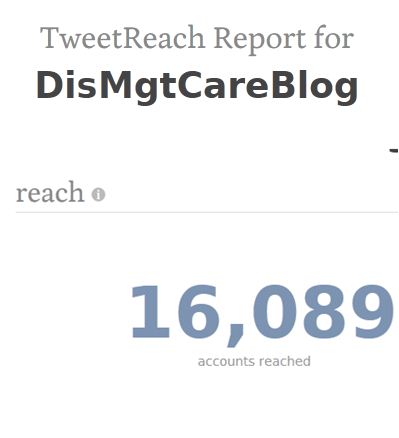
Thanks to Twitter, the @DisMgtCareBlog had a highly rewarding tweetologue with tweetociates @Paulflevy (with an insightful bit of bloggery here), @granitehead and @subatomicdoc about a recent DMCB post on the topic of electronic health record (EHR) patient portals. As readers will recall, yet another notion of the Lilliputian Order of Unquestioning EHR Believers failed to pass scientific muster when The Annals published a negative review on patient portals. Tweeples took note with a series of tweets that simultaneously advanced the DMCB's social media chops and the antipathy of the how-does-this-make-money? DMCB spouse.

To tell the truth, however, the skeptical DMCB took unfair advantage of this latest EHR kerfuffle. It confesses that it couldn't resist this latest addition to the target-rich environment of HIT disappointments in quality, cost and governmental overreach.

So, upon further reflection, just because almost 15 years of high quality research failed to establish any lasting value doesn't mean portals should go the way of the Dodo, low-cost medical malpractice insurance or Mr. Obama's credibility.

In other words, the DMCB does think that portals have a role to play in the health care reform landscape, and it said so in front of a huge audience at the recent Star Ratings Conference in Fort Lauderdale.

Portals, thinks the DMCB, have little value as stand-alone interventions. Just dropping it into a clinic's patient population is unlikely to significantly increase communication and shift behaviors enough to produce enough of a "signal" that cost or quality outcomes are better compared to usual care.

But when EHR portals are part of a multi-channel outreach strategy that includes (but is not limited to) mailings, interactive voice response-based calls, secure messaging, emails, social media, "anniversary" time-for-your-appointment cards, live telephony as well as home visits that are all backed by predictive modeling (who is at greatest risk) that informs "impactability" (how they're at greatest risk) that's all tethered to care management that is also closely aligned with marketing and builds brand, then portals mostly likely do add value.

Unfortunately, traditional health services research cannot assesses the multiple simultaneous interventions described above.  As Dr. Donald Berwick presciently noted in this classic JAMA article:

Experimentalists have pursued too single-mindedly the question of whether a [social] program works at the expense of knowing why it works. Thus, although [traditional research] seeks generalizable knowledge...it relies on removing most of the local details about “how” something works and about the “what” of contexts. It therefore reveals little about mechanisms or about factors that affect generalizability. Studying a few covariates, or using stratified designs, or probing for interactions can mitigate this loss, but these are inadequate tools for studying complex, unstable, nonlinear social change.

As the DMCB has noted before, absence of any proof is not the same as proof of absence.  The studies that the DMCB ultimately quoted were based on traditional research, which is simply not up to the task of the non-linear intervention of patient-doc-team communications.

Don Berwick recommends a more insightful approach:

Health care researchers who believe that their main role is to ride the brakes on change—to weigh evidence with impoverished tools, ill-fit for use—are not being as helpful as they need to be. “Where is the randomized trial?” is, for many purposes, the right question, but for many others it is the wrong question, a myopic one. A better one is broader: “What is everyone learning?” Asking the question that way will help clinicians and researchers see further in navigating toward improvement.

When it comes to EHR portals, it's time we ask just what are we learning.

Tuesday, December 4, 2012

12 Reasons Why Every Physician Should Have A Twitter Account


The Disease Management Care Blog really likes Twitter. Its scrolling 140-character tableau of news nuggets fit perfectly on the DMCB's hand held device, lap top and home personal computer.  It's easy to glance at between tasks and the advertising is blessedly minimal. The DMCB controls the content by following and unfollowing other Twitter accounts with a simple click or a touch.

But why, physician-skeptics may ask, is Twitter any better than traditional web browsing, email, list-servs and handheld apps?  Your DMCB thought about that and is pleased to offer its Top Twelve reasons why every doc should include Twitter in their informatics medical bag.

1. Lit Headlines: The major medical journals use Twitter to efficiently describe their latest content with links. For example.

2. Fame: Traditional print authors are publishing more and more about less and less. Getting peers to follow your original and insightful tweets is the new route to attaining status as an expert.  The DMCB has more than 500 daily followers vs. how many actually read the average peer-reviewed article?

3. News Junkies: Some of your like-minded peers are freely aggregating and retweeting relevant headlines with links for your perusing efficiency. They can be indefatigable.

4. Kool-Aid Immunity: Did you know your Chief, Chair, VP, lead administrator or Dean wants to control all your communication?  Twitter is an easy way to step out of the information bubble and monitor contrary news about that EHR, medical device, performance standards, your institution's business partners, the competition and more. For example.

5. Efficiency: Twitter trains you to be both brainy and brief. If you can't fit it into 140 characters or less, you're wasting your readers' time.

6. Messaging: The "@" allows you to interact with established and potential colleagues outside of your institution's email system. Thanks to this function, DMCB has met some wonderful colleagues.

7. Medical Conference Tweets: View formal and informal updates and insights about that conference you're attending from not only the meeting organizers but other attendees.

8. Community: Like-minded colleagues are not only clustering in listservs but in Twitter.

9. Room for Diversions: Efficiency makes it guilt-free to include non-medical content.

10. Speed: It's astonishing how quickly Twitter users spot and link just-released reports that take days to appear on the web and weeks to appear on print.

11. Searches: Yes, traditional literature searches and Google have their advantages, but the "#" function can find links to information resources that you might otherwise miss.

12. The Disease Management Care Blog is on Twitter.

Sunday, February 12, 2012

Hashtag #diseasemgtvalentines

The Disease Management Care Blog just discovered the Twitter hashtag #healthpolicyvalentines and has been watching the love flow.  In 140 characters or less, Tweeps combined policy and passion into tweets like "Let's go on a mandate" and "Uwe got what I need."

With only a day to go before Valentine's Day, the amorous DMCB joins in under the just-invented #diseasemgtvalentines hashtag:

I have the disease, you are the management

I want to populate your health.

You put the oh! in my ACO.

Let me in your risk corridor

PMPM's rising!

Let's make some outcomes

Honey, can I telephony?

Let's go off protocol

I want you at my point of care!

More to follow.....