Randomized controlled trials are the crown jewel of clinical research. By allocating patients to one of two or more treatment protocols (or "arms"), they can ascertain cause and effect while also eliminating any known or unknown bias from the results. As a result, they often provide "the" answer to the big questions about the true value of medical interventions.
Unfortunately, they're also difficult, expensive, time-consuming, can only gauge average impact, often exclude many "real world" patients, require patient consent and have made little impact on day-to-day health care.
Enter Big Data.
Defined as the "rapid analysis of (multiple) data sets using sophisticated machine-learning strategies," it is inexpensive, fast, uses readily available information, can give insight at an individual level, don't necessarily require patient consent, and also have had little impact on day-to-day health care.
So, Derek Angus suggests in the latest issue of JAMA that the two approaches can be fused:
1. Use electronic record based machine intelligence to scour the clinical data bases to find candidates for the trials, prompt the doctors to recruit the patients and then enter them immediately at the point of care;
2. Change the entry criteria as the application of Data to the randomized trial results begin to show that one arm is showing greater promise versus other arms;
3. Tilt the randomization toward one arm of the randomized trial if it begins to show a clinical advantage;
4. Have organizations commit to recruit ALL patients who would meet entry criteria to participation in the randomized trial.
To his credit, the author points out that there would be some challenges. Increased complexity could increase the threat of hacking of electronic health records. Convoluted recruitment, assignment and data analysis could be vulnerable to manipulation. Without high numbers of participants, heterogeneity could introduce hidden biases and undermine confidence that any observed results are real. Despite assurances that there is increased odds of actually benefitting from participation, physicians and their patients may still be reluctant to cooperate.
While this paper is really about using Big Data to help increase the efficiency of randomized trials, the Population Health Blog finds the concept intriguing. It wonders if large academic centers and traditional research sponsors have the flexibility to change their usual way of doing business.
The PHB makes note of one additional barrier: a small but additional burden on clinical workflows. While it may only take a few more minutes for a physician or nurse to deal with the prospect of a clinical trial, the multiple inefficiencies of the EHR have already added up to a significant burden. While the merits of clinical research are significant, front-line nurses and docs could view this as just one more hassle.
Since Population Health Management service providers already possess expertise in big data and electronic records, applying this to randomized trials may represent a new value proposition for the industry. Now that would be a big impact.
Showing posts with label EHR. Show all posts
Showing posts with label EHR. Show all posts
Thursday, August 27, 2015


Monday, March 24, 2014
Ten Things to Know About the mHealth App Ecosystem.
 |
| A mHealth app walled garden: enter at your own risk? |
Naturally, for time-pressed readers who'd rather not read it all, your PHB is happy to provide this ten point summary.
1) There are more than 40,000 of mHealth apps and the industry is still in its infancy.
2) Despite their faddish sexiness, there is very little hard evidence that many of the commercially available apps to lead to measurable improvements in clinical or economic outcomes. However, some of the underlying technology (such as pedometers) does provide a benefit.
3) The Food and Drug Administration (FDA) will assert its regulatory authority if the app "acts" like a "medical device" or as an accessory to a "medical device." Logging data, retrieving content or communicating won't be regulated, but medication dosing guides or the provision of diagnostic information will be.
4) 3) Little is known about the physician prescribing patterns for apps. We also haven't figured out if or how a patient's access to an app should depend on a licensed professional's approval/prescription.
5) There is a possibility that many currently available apps are putting users' privacy at risk.
6) Little is known about apps' compatibility with electronic health records (EHRs). This may be less of an "ecosystem" and more a bunch of isolated "walled gardens."
7) One vulnerability to any app's usefulness is data overload. Hundreds of food entries, for example, may do little to increase user insight about his or her diet.
8) Other than the FDA and its fussing over apps' medical "deviceness", there is no agency or entity that provides certification for apps. Consumers are on their own, based largely on on-line reviews and word of mouth. One organization tried to do it and conspicuously failed.
9) The time is right to create "guidelines" for app developers, such as how to provide useful data summaries as well as visual displays, maximize patient safety, ensure information accuracy and protect consumer privacy.
10) The time is also right for funding agencies to support research on apps, especially for persons with chronic illness.
Naturally, the PHB offers commentary:
It remains to be seen if the FDA can keep up, especially with apps that are in the "grey zone" between offering advice/possibilities vs. diagnosis/treatment. That shortcoming is vulnerable to overlawyering and regulatory overreach. That means prolonged time to market, increased uncertainty, hampered innovation and the threat of retroactive and potentially capricious reviews.
As you are reading this, many apps are undoubtedly being developed by the population health service providers. It may be time for entities like the Population Health Alliance or stakeholder organized medicine organizations to take the lead in establishing app benchmarks, best practices and guidelines. If they don't lead on this, someone will do it to them.
While vendors that offer apps along with their coaching may be inclined to regard them as proprietary and shield them from the scrutiny of peer review research, apps that are proven to improve outcomes will ultimately rise to the top. It's not just the funding agencies but the companies that offer these apps that have a stake in "proving it," while also advancing medical knowledge for the betterment of all of us.
Finally, wouldn't it be neat if there was a generic mHealth app that could be used by medical homes to facilitate nurse-patient coaching, link the patient to the EHR and enhance communication with providers? If there is one that the PHB isn't aware of, it wants to know about it.
Image from Wikipedia
Monday, February 24, 2014
Warning: Health Insurance is Hard
_b_437.jpg) As a former commercial medical director, the Disease Management Care Blog has wrangled with a number of physician colleagues in the population health, medical home and accountable care business on the basics of health insurance .
As a former commercial medical director, the Disease Management Care Blog has wrangled with a number of physician colleagues in the population health, medical home and accountable care business on the basics of health insurance . Many are afflicted with two "insurance-is-easy" conceits:
1. Insurers take in premium money, pay claims and keep what's left over, and
2. Quality health care means more money is left over.
Both have fueled the Accountable Care Organization (ACO) gold rush. Since insurers are supposedly fat with money, it's a no-brainer to want to get a piece of the action, especially since "stuff" like mammograms and the electronic record will save even more bucks.
Win-win, right?
Not so fast. Insurers' ROI is not huge, quality costs and the EHR's money-saving potential is just that.
Which is why the DMCB likes the short American Journal of Managed Care manuscript on ACOs that asks "Is the Deal Any Good?"
Author François De Brantes reminds readers that 1) a lot of patients are needed to dampen the individual impact of costly outliers, and 2) certain assumptions must be made about cost trends. Get either wrong and you could lose money.
The author also asks readers to consider the achievable savings rate. To the DMCB, this speaks to the assumption that quality and prevention automatically add to the bottom line. That's not necessarily true and could make you lose even more money.
Says the author:
Over a decade ago, the ability of providers to understand the uncertainty of the financial risks eventually led to the demise of many and a significant setback for the country in our collective ability to rein in runaway medical costs. We cannot allow the same mistakes to happen again, and both providers and payers need to understand whether or not the deal is any good.
In other word, insurance is hard. Stay tuned on whether the ACOs have figured that out.
Tuesday, February 4, 2014
Cost, Quality and Access in Health Care: Are All Three Out of Reach? Really?
 Maybe the Disease Management Care Blog has been wrong. And maybe there are implications for health reform.
The DMCB explains.
When it lectures at population health conferences, it patiently explains that health care data analytics will always involve trade-offs between speed, accuracy and detail. For example if it wanted insight on the quality of care for a cohort of persons with diabetes, it could want the results tomorrow (speed), that captured 100% of the population (accuracy) and included standard deviations as well as age and sex breakdowns (detail).
Analytics always must decide to pursue two out of three. For example, the DMCB might want detail and accuracy, but that will take extra time.
And so it goes.
An example from a parallel universe is the automobile market. One Mr. Ford got past selling cars that were any color the customer wanted so long as they were black, Detroit infamously forced consumers to make trade-offs in speed, safety, gas mileage and quality.
2014 may be a watershed year where much of the DMCB's trade-offs are false choices.
Bob Dylan argues that global consumers can have speed and safety and mileage and quality; he may have a point.
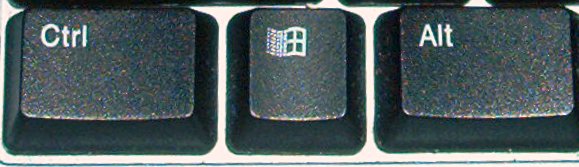
Returning to the health care industry, the DMCB wonders if the electronic record's expanding ability to capture patient detail combined with logarithmic growth in computational processing power will give providers the ability to hit "Ctrl-F1" and get an immediate, detailed and comprehensive on-screen report on the status of all persons with a particular attribute, like the presence of diabetes.
Which brings the DMCB to the infamous health care "iron triangle" of quality, access and cost. The DMCB believes that the re-emergence of narrow insurance networks is simply a trade-off of access in exchange for quality and cost. On the other hand, if consumers demand access and quality, they might have to settle for the high out-of-pocket costs of a stinky "bronze plan."
But here's the rub. If Detroit can move the needle on automobiles and if the electronic record and supporting infrastructure is finally reconciling speed, accuracy and detail, who says the health care industry won't eventually crack the quality, access and cost conundrum? The DMCB thinks it may take a while (Detroit took decades) but if the current pain over Obamacare eventually results in getting all three, maybe it will have been worth it. Maybe it is within reach.
Just maybe. We'll see.
Wednesday, December 4, 2013
Electronic Health Record Portals: So What Is the Evidence That Supports Their Use?
Talk about a compelling story that went ignored.
.jpg)
In the November 19 issue of the Annals of Internal Medicine, Caroline Lubick Goldzweig and colleagues examined the published science on the purported advantages of electronic health record (EHR) portals.
Recall that portals are web-based entryways that on-line health consumers can reportedly use to access their records, request medications, correspond with their doctors, manage their health conditions, reduce health care costs, increase U.S. life expectancy, reduce our national dependency on jumbo-sized sugary drinks and fix everything else that ails the U.S. health system.
Unfortunately, facts have intruded. After looking at fourteen randomized prospective trials, 21 observational, hypothesis-testing studies, five descriptive studies and six qualitative studies, the authors concluded...
"...evidence that patient portals improve health outcomes, cost, or utilization is insufficient."
Ouch.
In particular, any impact on diabetes care was short-lived or nonexistent, patients with heart failure had no meaningful improvement, blood pressure control did not improve and adherence to prevention recommendations were marginal. One observational study found persons with heart failure were more likely to use the emergency room. The only study that found any benefit involved a single randomized control trial that examined the impact of portals in the co-management of depression.
After looking at this review, depressed advocates of EHR portals may have to personally use their own portals to communicate with theirdocs health care medical neighborhood.
The only good news is that there were some data that suggested that a substantial number of consumers liked using the portals. But the DMCB likes channel surfing too, but that doesn't mean that the spouse agrees that its television-watching quality has improved or that the cost of all those premium channels is moderating.
The authors pointed out that it was difficult to isolate the impact of a portal vs. a portal plus care management. To the DMCB, that means that portals are at best a means-to-an-end of enabling care managers to better communicate with their enrollees.
To the thousands of DMCB readers, that is not a surprise.
In the meantime, the Feds and the NCQA have one more reason to re-examine their many cherished assumptions about health information technology and the stand-alone electronic record. The last time the DMCB looked, the federal government continues to extoll portal's stand-alone virtues. The National Committee on Quality Assurance (NCQA) still includes two way communication for appointments, referrals and prescription referrals as a standard for the medical home. Finally, the Fed's promotion of the electronic health record (EHR) approves of portals as an option in meeting meaningful use criteria.
Image from Wikipedia
In the November 19 issue of the Annals of Internal Medicine, Caroline Lubick Goldzweig and colleagues examined the published science on the purported advantages of electronic health record (EHR) portals.
Recall that portals are web-based entryways that on-line health consumers can reportedly use to access their records, request medications, correspond with their doctors, manage their health conditions, reduce health care costs, increase U.S. life expectancy, reduce our national dependency on jumbo-sized sugary drinks and fix everything else that ails the U.S. health system.
Unfortunately, facts have intruded. After looking at fourteen randomized prospective trials, 21 observational, hypothesis-testing studies, five descriptive studies and six qualitative studies, the authors concluded...
"...evidence that patient portals improve health outcomes, cost, or utilization is insufficient."
Ouch.
In particular, any impact on diabetes care was short-lived or nonexistent, patients with heart failure had no meaningful improvement, blood pressure control did not improve and adherence to prevention recommendations were marginal. One observational study found persons with heart failure were more likely to use the emergency room. The only study that found any benefit involved a single randomized control trial that examined the impact of portals in the co-management of depression.
After looking at this review, depressed advocates of EHR portals may have to personally use their own portals to communicate with their
The only good news is that there were some data that suggested that a substantial number of consumers liked using the portals. But the DMCB likes channel surfing too, but that doesn't mean that the spouse agrees that its television-watching quality has improved or that the cost of all those premium channels is moderating.
The authors pointed out that it was difficult to isolate the impact of a portal vs. a portal plus care management. To the DMCB, that means that portals are at best a means-to-an-end of enabling care managers to better communicate with their enrollees.
To the thousands of DMCB readers, that is not a surprise.
In the meantime, the Feds and the NCQA have one more reason to re-examine their many cherished assumptions about health information technology and the stand-alone electronic record. The last time the DMCB looked, the federal government continues to extoll portal's stand-alone virtues. The National Committee on Quality Assurance (NCQA) still includes two way communication for appointments, referrals and prescription referrals as a standard for the medical home. Finally, the Fed's promotion of the electronic health record (EHR) approves of portals as an option in meeting meaningful use criteria.
Image from Wikipedia
Monday, November 11, 2013
Health Information Technology and the Patient Centered Medical Home: Seven Additional Caveats
 The Disease Management Care Blog is scheduled to participate in a November 12 PCPCC webinar on the timely topic of population health management (PHM). We'll be focusing on the October 2013 PCPCC report "Managing Populations, Maximizing Technology." Readers can download it here and refer to page 2 where the DMCB, among other luminaries, is acknowledged for its thoughtful review.
The PCPCC report effectively reminds health system architects and policymakers that the electronic health record (EHR) is necessary - but nowhere near sufficient - for a high performing patient-centered medical neighborhood. Other information technology (IT) components include intelligent shared decision making, registries, health information exchanges, analytics, referral tracking, telemonitoring, automated outreach, patient communications, mobile apps, decision support and risk stratification.
And that's just for starters.
The good news here is that while Washington DC's EHR weenies remain focused on the dreary stages "meaningful use," innovative health systems with medical homes and neighborhoods are really using IT to make a thousand PHM flowers bloom.
Naturally, during the PCPCC webinar, the DMCB isn't going to stop there. If given a chance, it will also point out:
1. Build vs. buy: While health systems generally believe that PHM - with or without its IT trappings - can be built using local resources, a better answer may be to buy it from a vendor. Why own it when you can rent it?
2. And speaking of outsourcing: While its physician-colleagues prize the stature that comes from "quarterbacking" a medical home team, what is less appreciated is the distinct possibility that a quarterback is often not the most important position. Get out of the way and let the IT-empowered and enabled non-physicians do their thing.
3. The EHR gone wrong: "Portals" are preferred by EHR vendors because they push patients toward their products, often run by lawyers who fear HIPAA and typically programmed by IT geeks who only think about code. It's time to put patients first.
4. "This is not my patient!": While predictive modeling generates lists of patients that annoy physicians with multiple inaccuracies, the science is getting better. That being said, many other tests like EKGs and chest x-rays are notorious for false negative and false positive results. It's all part of being a doctor.
5. Apply a filter.... please!: The biggest threat from health IT is a data glut of numbers, labs, tests, surveys, messages, alerts, prompts, readings, alarms, vitals and figures that overwhelm medical home team members. That's going to involve setting thresholds and priorities.
6. It's not about the revenue: Forget about using health IT to justify additional payment. In a health system without anymore money, the purpose of health IT is to generate savings. That means it has to pay for itself.
7. Watch out! The under-appreciated health IT event that is going to change the relationship between insurers and providers: the move from using paid insurance claims to submitted EHR claims to assess population outcomes.
Image from Wikipedia
Thursday, December 27, 2012
Additional Ingredients for ACO Success: Communication Training, Support Tools and Culture

And then Matthew Press and colleagues come along with this AJMC article on Care Coordination in Accountable Care Organizations: Moving Beyond Structure and Incentives.
Their message? You may have what's necessary, but it's not sufficient. Organization and incentives are not enough.
What's also needed are:
1. Training: physicians need education on coordination, collaboration communication and teamwork. The education should be an organizational priority and typically involve course work, observation and feedback with continuous evaluation. This cannot be accomplished in a one day workshop. An example of what it might take can be found here.
2. Support tools: since efficient information transfer must to be built into ACOs' workflows, informal "situation" or "personality" dependent communication between docs and nurses need to be transformed. An example of the kind of framework that Kaiser instituted can be found here. While you're at it, think about HIPAA-compliant texting, wiki-enabled EHR records and patient activity streams.
3. Culture: if front line staff are going to support the delivery of high quality and optimum cost care, the organization will need to protect time for care coordination activities, multi-disciplinary meetings, forums to share best practices and incentives that recognize collaborative behaviors.
Looks like the work has only just begun.
Subscribe to:
Posts (Atom)




 Posts
Posts