Showing posts with label Obamacare. Show all posts

Tuesday, July 12, 2016

President Obama Writes About Health Care Reform in JAMA

All aboard!
In a first for the Journal of the American Medical Association ("JAMA"), President Obama has authored a Special Communication on "United States Health Care Reform."

As the Population Health Blog would expect of any modern sitting President's essay on any political achievement, there are no new insights, no new useful lessons learned and no regrets. The reader is instead treated to an Affordable Care Act (ACA) legacy-building "bus tour" of selected facts and gratuitous framing of the Affordable Care Act (ACA). a

Briefly, Mr. Obama points out that, thanks to the ACA, the national uninsured rate dropped by 7% from 16% to 9%, which was accompanied by a 3.5% increase in the number of individuals with a personal physician and 2.4% increase in access to medicine. He takes credit for declines in the inflation rate for health care spending, decreases in consumer out-of-pocket health care spending, the rise of value based care, and improvements in quality of care.

The President goes on to putter around the edges with some suggestions for "building on progress to date":
He closes with "lessons for policymakers":
  • While change is difficult, "hyperpartisanship" makes it doubly so. The tools of hyperpartisan sabotage include "inadequate funding, opposition to routine technical corrections, excessive oversight, and relentless litigation."
  • Special interests "like the pharmaceutical industry" still "pose a continued obstacle to change."
  • The ACA is an example of American middle ground pragmatism between the extremes of vouchers for all and single payer. It should continue.
The PHB's Take

As years of over-lawyering has taught Americans (indeed, JAMA has put the academic credential "JD" after Barack Obama's name), real peer-reviewed policymaking benefits not only from the truth, but the whole truth.

What makes this JAMA piece less than the whole truth is failure to mention (other than in passing) how lingering of the Great Recession is what blunted the majority health care inflation, that a shocking amount of treasure as well as political capital was used for a seemingly modest 7% absolute reduction in the uninsured rate, that government sponsored plans will likely put the remaining regional insurers out of business, and that the prospect that any company doing business in the U.S. being legally compelled to share proprietary cost information is highly unlikely.

Oh, and by the way, short of firing up some more money-printing presses or some real reforms, Uncle Sam has no money to pay for any of the additional proposed suggested goodies.  There is no political appetite for shoveling any more federal money toward health care.  

Last but not least, the ACA was midwifed by a hyperpartisan ramrod that failed to get even one Republican vote in either chamber of Congress. This Special Communication does nothing to diminish that legacy.
Was this a squandered opportunity to set the record straight and address some meaningful reforms?

You be the judge.

But don't take the PHB's word it. Appearing in the same issue of JAMA is this editorial by the Brooking Institution's Stuart Butler.  He points out that Medicaid and not the marketplaces was responsible for a significant majority of newly insured Americans, that, even with premium support (or its expansion), commercial insurance enrollees are now saddled with very high out-of-pocket costs.

Oh, and then there is a consensus - now that the Recession is waning and the ACA is taking hold - that health care inflation is poised to accelerate.

Image from Wikipedia

(Updated July 14)

Wednesday, July 8, 2015

Three Downsides to Commercial Health Insurer Consolidation

Writing in The Wall Street Journal, Scott Gottlieb argues that the Aetna-Humana and the Anthem-Cigna combinations are evidence of waning insurer competition that is the direct result of Obamacare.  Not only are ACOs not a panacea, but the Affordable Care Act's insurance mandate to limit administrative costs is forcing Aetna et al to spread their costs over a larger base.  Dr. Gottlieb fears that the oligopolies won't be able to deliver on innovation and will limit consumer choice   

Too bad The WSJ didn't give him more print space.  If they did, Dr. Gottlieb may have also pointed to three other potential downsides to commercial insurer consolidation:

1) The concentration of risk: While having a small regional health insurer go bust is a big problem for hundreds of thousands of insurance enrollees, having a for-profit national insurer with tens of millions of enrollees go bust would be a national catastrophe. Think Lehman Brothers, Black Swans and Too Big To Fail.

2) Cronyism: Politicians and C-Suite executives no longer blush at the prevalence of the revolving door between government and all industry.  Health insurance will likewise be too regulated and complicated to leave to anyone other than insiders, who will naturally be unable to discern the line that separates their interests from the patients'.
 
3) Political Power: Will Washington DC and 50 states really be able to stand up to a handful of companies that dominate a fifth of the national economy?  Years ago, the commercial insurers remained silent while they were called "Fat Cats." The Population Health Blog bets that the next time a While House blames the insurers for rising costs, they won't remain so deferential.

Image from Wikipedia

Wednesday, February 4, 2015

Maintenance of Certification (MOC) Update: A Health Reform Lesson

The 1967 Corvair. A non-PHB version
Long ago, when the Population Health Blog was courting the future PHB spouse, our unspoken understanding was that if the PHB liked its unsafe-at-any-speed 1967 Corvair, it could keep its unsafe-at-any-speed Corvair.

The sweet perfume of our relationship more than made up for the odor of car exhaust, unsightly blemishes, noisy rattles and rusted floorboards.

Cracking the windows, touches of spray paint, the AM radio volume knob and care where you placed your feet also helped.

It wasn't until courtship turned to relationship that the spouse's true thinking began to manifest itself.

That's why, years later, the PHB was unsurprised by President Obama's disavowal of his you-can-keep-your-health-plan assurances. Substitute Federal minimal essential benefit requirements, narrow networks and unaffordable premiums for spousal safety demands, mocking eye-rolling and intrusive hints about the merits of a new car, and readers should understand the PHB's acquiescence.

So the PHB shrugged off the notification that its life-long American Board of Internal Medicine (ABIM) specialty credential wasn't really a life-long credential.  

Enter maintenance of certification or "MOC."

More background can be found here, but, briefly, the sweet perfume of accomplishment was overcome by the MOC stink of intrusive, unproven as well as expensive documentation, education and testing renewal requirements.

Thousands of the PHB's physician colleagues were less submissive about the matter in print and on-line. There were also competitive threats, lawsuits, online petitions, and websites. The American Medical Association weighed in. And then state medical societies, which have a vital interest in serving their membership, began to sound the alarm.

And it paid off. 

While the PHB would have predicted that the academics populating the ABIM leadership were about as likely as Mr. Obama or the PHB spouse to change their minds, they've issued a "we got it wrong and sincerely apologize" announcement. 

As a result, many of their documentation requirements are on hold, the test is being revamped, fees are being reduced and the education options are being broadened.

Good for the ABIM and good for the practice of internal medicine.

This kind of mea culpa is a good first step in engaging the opposition and is likely to turn many critics into allies. More importantly, this is a great example of the impact of grass roots activism and the advocacy of organized medicine.

If this can happen in this corner health care, perhaps there are other areas of health reform where a well placed apology might be a good first step.

The magnanimous PHB is also happy to admit that, in retrospect, the spouse was right about the Corvair. At one point, highway snow was blowing up into the passenger compartment.  At 60 miles an hour.  Seriously.

Since then, it has gotten to like and keep lots of other stuff.  It makes having to pay so much for its own heath insurance a little more tolerable.

Image from Wikipedia

Wednesday, November 12, 2014

Rising Healthcare Costs: Delayed or Defeated?

Ready, set......
According to this just-published New England Journal article, analysts are still waiting for the twin forces of 1) an improving U.S. economy and 2) higher numbers of newly insured Americans to reignite healthcare inflation.  While the latest data from the Bureau of Economic Analysis (BEA) are conflicting, data from the early part of 2014 suggests that health costs are remaining tame.

What gives?
 
While many Obamacare supporters say this is more evidence of Washington's central-planning genius, author Charles Roehrig notes other factors be at play, namely:

1. The 9 million of 2014's newly insured amounts to 3% of the U.S. population. Their baseline spending was probably half of normal, so the resulting increase would expand the nation's spending by a modest additional 1.5%.  Since this group is younger, it'll likely be less than that.  Their contribution to increasing costs will be harder to detect.

2. What's more, insurance enrollments were finalized relatively late in the year, so these newly insured haven't had much of a chance to give their new benefits an early test-drive.

3. The first quarter of 2014 was an unusually cold winter. The Population Health Blog recalls how freezing temps, wind and snow made for a relaxed day at the clinic. Multiply that across millions of newly as well as long-term insured people, and it adds up.

4. Yes, stupid, it is the economy, which has a strong correlation with healthcare spending. Loss of health insurance thanks to unemployment, declining tax revenues that pressure government insurance programs to limit eligibility as well as benefits, employers' unwillingness to go along with otherwise automatic benefit increases and a general unwillingness of consumers to open their wallets in recessionary times has also added up.

5. Thanks to the expiration of some patents, prescription drug spending moderated.

Bottom line: all of the above are one-time impacts.  The economy's impact and new access to insurance are lasting fundamentals that will not go away. It's too soon to tell what is really going on.
 
The PHB will stay tuned.

Thursday, July 24, 2014

Credble Numbers on Obamacare: And Why is the 16.3% Prevalence of Persons Without Health Insurance Good News?

The signed Affordable Care Act
We finally have some credible numbers on what's happened to insurance enrollment under Obamacare. The paper can be found here.

The authors used the ongoing Gallup-Healthways survey that questions representative samples of the U.S. population about their health insurance status. Since it began, this repeat survey has assessed changes in the coverage of adults 18 to 64 years of age. The authors used these data to assess the trends in insurance status that were associated with the roll-out of Obamacare between January 2012 to June 2014.

For all of 2012 and the first part of 2013, the nation's uninsured rate was 20% to 21%.  Following the star-crossed open enrollment period that began in the fall of 2013, the uninsured rate began to drop.  By April of 2014, it fell to 16.3%. 

Depending on the underlying statistical assumptions, the absolute percent increase in Americans with insurance ranged between 4.2% to 7.1%. States that took the Feds up on their offer to underwrite Medicaid expansion saw a absolute decline of 6%  of low-income Americans having no insurance.

The Population Health Blog predicted that the 2014 outcomes from Obamacare would have something for everyone.  For the news outlets (like this and this) with a reputation of being sympathetic to the Administration, positive spin abounded. In the meantime, more skeptical reporters tried to poke some holes in the data, saying the increase in insurance coverage was really thanks to gains in employment or was in reality a lousy deal thanks to narrow networks.

The PHB's take?

It's struck by the relatively modest decline in the percent of uninsured Americans. Considering the heavy price we've paid, that lingering 16.3% rate is a lot.

That price?  It includes not only the hit to our national fisc, but paralyzing partisan rancor, endless and unpredictable litigation and the precedents of White House 'pen and phone' fiat by regulation. The latter will almost certainly be used by a future Presidents on both sides of the aisle.

And so it goes.

Wednesday, June 25, 2014

A Path Toward Further Health Reform Is Lined With the IRS?

As attention has shifted to phantom IRS emails, misbehaving Iraqis and our newfound national awareness of soccer's off-side rule, it's only natural for the Population Health Blog to wonder about the status of health reform.

Enter The New England Journal with a pair of perspectives on the coming prospects for the Affordable Care Act.

Over on the left, the Brooking Institution's Henry Aaron believes that, notwithstanding ascendant Republican hopes for the 2014 elections, Mr. Obama's veto power virtually guarantees the law's survival.  The only question is whether politics will get in the way of any adjustments.  Once we're into 2015 and beyond, these could include the mandate (weaken any penalties?), Medicaid (spending caps?), the states' roles (allow for local modifications?) and changing affordability standards (increasing income-based premium support for families).

Over on the right, the American Enterprise Institute's Joe Antos agrees there is no going back.  He offers up some potential conservative modifications for 2015 and beyond, such as shifting the insurance premium support to a defined contribution basis (versus a defined benefit), shielding mainstream health insurance by moving catastrophically ill persons to "high-risk" pools and requiring insurers (including Medicare) to leverage consumer education and incentives along with provider teaming to help steer beneficiaries toward lower-cost care options.

Drs. Aaron and Antos both agree that IRS-based enforcement rules may force significant changes.  Under current law, poor persons who underestimated future income for today's premium support calculations may be subject to claw-backs. According to Dr. Aaron, the IRS is responsible for administering that, and any payment would ultimately go to the insurer long after the fact.  Dr. Antos points out that the IRS's enforcement of the mandate could lead to the spectacle of tax refunds being withheld from low-income individuals and families.

The PHB is less sanguine.  While the PHB is no political pundit, the likely increase in the number of Republicans in Congress after 2013 combined with the kick-off of the 2016 Presidential race portends more of the same health reform gridlock. 

The only good news from Aaron and Antos is that growing antipathy toward the IRS may lead Congress to uncouple the IRS and it's enforcement mechanisms from the ACA. It may not be an example of pristine bipartisanship, but if it leads to necessary modifications of the ACA, that's not necessarily a bad thing.

Stay tuned!

Image from Wikipedia

Wednesday, June 4, 2014

Looking Ahead to the Second Enrollment Wave of Obamacare This Fall

Big or small?
The latest just-published edition of Health Affairs has a sobering reminder written by Tricia Brooks ("Open Enrollment, Take Two") that the healthcare marketplace wars will recommence on November 15.

That's when open enrollment starts all over again. While the good news is that more than 7 million people got health insurance through the on-line marketplaces, the bad news is that there are now 7 million people who will have to use the process again to get their insurance renewed.

While Dr. Brooks is generally upbeat and hopes our politicians will put their constituents first, the Population Health Blog asks.... what could possibly go wrong?

What the PHB learned.....

Development work isn't finished yet.  The back-room and behind-the-scenes web machinery dealing with application questions, required consumer notifications and eligibility issues are continuing to get tweaked. In addition, the Feds are working to upgrade the electronic and other processes that are necessary to verify identity and immigration status. Plus, it has yet to be fully integrated with the commercial marketplaces, Medicaid and the CHIP agencies.

It is also possible that during the renewal process, persons who underestimated their income in the process of applying for tax credits may be subject to claw back, and the individual mandate's tax penalty will rear its ugly head.  We don't know how consumers will react.

It also remains to be seen how many consumers will understand the financial assistance or miss the deadline. Look to the Administration launch reprise of a marketing campaign that encourages "tell your friends and family" word-of-mouth.

And then there is no guarantee that many states will want to - or be able to - fully cooperate.

What went unmentioned is the "wild card" of the fall political campaign.  All of the members of the House of Representatives, a third of the Senate and many Governors will be spinning Obamacare.  Thanks to the fog of political war played out our TV screens, individuals may be entering the open enrollment period with a whole new set of opinions and apprehensions.

Stay tuned!

Tuesday, February 11, 2014

What the Obamacare Health Insurance Exchanges Can - and Can't - Do

It looked so easy, didn't it? 

So says Massachusetts Connector architect John Kingsdale.  Writing in the prestigious New England Journal, the Obamacare insurance exchange was supposed to list health insurance options in a user-friendly fashion while simultaneously determining eligibility for exemptions and subsidies. 

What happened instead was the mother of all procurement debacles. What's worse, it was all predictable because it turns out that less than 10% of government's IT development contracts are successful.

So, if you like your government's version of insurance Expedia, you can't keep it because it was never really there.

But, says Dr. Kingsdale, assuming Uncle Sam gets its act together, there are four big reasons to like a functioning health insurance exchange:

1. User-friendly insurance shopping: transparent and easy-to-understand choices involving a core set of trade-offs can save time and fulfill conservatives' demands for market-based solutions.

2. Paperless technology: An on-line automated and scalable distribution system should eliminate much of the commercial insurers' marketing and enrollment costs.  Those savings should go to the consumer.

3. Competition: while its unlikely that plans with narrow networks and high out-of-pocket costs will ever go away, exchanges lower their barriers to market entry by other insurers, which should lead to more options for consumers.

4. Quality: as insurers collaborate with health systems, exchanges can lead users to select coverage options that are linked to particular provider entities, like ACOs.

The Disease Management Care Blog has a skeptical take to Dr. Kingsdale's vision.  Here's the downside arguments to why it may not work and why the DMCB will reserve judgment:

1. When it comes to "shopping" for the current versions health insurance, you get what you pay for, which is currently a highly regulated and rich basket of coverage mandates. Thirty year olds must now have any cancer screening they don't want, just so long as they're at least fifty years old.  All insurers are offering the same thing.

2. Outmoded paperless technology will soon be followed by outmoded desktop PC technology.  By the time the on-line bugs are worked out, iPhone enabled consumers will be wondering where's the app for handheldhealthcare.com.  And, by the way, since when do health insurers pass any savings to consumers?

3. If the Massachusetts Connector fosters "competition," why does Boston lead the nation in physician wait times?  The answer is complicated but has more to do with the nature of commercial monopsonies and government price controls, neither of which will ever be helped by IT.

4. The movement of risk from insurers to providers could eventually lead those providers to use the same tricks as insurers, including utilization management and closed walled-garden networks that are ultimately designed to protect their capitation. Insurer-provider collaboration has more to do with who is monetizing and minimizing risk and consumers won't ultimately see any difference when it comes to the "what" of bad behavior. Quality has little to do with it.

Tuesday, January 28, 2014

The State of the Union is Over. Advice on What's Next for Obamacare

When it comes to assessing or "monetizing" the possibility of a bad future event, the insurance-minded Disease Management Care Blog recalls that a common approach is to multiply the probability of the outcome and its value.  For example, if the chance of a $100,000 house burning down in the next year is 1%, the present value of that risk is .01 x 100,000 or $1000.  That $1000 figure is the starting basis of calculating the cost of homeowner's insurance.

While that logic only goes so far, it can be a useful way to look at other types of risk. For example, instead of confidently proclaiming that the Affordable Care Act "will" or "will not" lead to a deficit, it may be wiser to describe the range of probabilities.  So, depending on future GDP, inflation, disease burden, and other factors, it could be reasonably estimated there is an "X" percent chance it will increase the deficit by "Y" billions of dollars. Multiply that downside risk against the size of the deficit, and Congress and the White House could use that number to discuss the implications for this year's budgeting.

Fat chance of that happening.

With just hours until the State of the Union ("#SOTU") address, it appears our cerebral President won't be thinking that way. Rather, it's more likely that he extol healthcare.gov's repaired functionality, remind listeners that millions of Americans have signed up for insurance, push a "regulatory" agenda and threaten that, so long as he wields the veto pen, "there's no going back."

While the DMCB admires the President's pluck, it still fears that Obamacare could turn out to be his Napoleonic Russian invasion. While he's taken "Moscow" with the passage of the ACA, the countryside is filled with angry partisans, the 2014 elections portend a long cold winter and his supply lines are threatened by botched health insurance data feeds, a dodgy mandate, unintended consequences and costly risk pools.

Once the political theater of SOTU is over, the DMCB suggests that Mr. Obama's advisors should quietly ascertain the likelihood that the ACA gets worse (1%?, 10%?, 25%?) in 2014 and multiply that times the value of the President's legacy.  A realistic appraisal of that number may prompt the President to look at his signature achievement in a new light, gauge the political theatrics for what they are and devote a commensurate level of Oval Office attention to making the law work.

Wednesday, January 22, 2014

The Behavioral Economics Behind the Individual Mandate

Thanks to analyses like these, the Disease Management Care Blog is coming down with a tiresome case of individual mandatosis complicated by penaltyalgia.

Former CBO Director Douglas Holtz-Eakin's American Action Forum just posted that erudite and well-referenced article. It contrasts the simple cost of a) paying for subsidized insurance with "silver "and "bronze" high out-of-pocket costs vs. b) foregoing insurance, paying the penalty and paying retail for health care.  News outlets are reporting that the average person with average utilization will come out ahead with option B.  By implication, therefore, the penalty attached to the individual mandate is too small to make a difference.

"That's not the point," says the conservative DMCB.

The mandate was originally developed as a smaller part in a grand national experiment in behavioral economics.   It was long since departed White House Advisor Peter Orszag who betted that Obamacare's new "social norm" would nudge citizens toward doing right by buying health insurance.  The mandate was never intended to tip the financial scales, but act as a gentle reminder that could symbolically promote greater civic duty like voting or using seat belts.

The fundamental problem with the mandate isn't that the penalty is too small to change buying behavior.  The problem is that this building block of health reform remains an experiment.  It will be years before we can assess Orszag's bet on the impact of these behavioral penalties attached to the mandate.

The DMCB also remains wary of "average" outcomes.  While a typical silver or bronze buyer would come out ahead by being wary of the famous nine words about government "help," there is a small segment of individuals who would be protected from bankruptcy.  The purpose of insurance is to monetize risk and transfer it. That's a real cost for everyone, except the unlucky few who need it.

Image from Wikipedia

Tuesday, January 21, 2014

What Is the Plan B for Healthcare.gov's IT Problems

While Obamacare skeptics have glommed onto this government document for all the usual reasons of partisan advantage, the Disease Management Care Blog has a different take.

Titled "Justification for Other than Full and Open Competition," its ultimate purpose is to justify the non-compete and hurry-up hiring of IT company Accenture to fix the star-crossed healthcare.gov web site. It makes for interesting reading, with scary references to "the entire healthcare reform program [being] jeopardized" by "inaccurate... payments" to health insurers "potentially leading to their default" as well as "inaccurate forecasting of risk adjustment, reinsurance and risk corridor[s]" "potentially putting the entire health insurance industry at risk."

The deadline for the fix is less than two months away in "mid-March 2014" with an additional taxpayer cost of $91.1 million.

1) The DMCB doesn't mind a little bit of bureaucratic alarmism to justify the cutting of some red tape.  The considerable back-end transaction errors and reconciliation issues of healthcare.gov need to be fixed and the Justification is a refreshing alternative to CMS's wildly political pablum.  Good for them.

2) Check out the last two pages of the document and you'll find separate authorizing signatures from a "Project Officer," "Immediate Supervisor," "Head of the Sponsoring Program Office," "Contracting Officer," "Cognizant Group Director," "Cognizant Policy Director," "Director 'OAGM,'" "Competition Advocate" and "HHS Senior Procurement Executive."  Despite the vulnerability of the U.S. health insurance market and the threat to the credibility of healthcare.gov, nine signatures were needed from relatively unknown government officials buried deep inside a vast government bureaucracy.

3) Worst of all, the document makes no mention of a Plan B.  If the President's signature health health reform program is in jeopardy, what happens, asks the DMCB, if Accenture falls short?

Wednesday, January 15, 2014

One Proposed Measure of Obamacare Success: Drop-Outs from the Bronze and Silver Plans


Quick: if you had to chose a limited number of measures to gauge success of the Affordable Care Act, what would you choose?  Would it be the number of persons who have enrolled in healthcare.gov? The number of persons who have paid for their insurance and have coverage?  The number of young people with coverage?  The degree of spin used by the White House?

Naturally, the quizzical Disease Management Care Blog proposes a different metric:

The percent of persons with either 1) "silver" or 2) "bronze" plans who have gone two or more months without paying their insurance premium.

Why, you ask?

1) The silver and bronze plans, because their monthly premium is lower, will attract a disproportionate number of persons who were previously unable to afford health insurance and are now newly insured;

2) According to this just published JAMA article, even if their monthly premiums are fully or partially subsidized, these lower-cost insurance plans cover only up to 60% to 70% of medical expenses. That means cost sharing that can be excess of $6000 and $12,000 for individuals and families, respectively.

As these newly insured persons begin to access health care, high out-of-pocket expenses can lead to two scenarios:

1) Those with subsidized insurance will resent paying anything for a plan that stretches the very definition of "health insurance," or

2) Those with partially subsidized or unsubsidized insurance, because of their mounting bills, won't be able to pay the premium

Either drop-out scenario is very possible.  The DMCB isn't aware of any data that describes the normal drop-out rate in low-premium/high out of pocket health insurance plans, but that number exists somewhere.  If Obamacare has a higher than expected rate of of drop-outs, that could spell trouble.  If the drop-out rate is low, things are going well.

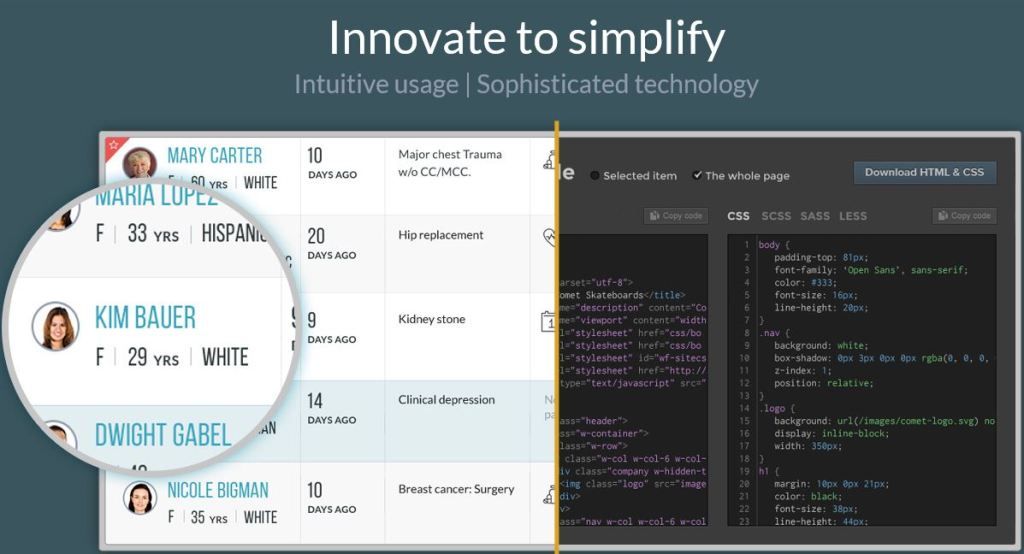
CODA: The image above is an example of an enterprise data dashboard, which is intended to help companies track real time success in achieving specified targets.  It's arguably a best management practice and it shouldn't be too much to expect the White House to post an ACA "healthcare" dashboard on their web site.  Why not?

Image from Wikipedia

Monday, January 6, 2014

A Runaway Steetcar Named Contraception Mandate

Here's comes the contraception mandate!
Consider the classic "trolley car" thought experiment:

There is a runaway trolley barreling down the railway tracks. Ahead, on the tracks, there are five people tied up and unable to move. The trolley is headed straight for them. You are standing some distance off in the train yard, next to a lever. If you pull this lever, the trolley will switch to a different set of tracks. Unfortunately, you notice that there is one person on the side track. You do not have the ability to operate the lever in a way that would cause the trolley to derail without loss of life (for example, holding the lever in an intermediate position so that the trolley goes between the two sets of tracks, or pulling the lever after the front wheels pass the switch, but before the rear wheels do). You have two options:

 (1) Do nothing, and the trolley kills the five people on the main track,

 (2) Pull the lever, diverting the trolley onto the side track where it will kill one person.

Which is the correct choice?

While this thought experiment has lived on through countless variations and even more debate, the Disease Management Care Blog was taught in a long bygone ethics class that the choices boil down to a utilitarian argument (pull the switch because five lost lives is worse than one lost life) vs. the moral argument (don't pull the switch because, in a situation for which you bear no responsibility, you have a personal duty to not sin by taking a life).

While the DMCB could ruminate on what the Fat Lady would advise, that's not the point here. Rather, the DMCB points out that philosophical choices are unsettled and that there is plenty of room for intelligent argument on both sides.

Which brings us to the Little Sisters of the Poor and their appeal over the Obamacare contraception mandate. 

As the DMCB understands it, this Catholic religious order wants to be exempted from the exemption process that requires the completion of a one-page "self certifying" form. The purpose of the self-certifying form is to allow organizations like Little Sisters to exclude birth control pills (the moral arguments on why it's regarded as sinful can be found here) as a covered benefit for its insured employees.

Completing that form would oblige the insurer, not the buyer, to provide access to contraception services that are mandated by the Affordable Care Act. After checking out pages 39877 and 39878 of the Federal Register, DMCB understands that Washington DC defends this "accommodation" as a cost-neutral solution (fewer pregnancies underwrite the cost of the contraceptives) and as a "administrative" cost that is spread across the risk pool. Accordingly, neither arguably obliges a Catholic organization to meaningfully participate in (pay for) what it regards as a moral sin.

But, says the DMCB, signing the self-certifying form triggers the accommodation which, in turn, leads to coverage of contraceptives. The Little Sisters of the Poor are, in effect, being asked to pull the enabling trolley switch.  Sure, it's not the death of innocents or the trading of lives, but the underlying parallels to the thought experiment still apply. These nuns are being asked to choose the lesser of what they regard as two sins and trigger the contraception coverage.

 In simplistic terms, these nuns are instead choosing a classic moral answer.

From an ethics standpoint, the contraception mandate is far more murky than it appears.

Two additional thoughts:

1.  The contraceptive mandate is a trolley car conundrum of the government's making. They're the ones that built the tracks and put the nuns - and other persons of conscience -  at the switch.

2. In that long bygone ethics class, the DMCB was confronted by a variation in the trolley care thought experiment. Supposed you were held at gunpoint and non-compliance also meant your death in addition to the death of five innocents?  The moral answer would be that your personal duty to do no harm to extends to yourself and you would need to take the bullet. 

That's why the DMCB fears that the Sisters are not going to cooperate even if the government legally prevails in overcoming their objections. They probably mean it and will go out of business.  To make a statement in the best tradition of civil disobedience, they could continue to provide services, refuse to pay the fines and go to jail. 

Yikes.

CODA: It turns out that the particular insurer is also exempt from the contraception mandate. That makes much of the Little Sisters' objections legally moot, but that's not the moral point.

Thursday, January 2, 2014

Twelve Health Care Predictions for 2014

While the Disease Management Care Blog eschewed forecasting for 2013, it has decided to reverse course and inaugurate the 2014 blogging season with a contrarian duodecimal exercise in futurism.

Will this antidecimal augury align with the mysterious cosmic order and governing perfection?  Let the thousands of DMCB readers (more on that in a future post) be the judge in January 2015......

1. Obamacare will neither succeed nor fail.  This hugely complex law will have too many outcomes, statistics and analyses that will be subject to too much spin by both supporters and detractors. Like puppies clamoring for the mother's attention, the loudest wins, but only in 15 minute media increments.

2. Inflation returns, with a vengeance: While we won't know it until well into 2015 or 2016, 2014 will be the year that the sleeping giant of healthcare costs awakens. Millions of new insureds in an improving economy will finally get their pent-up pricey preference-sensitive health care needs fulfilled.

3. All boats benefit.....While the PHM industry will continue to extol its cost-savings value proposition, its investors will profitably ride the rising tide of overall increased health spending.

4. Duh, it's the delays stupid: While low income Americans will appreciate having access to subsidized health insurance and Medicaid, the middle class' unsubsidized sticker shock will threaten the fall 2014 elections. Caught between conflicting advice of insurance actuaries and political hacks, the White House's regulatory choices will be obvious.

5. Unfavorable prognosis for physician income means an emerging bull market for concierge medicine: Past attempts to replace the SGR never fail to disappoint and 2014 will be no exception. That, however, will only be on the icing on the bitter cake of foregone co-pays and coinsurance by patients who chose all those stinky bronze plans.  As a result, more docs will bail on their insurance contracts and open "concierge" practices.

6. Navigators Ver. 2.0: Knowing that 2014 could be a high water mark for top-line income from newly insured patients, hospitals will step up and hire their own "navigators." Unsurprisingly, they will not seek out the healthy millennials. And insurers, thanks to the "3Rs" that are largely backed by Uncle Sam, won't care about the resulting adverse selection.  

7. Snowden blow-back: as the promise of big-data grows, fearful health care consumers will be even less inclined toward allowing access to their health information.  Too bad they won't be given a say.

8. Innovator's Dilemma for health tech: solutions that are simple, transparent and modular will continue to make 'from the bottom' inroads into a tech industry that - like early data storage - is too complex, opaque and entangled.

9. Speaking of health tech, patient-monitoring solutions that offer more insight and less data will grab market share.  Instead of a series of blood glucose results dumped into an electronic inbox, think algorithms that suggest insulin dose adjustments.

10. Thanks to the battered healthcare.gov brand, conservatives will be better positioned to thwart other "big government" proposals in 2014 outside of health care (for example, education, carbon markets or immigration reform). Progressives will focus on simpler stuff, like increasing the minimum wage and keeping The New York Times afloat, but miss a decades-long setback of Obama-inspired liberalism.

11. ACOs stumble: Far more ACOs will fail than succeed in hitting their risk-share thresholds because docs can't say no, one patient at a time. As a result, we'll see these organizations begin to cut costs by parting company with some of their recently hired physicians, further fueling the concierge medicine movement.

12 Commercial scientific misconduct: Unable to resist the allure of bonus payments (like this) or the branding that is dependent on the public release of quality outcomes, at least one large health entity will be caught committing "reporting fraud."

Tuesday, December 17, 2013

The Looming Credibility Trap of Obamacare?

While the young Disease Management Care Blog was first introduced to the concept of the "credibility gap" by Lyndon Johnson's Vietnam war, it wasn't until it started paying attention to blogs that it ran across the term "credibility trap." The former describes a disbelieving citizenry, while the latter describes a disbelieving government.

Enter this telling PolitcoMagazine article on the travails of being a Washington DC Cabinet Secretary.

In the modern course of our Republic, there are 23 talented overachievers who nominally preside over a huge federal bureaucracy. The DMCB thinks of that as the core machinery that lies at the heart of the liberal promise that Big 21st Century Government Can Accomplish Great Things.

If the Politico article is correct, successive White House Administrations have marginalized the Secretaries, letting the majority of Washington DC run like some side-show perpetual motion machine. As the DMCB understands it, that leaves the White House to insource the management of the really important stuff, like getting reelected or reversing rising ocean levels.

And so it was when it came to the implementation of the Affordable Care Act. Looking past the partisan cacophony, it appears the White House genuinely counted on HHS to smoothly implement the health care marketplace and its various mandates. What happened was a fumble of historic proportions that will continue in the weeks and months to come.

While conservative pundits are using the Obamacare imbroglio as another tiresome I-told-you-so lesson in government overreach, the DMCB is worried that the bright men and women who are responsible for implementing health reform are getting a crash course in the cynicism of the credibility trap.

Statutory deadlines are now meaningless. Regulations can be ignored. Being "on message" trumps the truth. Czars go into private equity so that lobbyists can become insiders. Political expediency is allowed to batter markets. Blowback begets stopgap crisis management by an insular political elite.

And as 2014 is threatened by death spirals, corrupted commercial enrollment data, unpleasant out-of-pocket surprises for consumers, small as well as large business market rate shocks, unpredictable legal challenges and further mischief by an emboldened Republican opposition, it becomes less a function of whose "fault" it is and more of a dreary exercise in keeping the Amtrak of health care from running off the rails.

The folks running the government bureaucracy are stuck with this lemon. Many are probably thinking that they deserve better.

Is the DMCB reading too much into the symptoms of C.T?

You be the judge.

Monday, December 2, 2013

The Oval Office Tone At the Top and the Temptation for Consumers to Lie About Income on the Health Insurance Exchanges

According to this CNN article, it's naïve for the Disease Management Care Blog to expect U.S. Presidents to never lie. From time to time, political realities force occupants of the Oval Office to use falsehoods to advance a greater good and/or protect the integrity of their office.  What's more, when they're found out, voters tend to be remarkably forgiving. So, When Mr. Obama repeatedly reassured Americans that "you can keep your health insurance," the DMCB should conclude that this was business-as-usual statecraft and that it will all work out.

But even if many Americans sign up for health insurance and the President rebuilds his approval ratings, the contrarian DMCB has a deeper concern.

It thinks a dishonest "tone at the top" can have a corrosive effect on how Americans will access their premium subsidies. 

In the business world, it is well known that the misbehavior of corporate boards and C-suite leaders can infect an entire company. The Board Chair's or the CEO's dubious financials, revenue schemes, stock manipulation, predatory behavior or just plain arrogance can roll right through the managerial ranks and destroy a company in a matter of months. When leaders lie to serve some other business need, you can be sure that others in the company will also lie.

The same may be true for the government of the United States. It's one thing to lie about Japan's military might (Roosevelt), trading arms for hostages (Reagan) or Iraq's weapons of mass destruction (Bush), it's quite another to lie about buying health insurance. The DMCB suspects that "tone of the Oval Office" is subtly signaling to regulators, insurers and ultimately consumers that it's OK to manipulate the truth when it comes to buying health insurance.

Recall that as part of health reform, the health insurance exchanges prompt applicants to estimate future income. It's also temptingly easy to misrepresent projected 2014 income.  A mild "fudge" that lowballs income can make the difference of thousands of dollars in subsidies.

Long before the President landed in hot water over his "you can keep it" promise, Americans had a huge incentive to lie about their income. That has been especially true for low income earners who really need the insurance. Now that everyone - including Mr. Obama - has admitted that he stretched the truth, the DMCB suspects Americans now have one more reason to do the same when it comes to getting health insurance subsidies. Once that pattern of insurance fraud becomes established in the marketplace, the DMCB thinks it will never go away and hundreds of millions of dollars will go to where it's not intended year after year after year.

The DMCB predicts tens of thousands of Americans who purchase insurance on the exchanges will succumb to lying in 2014.

You read it here first. 

Coda: The good news is that when it comes to the health insurers who are responsible for signing up the millions of Americans, there's no evidence that they're helping enrollees lie.  The DMCB suspects that in the battle to capture market share, it's just a matter of time until one of them has a renegade employee or two who channel the President and likewise help prospective customers to lie. We'll see.

Monday, November 18, 2013

Stuff Their Mouths with Gold

The Disease Management Care Blog uncovered this confidential memo, presumably authored by a health insurance CEO to the company's senior management team. Any resemblance to reality or perception is purely intentional.

DATE: November 18, 2013

TO: Senior Management

FROM: The Office of the CEO

RE: Our recent White House meeting on the individual mandate

As many of you are aware, I and other commercial insurance CEOs visited White House to barnstorm over ways to help President Obama out of his latest political pickle.  While, like you, I was caught off-guard by the President's "I hear you loud and clear" proclamation, our trade association CEO, Karen Ignagni, was once again masterful in helping us understand the big picture.  I wish to share that information with you.

1. Remember that the Affordable Care Act (ACA) is a commercial insurance gold-laying goose. Millions of Americans are being forced to buy our products, and a lot of them will be subsidized by the faith and credit of the Federal government. While the President will use every opportunity to deflect any blame on us, we must remember: eye on the prize, people!

2. While we would naturally prefer that, effective January 1 2014, our customers move from the skimpy lower margin individual plans to the richer and more profitable "essential health benefit" plans, Ms. Ignagni anticipated that the amateurs advising the President would lead to him to having to make stuff up on the fly.  Think of this as the price of doing business.
 
3. While many of you will be working long hours through the upcoming holidays to un-disenroll the hundreds of thousands of insureds that got our cancellation nastygrams, let me assure you that getting it right most, not all of the time is our new business mantra.  Sure, thousands of persons will allege that that they thought they were covered with X deductible for Y condition, but we can clean that up after the fact through the standard appeal process.  Hey, it's right there on the White House web site.

4. It's no accident that Ms. Ignagni described our White House meeting as "very productive."  While the details cannot be shared with you, as many of you know, the ACA allows for certain "risk corridor offsets" to be made if there are early death spirals in the mandated minimum benefit plans.  While opponents of the ACA will attempt to undermine those costly offsets in the upcoming government budget battles, we're hopeful that politicians on both sides of the aisle will ultimately recognize that it's not our fault that the White House's insights on health insurance is about as deep as Toronto Mayor Rob Ford's awareness of the perils of crack.

5. We must remain quiet and outside the public eye. While all of us are appalled at the Administration's blunders, the last thing we want to do is to remind our Democratic allies about the "public option."  If we are approached by the media, let's recall that Aneurin Bevan, the founder of the National Health Service, neutralized the opposition of Britain's doctors by "stuff[ing] their mouths with gold." The ACA is our gold and let's keep our dismay out of sight and our mouths silent. 

Monday, November 4, 2013

The Magnificent Carnac Again Speaks to Health Care Reform!

Visitated once again by the astral, magnificent, all-knowing and soothsaying Carnac, the Disease Management Care Blog has divined his answers to the questions swirling around the healthcare.com roll-out debacle.

As Tonight Show Johnny Carson fans know, the prescient Carnac can foretell answers before the questions have even been asked by Congress and its allies in the punditosphere! By merely holding an hermetically sealed envelope containing the question, the mighty Carnac would provide astounded observers with the answer.

Behold the wisdom of Carnac's answers:

"Six"....

That is NOT the number of individuals securing insurance on the first day of the website! Rather, it is the answer to the question:

"How many million lines of computer code need to be changed to fix the Healthcare.gov web site?"

"Healthcare dot gov and the DMCB spouse"....

The question: "Name one thing that won't work and one person who won't twerk."

"Grits, Glitz and Glitch"....

The question: "Name an excuse for breakfast, zirconium and a government sponsored website."

"Burger King, Viagra dot com and the misstatements surrounding the Affordable Care Act"....

The question: "Name three homes for "The Whopper."

"Zero Dark Thirty"....

The question: "Name three descriptions of what happened to President Obama's approval ratings following the roll out of healthcare.com."

More information on the image can be found here.

Tuesday, October 29, 2013

The Dreaded Strike Three for Obamacare: Corrupted Exchange Data and Inaccurate Insurance Policies

While the prescient Disease Management Care Blog was among the earliest to identify the threat of an Obamacare-induced insurance "death spiral," it missed spotting the potential fallout from a delay of the individual mandate.

As shrewdly pointed out in this Politico article, health insurance timelines require at least three months of claims experience to inform future rate setting.  Once that actuarial work is done, it then has to go through the states' Insurance Departments for approval.

In other words, if large numbers of Obamacare customers are allowed to sign up after March 31, 2014, insurance companies won't know what to charge their customers on January 1, 2015. 

While overcharging can be remedied by customer rebates, it remains to be seen how accommodating Washington DC will be if the insurers undercharge. That means negative cash flows, raiding surpluses and facing the ire of their investors and Boards of Directors.

It's baseball season, so think of the death spiral as a potential strike one, and inaccurate rate setting as a potential strike two.

Which brings the DMCB to a dreaded strike three. If it happens, the health reform brand could be irretrievably tarnished.  It could also and sink the current version of Obamacare.

Strike three would be a critical mass of inaccurate insurance policies.

If reports like this and this are even remotely representative of the back-end of Obamacare enrollment, the relative trickle of individuals who are successfully navigating the exchanges are getting commercial polices that depend on a very vulnerable reconciliation process involving many moving parts.  That includes information from the "hub" as well as user-based data entry. As noted in this report, commercial insurers are being forced to manually "clean up" the information prior to issuing their exchange-generated policies.

The DMCB suspects that a "garbage in, garbage out" adage may apply. Thanks to sheer number of inputs, clean-up mistakes are going to be inevitable.  And it will get a whole lot worse if the healthcare.gov web site gets only partially fixed. 

While a few mistakes are acceptable in large risk pools, more than a few could be huge problem at three levels:

1. At a business level, where a core competency of insurance companies is to cover their enrollees and only their enrollees. Insurance companies are really good at knowing who is and who isn't insured for a covered or non-covered service with or without a variety of co-insurance arrangements.  It's more than just getting it right, it goes to the core of their business model. If enough policies are inaccurate, it could bring the finances of some smaller health insurers to their knees.

2. At national health policy-making level, where a critical mass of insured customers with premiums and subsidies mismatched to the risk could destabilize the market and distract our political leaders. Think about the customers who assume a service is covered, providers who expect to get paid accurately, balance sheets that don't reflect the truth about claims expense as well as IBNR and regulators who will need to sort it all out.

3. At an Obamacare "brand" level.  Think about all those unfriendly and anecdotal news reports about vulnerable patients who ended up legitimately - if mistakenly - paying more out of pocket for care, or persons mysteriously lacking insurance, or hospitals and doctors being unable to get paid. It could ultimately track back to the HealthCare.gov web site that everyone will loves to hate.

The worst part is that the White House has done such a masterful job of bullying the insurers that it's unlikely that they'll want to rock the boat by going public with any notification that their enrollment data is corrupted.  Mr. Obama will naturally claim that he wasn't in the loop and his loyal aides will deflect blame elsewhere.

Strike three, and we may not even see it coming.

Thursday, October 24, 2013

The President Says You Should Ignore This Health Wonk Review

Welcome to this October 2014 edition of the Health Wonk Review, hosted by your Disease Management Care Blog. The Review is a sampling of the best recent postings by thoughtful health policy bloggers who are offering insights about healthcare delivery, insurance and reform that are outside the media mainstream.

Or White House control. While Mr. Obama would like the bloggers to sit down, be quiet and let the Washington's expert political class get on with the people's work, the DMCB respectfully disagrees. It was the bloggers who were sounding the earliest alarms about the dysfunctions of the federal health insurance exchange. Despite the advice of our President, this edition of the HWR proudly offers readers some important insights, additional warnings and lessons learned.

One of those lessons is that the HWR bloggers should be read more, not less.

Of course, this Review is not just about the exchanges. If that bungled bit of bureaucracy doesn't pique your interest, read on and you'll find other great stuff on health reform, pharmaceutical costs, Medicare's well-meaning ability to impose silly regulations on docs and how that horrific Bangladesh garment factory fire didn't really lead to any meaningful worker safety reforms.

First up, the exchanges.....

Joe Paduda of Managed Care Matters says the Obama Administration's roll out of the exchanges failed at several levels. Let's face it, he says, the development process was politicized and, as a result, consumers were given the green light to use a flawed web site. They're now being forced to enter too much data before they can shop for insurance, server capacity is insufficient, links to participating insurers are dodgy and patients are unable to ascertain if their doctor is in a particular network. He believes the best way forward is to completely redo the web site and to never ever forget what happens when politics trumps common sense. It's so bad, says Paduda, that the only reason not to fire HHS Secretary Sebelius is the prospect of another partisan battle over her replacement. "Ouch!" says the DMCB.

For crying out loud, says Tim Jost in the Health Affairs blog notes, we're talking about a web site, not cold fusion. While all eyes are on the individual mandate, Jost isn't worried because that's assessed on a monthly basis and the ACA allows for "hardship" exemptions. He reminds us that the key deadline date of December 15 is months away. That's the last day that individuals can enroll in time for the subsidies that will be in place on January 1 2014. If deadline is not met, it's possible that millions of Americans will be unable to obtain affordable insurance. The good news is that the Feds have broad discretion to extend enrollment periods as well as provide commercial insurers with additional assistance. Jost is confident that with the right amount of creativity, health reform can continue. After reading this, the DMCB predicts HHS's creativity will include delaying the individual mandate without "delaying" the individual mandate.

John Goodman is less optimistic. He uses his eponymously named blog to remind us that if only the sickest and most persistent Americans successfully use the exchanges, Obamacare may precipitate numerous insurer death spirals. State risk pools are closing, employer-based plans are closing, and individuals can now exit their "job lock." John predicts the sickest of these individuals will find the exchange's "gold" and "platinum" insurance plans to be relative bargains. Goodman offers some potential solutions, including flattening the subsidies, prohibiting dumping of the sickest members by insurers, requiring COBRA benefits to be exhausted first and stopping enrollees from gaming the system by enrolling at the last minute. It's the risk pools stupid!

Sean McGuire of Health Reform Explained coins the new catchphrase "nerd herd" to describe the exchange's "tech surge" repair. Despite the impressive-sounding term, he doubts the website code will be successfully rewritten any time soon. He wonders if the Feds shouldn't completely outsource to the states, because they have the track record and, with sufficient financial support, the resources to fix this problem. Code woes prompt geek fleet.

Hank Stern of the Insure Blog builds off another blogger's observation that one reason why the exchanges are not performing well is because HHS wanted to shield users from seeing the cost of their insurance prior to the calculation of the income-indexed subsidy. For us wannabe techies, this is known as a "no wrong door" approach to web portals. What HWR review is complete without a catch phrase you can use to impress your friends and stymie your enemies. And you're welcome.

So, how's health reform going?

Louse Norris, writing in Colorado Health Insurance Insider blogs with first-hand knowledge about a wrinkle in the ACA that allows for early renewal of existing insurance policies. As the DMCB understands it, this pushes back the day of reckoning when persons have to "buy up" to standard insurance benefit packages that may be more expensive than the "skinnier" policies that have lower out-of-pocket expenses. While some unnamed policy makers think that's a loophole, Louise thinks it's a good idea because, for her family - and many other Americans - that translates into hundreds of dollars a month in savings for 2014. What other loopholes are there?

Maggie Mahar of the Health Beat Blog points out that the commercial insurers were at the table when the final details of the Affordable Care Act were hammered out. They agreed to shelling out new
fees and taxes to help fund the legislation. Despite that, however, skeptics were suspicious that Mr. Obama had been too accommodating to the insurers. According to Maggie, we now can say with certainty that the skeptics were wrong. The commercial insurers' stock prices are now tanking because the investors are only now discovering, among other things, that pre-existing conditions cannot be used against patients, administrative costs are limited, preventive care now has first dollar coverage, lifetime caps no long exist, that they have to cover a standard benefit and state regulators are finally "getting some spine." She thinks the investors made two mistakes that she perceptively avoided: along with Ms. Pelosi, they didn't read the bill and they were confident that Mr. Obama wouldn't be re-elected. The DMCB wonders if investors are also worried about the commercial for-profits being battered by death spirals.

Never mind high tech, how about payment reform leading to high touch? David Harlow of The Health Blawg argues that the evidence that transformed primary care can save money is reaching critical mass. Primary care clinics that invest in systems of care may cost more in the short run, but the downstream cost savings are considerable. As fee-for-service continues to unravel, Harlow predicts these preventive and care coordination business models will become even more compelling. Which prompts the DMCB to provocatively ask if this could this also be an argument for the monthly fees commanded by the "concierge" practices?

For those of us who think there may be market solutions that can reinvigorate medical education, Roy Poses of the Healthcare Renewal blog says it's time to think again. Roy looks at some of the "outcomes" from one off-shore for-profit medical school that caters to U.S. students, including the entry of venture capitalists, the creation of shady tax shelters, deans with jet-setting lifestyles, Swiss bank accounts, laundering money and the mysterious disappearance of school Presidents once the indictments start to roll. As Roy has pointed out, however, on-shore and not-for-profit medical enterprises are not immune from bad behavior either. Health care bubble, anyone? 

Brad Flansbaum of The Hospital Leader blog examines the impact of the Medicare regulation that post-hospital home health services can only be prescribed during the course of a "face-to-face" visit. For doctors getting their patients out of the hospital, this has resulted in one more form that needs to be completed (typically by someone other than the doctor) and then signed (by the doctor).When added to the press of other things that have to happen, the result is a discharge of a thousand cuts. The DMCB's colleagues have lived with these and other unpleasantness that comes from being on the business end of Medicare.  And people wonder why docs are leery about a single payer system?

Drugs!

Jason Shafrin of the Healthcare Economist blog describes how the Italian city of Naples recently saved 20 million euros in pharmaceutical costs. There was no single solution, but a combination approaches that may hold lessons for the United States. They include direct purchasing of drugs by patients, providing a supply of necessary medicines when patients leave the hospital, accepting generic drug names for prescriptions and making patients pay the difference when they insist on a brand-name drug. That doesn't mean that Italy's cost problems are automatically solved. New agents are constantly coming on line and the Italians do recognize that manufacturers need to recoup their development costs. That's OK, however, because Italy uses multiple administrative levels of review for efficacy, a rigorous "pay for performance evaluation process and "soft" spending global limits. In the end, if a drug is worth it, they'll pay for it. U.S. drug company executives may end up taking some of their own products if this system gets adopted here.

If reports are true, David Williams of the Health Business Blog points out that the Food and Drug Administration's public service mission is being undercut by the "invitation-only" meddling of pharmaceutical companies in the Agency's pain management evaluation meeting panels. Either pharma should get out, says Williams, or other legitimate stakeholders, like patients, payers, academics, advocacy groups and other government agencies should also be in the room. So, with news like this, why is bloggery a bad thing?

And last but certainly not least.....

We all remember that horrendous garment factory fire in Bangladesh that killed over a thousand workers. If you still enjoy wearing that name-brand clothing, you won't want to read Julie Ferguson's summary and review of a multi-part series of articles on the topic appearing in Workers Comp Insider. If you do, you'll either want to go naked or start paying attention to which retailers have truly committed to international worker safety. Unfortunately, it appears that most continue to put low-cost fashion as their number one priority, even if it means putting more lives at risk. Behold the health implications of our throw-away clothing life style.  Maybe it's time to reward clothing manufacturers that offer products made in the U.S.A.