Thanks to this outfit, the Population Health Blog discovered this compelling factcandy video on the topic of social media.
In the meantime, Fatboy Slim's earcandy has been added to the PHB workout playlist.
Showing posts with label Social Media. Show all posts
Showing posts with label Social Media. Show all posts
Friday, April 17, 2015


Monday, January 13, 2014
The Disease Management Care Blog Annual Report: Three Insights on Social Media in Health Care
 It's that time for the Disease Management Care Blog to reflect on the state of social media, both in general and for this blog.
 First off: an annual report for this blog.
Stats: While overall readership in 2013 was down compared to prior years (37,000 vs. 49,000 unique visits) the number of "regular readers" (at least once a month) has increased from approximately 5000 to 5200. And these DMCB regulars are a brainy bunch, with ISPs that include health systems, government agencies, policy shops, regional and national health insurers, population health service providers, hospitals, consultants, news organizations, organized medical societies, universities, pharma companies, health care trade associations, foundations, state as well as city governments and other bloggers. The DMCB doubts many CEOs or SVPs are reading its bloggery; more likely it's front line managers, supervisors and other leaders who are looking for that extra insight.
It's also been a good year for the DMCB Twitter, with over 700 followers. They likewise reflect the spread of health care stakeholders described above.
What has the DMCB's learned in the last year?
A New Wrinkle on An Old Digital Divide: Health writers have pointed out that the socioeconomically disadvantaged and the hospitals that serve them have been unable afford the power of health information technology. Yet, many well-off health care organizations with knowledge and cultural disadvantages are likewise failing to leverage social media to build visibility and enrich their brand. Some with established accounts are using them to achieve a competitive advantage, but far fewer have actually done anything useful with them. The DMCB has listened and their silence is embarrassingly deafening.
Cloud Beats Complicated: While the dominant mainsteam media continues to get complicated medical and health policy news stories half right, the good news is that a collective "cloud" of critically thinking bloggers and twitterers are getting things completely right with an on-line wisdom of crowds. As news sources consolidate and their market power grows more concentrated, social media will come to the rescue.
Print and Social Media beat Print Alone: While the prestigious New England Journal has 200,000 subscribers, the DMCB doubts every published article has the same number of readers. In contrast, Kevin MD has 100,000 readers and a million monthly page views. To make a real splash, policy authors would be well advised to have their insights appear in both outlets; that's doubly true because the Digital Divide is likewise present in the medical community. What's more, social media will place an increasing role in increasing awareness - and the implementation - of discoveries from research extending from the bench to the organization of care.
Image from Wikipedia
Monday, December 9, 2013
Follow-Up on Electronic Health Record Portals: We're Asking the Wrong Question (and the DMCB is guilty)
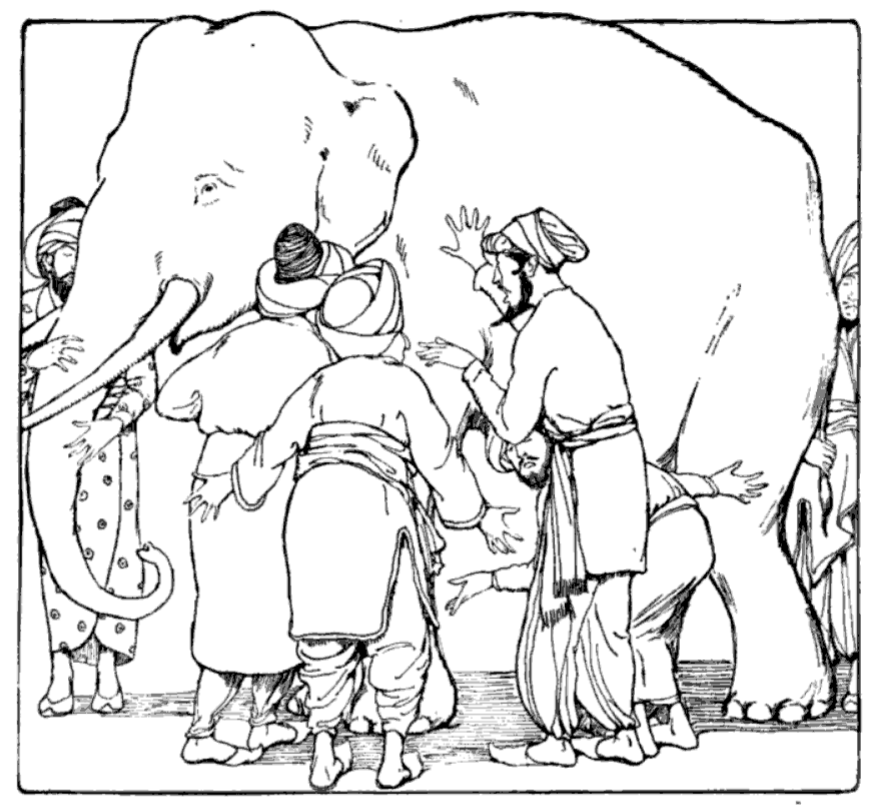 |
| Researchers pondering the EHR portal |
To tell the truth, however, the skeptical DMCB took unfair advantage of this latest EHR kerfuffle. It confesses that it couldn't resist this latest addition to the target-rich environment of HIT disappointments in quality, cost and governmental overreach.
So, upon further reflection, just because almost 15 years of high quality research failed to establish any lasting value doesn't mean portals should go the way of the Dodo, low-cost medical malpractice insurance or Mr. Obama's credibility.
In other words, the DMCB does think that portals have a role to play in the health care reform landscape, and it said so in front of a huge audience at the recent Star Ratings Conference in Fort Lauderdale.
Portals, thinks the DMCB, have little value as stand-alone interventions. Just dropping it into a clinic's patient population is unlikely to significantly increase communication and shift behaviors enough to produce enough of a "signal" that cost or quality outcomes are better compared to usual care.
But when EHR portals are part of a multi-channel outreach strategy that includes (but is not limited to) mailings, interactive voice response-based calls, secure messaging, emails, social media, "anniversary" time-for-your-appointment cards, live telephony as well as home visits that are all backed by predictive modeling (who is at greatest risk) that informs "impactability" (how they're at greatest risk) that's all tethered to care management that is also closely aligned with marketing and builds brand, then portals mostly likely do add value.
Unfortunately, traditional health services research cannot assesses the multiple simultaneous interventions described above. As Dr. Donald Berwick presciently noted in this classic JAMA article:
Experimentalists have pursued too single-mindedly the question of whether a [social] program works at the expense of knowing why it works. Thus, although [traditional research] seeks generalizable knowledge...it relies on removing most of the local details about “how” something works and about the “what” of contexts. It therefore reveals little about mechanisms or about factors that affect generalizability. Studying a few covariates, or using stratified designs, or probing for interactions can mitigate this loss, but these are inadequate tools for studying complex, unstable, nonlinear social change.
As the DMCB has noted before, absence of any proof is not the same as proof of absence. The studies that the DMCB ultimately quoted were based on traditional research, which is simply not up to the task of the non-linear intervention of patient-doc-team communications.
Don Berwick recommends a more insightful approach:
Health care researchers who believe that their main role is to ride the brakes on change—to weigh evidence with impoverished tools, ill-fit for use—are not being as helpful as they need to be. “Where is the randomized trial?” is, for many purposes, the right question, but for many others it is the wrong question, a myopic one. A better one is broader: “What is everyone learning?” Asking the question that way will help clinicians and researchers see further in navigating toward improvement.
When it comes to EHR portals, it's time we ask just what are we learning.
Tuesday, September 24, 2013
Media Savvy and the Implications for Business Leadership in the 21st Century
 The Disease Management Care Blog continues to be beguiled by Meghan McCain, and not just because she could be a good match for one of the DMCB's unmarried spawn. Ms. McCain's career may hold some early lessons in the coming style of 21st century leadership.
Way off topic for the health industry-oriented DMCB?
Not quite. It explains below.
As the DMCB understands it, the very blond daughter of Arizona Senator John McCain has a reputation for a liberal style of nontraditional Republicanism. That, combined with her namesake's political and media connections, has undoubtedly (and perhaps unfairly) catapulted her into the national spotlight. She could have faded away along with her dad's presidential ambitions, but she now has a web-TV gig that is a curious mix of 50% reality show (e.g., the travails of hanging taxidermy), 50% social commentary (e.g., her generation's lackadaisical views on privacy) and 50% chatty self-promotion.
That's not the point. What is the point is that 20th century old-fashioned (in politics, think Ronald Reagan or in business, Jack Welch) leadership skills were honed by decades of practice practice practice in the written word, public speaking and retail networking. Once they mastered that, their formidable communication skills helped propel these very talented men into their very successful careers.
We don't know where Ms. McCain's career trajectory will take her, and it's very possible that she could ultimately fade away. The DMCB bets not. While her current views and public persona can come across as naïve and unpolished, this young woman is likewise practicing practicing practicing to master a newly emerging 21st century style of leadership that will rely on the broadcast word, media savvy and web-based networking. By the time she is in her 50s, decades of experience combined with her other skills on both sides of the lens could make turn a diamond in the rough into a formidable force in business or politics or both.
Which brings the DMCB back to the business and politics of health care.
This has important implications for health industry leadership, including population health management. Simply avoiding the social media is no longer a formula for success. Smart hospital administrators are also mastering blogging to mitigate threats. Bad moments captured on YouTube can make health industry leaders look bad. Branding without Twitter is now like personal injury attorneys without contingency fees. Boards of Directors can't ignore the threat of adverse media relations like this in their enterprise risk management.
And who will be best positioned in the coming decades to lead health care companies through these challenges? Smart CEOs and executives who have a deep familiarity with leveraging TV and social media - thanks to decades of personal experience - to engage their constituents and customers to choose their products and services instead of their competitors'. And if they go into politics, they'll be leveraging the same social media skill-set to get voters choose their ideas and to vote for them.
You go gurl!
Image from Wikipedia
Monday, September 9, 2013
Social Media: Does It Really Change Patient Behavior?

Think Facebook for the flu. Twitter for tinnitus. Egads, listen to the typical consultant, pundit or futurist and it's easy to believe that we're on the verge of a silicon-based health care revolution
But then reality intrudes and some skeptic somewhere always asks about the bang for the buck, the juice for the squeeze, the return for the investment. It's a good question.
For something of an answer, consider the results appearing in a recently published randomized clinical trial. The actual condition in question is going unmentioned for now, so that the DMCB can better focus on the issue of patient engagement
Over a 4 month period, "at risk persons" were recruited for a clinical research trial with on-line ads (Facebook banners, Craigslist, for example) as well as announcements in community settings and venues. Once persons met the usual inclusion criteria and had a unique Facebook account, they were randomly assigned to one of two treatment arms.
One treatment arm used a closed Facebook group to coach persons about their at risk condition. The other treatment arm similarly used Facebook to coach persons about general health improvement. Lay "Peer Leaders," who were given a three hour training session on "epidemiology of the condition or general health subjects and ways of using Facebook to discuss health and stigmatizing topics," were assigned to lead the groups.
Peer Leaders attempted to reach out to their assigned group persons with messaging, chats and wall posts. Once the link was established, the relationship in the intervention group included communication about prevention and treatment of the condition. At the end of 1, 2 and three months of the study, participants completed a variety of surveys.
Results?
57 individuals were in the control general health group and 55 were in the condition coaching group. According to the surveys, intervention patients were ultimately statistically significantly more likely to agree to condition testing (44%) than the control patients (20%). Because there were few participants, the modest decrease in actual tests or risk behaviors were not statistically meaningful.
The DMCB's take:
While this was a small study, this is the first time that the DMCB has seen reasonable proof that social media by itself can move the behavior needle. On the other hand, this did not result in a patient engagement stampede toward better care or hard clinical outcomes. A majority of participants (56%) did not appear to benefit. Nonetheless, the results do support the inclusion of Facebook-style closed group social media in the suite of population health management services.
That being said, the condition at risk was HIV and study population was men who have sex with men ("MSMs"). It doesn't necessarily follow that what would work in this community of persons would necessarily be transferrable to other conditions, such as diabetes. The DMCB doesn't think that's really true and finds it credible that 112 persons with diabetes or hypertension would probably achieve the same kind of results (A1c testing or home blood pressure monitoring) in a similarly tailored Facebook closed group.
Here's the study.
Let the research continue!
Monday, June 3, 2013
The Growing Power of Social Media In Scientific Scrutiny and Public Policy: Two Examples
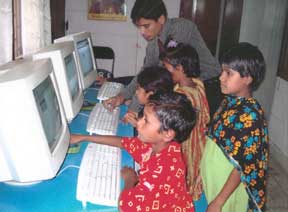 |
| Tomorrow's docs checking out the medical literature |
Here are two great examples:
In this blog post, public health professor Michael Siegel takes the company Alere to task for allegedly making inflated claims on its web site about the success of its tobacco cessation program. The sleuthful Dr. Siegel did a literature search to find out more about the science underlying its claim, and found that persons lost to follow-up were assumed to have quit. The original Alere publication refers to a curious "responder analysis," but also documents a far more modest "intention to treat analysis" with a one-month quit rate of 21%. That lower number - and the fact that quit rates are typically reported over 6 months, not one month - was excluded from Alere's marketing.
The Disease Management Care Blog has previously pointed out the hazards from Boards of Directors letting their company's management put dubious or vulnerable research into the public domain. Dr. Siegel is a perfect case in point of the power of an interested and skeptical scientist who can use the internet's public square to attack research "spin" and batter a company's reputation. This kind of reputational threat needs to be "top of mind" when population health and care management company Boards are thinking about their enterprise risk management challenges.
And as further testimony to the growing potency of bloggery, check out this posting on The Health Care Blog on "seven policy recommendations" that were jointly co-authored by heavyweights from the Urban Institute, Johns Hopkins and Yale. Not only are the recommendations themselves worth consideration, they were "open-sourced" on a blog - not a journal - with a level of speed, timeliness and visibility that traditional print media can simply no longer match.
Tuesday, November 6, 2012
Texting to Promote Weight Loss and in Population Health Management
 Anyone who regularly attends a house of worship is certainly aware of how preachers make a point of regularly visiting parishioners while they're in a hospital. Since the Disease Management Care Blog's recent hospitalization involved an inconvenient distance (hour and a half drive) and time (6:30 AM), the DMCB pastor adapted by texting a prayer message. The DMCB took some comfort in what its colleagues euphemistically refer to as "faith healing."
Which is one reason why the DMCB paid attention to this interesting peer-reviewed abstract. 170 obese persons were randomly assigned to either monthly emails or daily "personally relevant and interactive" text messages. There was no difference in weight loss at 6 and 12 months of follow-up, but persons who were "adherent" to the text messages had statistically significant greater weight loss and greater activity levels. Satisfaction levels were also high in the text message group.
And then there's this other study that randomly assigned obese college students to text messaging plus Facebook, Facebook alone and a "waiting list" control group. In the limited follow-up of 8 weeks, the text messaging group lost a significantly greater amount of weight (2.4 kg.) vs. the other two groups.
Is texting an option for weight loss in particular and for population health management (PHM) in general? These two studies would indicate the answer for both is "perhaps." A better answer may be that texting plus other PHM interventions is better and that texting for persons who prefer it is best.
The DMCB's Fat Lady might also approve of texting. If it's good enough for the prayerful among us, who can argue against it?
Image from Wikipedia
Thursday, October 18, 2012
Pearls from the Care Continuum Alliance Forum12

It's also grateful for all the pre-event PowerPoint advice that it got (you know who you are).
Nonetheless, the DMCB steeled itself and attended a host of educational follow-up sessions over the remainder of the day and scribbled down some of the better pearls of wisdom:
Americans, without exception, distrust all large institutions. That prompted the DMCB to wonder again about the prognosis of the ACO business model.
People trust persons like themselves. This used to mean just friends, neighbors and family, but now includes social media circles. Health providers ignore the implications of that at their peril.
Consumers do not equate healthcare information with healthcare solutions.
A goal of old age is to live with inevitable chronic illness without being sick.
HIPAA compliant on-line authentication is moving away from entering an email address to entering a cell phone number. Email accounts change, but people tend to keep the same cell number even if they change phones or carriers.
Ideal clinical work flows from a Patient Centered Medical Home is circuitous: the patient never exits.
Sunday, January 15, 2012
OK, You Want to Do Some Health Care Social Media. What's Next?
 |
| No social media is complete without it! |
That stuff is important, but PwC reminds us that social media has other important roles. "Outward" social media can also act as a listening post (for example, becoming aware of service perceptions like this before they reach a critical mass) and notification tool (such as patient alerts). Then there's "inward" social media, which can collaboratively link your workforce and allied professionals for online problem solving (there are lots in the public domain, by the way).
All well and good, says the DMCB but once you commit to investing in social media and setting up some accounts, what's next? While the DMCB doesn't usually reflect other bloggers, it recommends these well written Part I and Part II posts courtesy of David Harlow's Health Care Law Blog.
Mr. Harlow recommends that companies think early about the patient confidentiality rules imposed by HIPAA, professional codes of conduct and underrecognized threats from the Federal Trade Commission and National Labor Relations Board. The eye-opener for the DMCB was the need to develop local, flexible, inclusive and protective organizational policies backed up by training that reminds users that they are "ambassadors" for the company on their social media "property.'
Wednesday, May 4, 2011
Ten Rules for Health Care Organizations Interested in Using Social Media

Case in point: during a recent work-out at the local fitness center, the Disease Management Care Blog witnessed two elder women chatting while speed-walking on side-by-side treadmills. Down the row were two younger women on side-by-side exercise bicycles, also chatting. The difference was that the two younger women had ear plugs in place, their cell phones out and were simultaneously texting. All four women were continuously talking at the same time, but that's not the point. The point is that two-way web-based cellular communication is fast becoming a 24-7 standard for tens of millions of people. Those two elders may currently command greater purchasing power, but those texting youngsters is where the future lies.
As mentioned in yesterday's post, health care organizations that realize that they need to get the attention of the two women on those exercise bikes will find it extremely challenging. That's because those ladies will have to "opt-in" and agree to "friend" or "follow" you.
While social media is just as new to population health providers, the DMCB thinks they'll have a leg up because they have been in the "opt-in" business for over a decade. After doing some reading and talking to some colleagues in the disease management industry, here are ten insights that can help other health care organizations such as accountable care organizations, integrated delivery systems, medical homes or other provider organizations build followers, tweeps, and friends the opt-in world of social media:
1) Offer brief, personalized, meaningful and relevant content: mass messaging and links to milquetoast advice offer little value. Efficiently written humor, unique insights and actionable information need to make the effort it takes for your customers to pay attention worthwhile. Being snarky , rude and pushy isn't necessarily bad. Extra points for catering to "micro" communities.
2) Expect slow uptake, one person at a time: adoption is non-linear, starting slowly and building as awareness grows to, if you do this right, a tipping point. While big Twitter communities weren't built in a day, the good news is that once a base of readers/friends/followers is established, it won't easily go away.
3) It's a part of a larger coherent marketing and branding strategy: traditional communication "channels" still have a role to play. Print, email and phone calls should continue in addition to tweets and postings.
4) Aim it relevant generational health issues - current younger users of social media are more likely to be interested in personally important issues like health promotion, obesity or child care. Chronic conditions like diabetes or hypertension are less relevant.... for now.
5) Incentives are OK: assuming you can get past the kick-back, privacy and insurance rules, think gift certificates or raffles for sign-ups as well as referrals. It works in employer settings, why not out on the net?
6) Worries? Yes, including HIPAA, creepy data mining, hacking, surveillance, cyber-bullying and predatory behavior. You'll need to be up-front with friends and tweeples about this and promptly notify them of any problems.
7) It's messy: the likelihood that this can be predictably planned is very low. Flexible adaptation and trying to get buy-in from a skeptical audience means this will be more of a journey than a destination.
8) Social media networking is important: in addition to building your community of individuals, you'll need to interact with other Twitterers, Facebook pages and blogs. Play nice with them and they'll notify others about you.
9) Prize relationships: this is a two-way street, which means you have to have a reputation for listening. That means being aware of any community "buzz" and promptly answering all individual questions, comments and concerns.
10) It isn't cheap: This takes time. This has to be supported with policy and procedure. This requires training and staffing. This needs money.
Wednesday, December 8, 2010
Dreaming About A Killer Ap That Measures & Credits Social Media-Based Panel Size and Shared Decision Making
 The Disease Management Care Blog announces its retirement from bloggery. It has decided to commit its considerable accumulated blogging cash flow and the DMCB spouse’s retirement fund to launch a novel, venture capital-backed and "killer" web application.
Well, not really, but read on. The DMCB can fantasize, right?
It’s called HealthyFacebookery. This novel and robust smart-phone, cloud-based and social-media technology package takes advantage of the evolution of provider-patient relationships away from "production line" face-to-face encounters. As patients and doctors will tell you, office visits have been hollowed out by the need to create medical record entries and health insurance claims. This application will leverage the growing preference of consumers for on-line relationships. As regular readers of the DMCB know, this new social media is now defining the virtual dimensions of physician care.
HealthyFacebookery offers several solutions.
First of all, it can be used by savvy buyers and insurers to assess providers' true productivity and risk-adjust provider payments. By using web crawlers that catalog and weigh the number and intensity of on-line “friending" and other interactions, Healthy Facebookery will add a unique level of granularity to insurer network management. This is paying for email visits Ver. 2.0.
In addition to gauging the quantity and quality of virtual doctor-patient relationships, Healthy Facebookery will also leverage patient centeredness by assisting users' access to unbiased and vetted information about nationally recognized and recommended care interventions. It relies on the key principle of shared decision making (SDM), in which the patient, after receipt of unbiased and trusted information and decision support, is ultimately empowered to trigger care based on his or her own preferences and values. HealthyFacebookery will seek consumer friending on behalf of providers and, if approved, will offer links to any on-line resource that provides facilitated decision-making. Modules that are free of any advertising and that are game-based will be favored. HealthyFacebookery will not create any content but will be happy to accept fees or profit sharing with those who do, assuming they also link the widely read and excellently written Disease Management Care Blog on their corporate web sites.
In addition to gauging the quantity and quality of virtual doctor-patient relationships, Healthy Facebookery will also leverage patient centeredness by assisting users' access to unbiased and vetted information about nationally recognized and recommended care interventions. It relies on the key principle of shared decision making (SDM), in which the patient, after receipt of unbiased and trusted information and decision support, is ultimately empowered to trigger care based on his or her own preferences and values. HealthyFacebookery will seek consumer friending on behalf of providers and, if approved, will offer links to any on-line resource that provides facilitated decision-making. Modules that are free of any advertising and that are game-based will be favored. HealthyFacebookery will not create any content but will be happy to accept fees or profit sharing with those who do, assuming they also link the widely read and excellently written Disease Management Care Blog on their corporate web sites.
Finally, HealthyFacebookery's patented technology will also measure how often participants used on-line shared decision making. In other words, it will assess how many participants were not only informed, but how often they considered recommended care interventions. HealthyFacebookery patented online measurement protocols will help health insurers understand and support this independent decision making of their beneficiaries. It will recognize that patient-consumer-users have the right to make "informed refusals." What's more, this application will assure that providers are credited when their patients participate in shared decision making. Insurers will be able to use these twin measures of "considered" and "decided" as a state-of-the-art metric of patient centeredness. This makes HealthyFacebookery a classic disruptive measurement technology that makes standard denominator-numerator quality assessment methodologies destined for obsolescence.
You read it here first.
Tuesday, November 23, 2010
Mixing Social Media and Health Care: Concocting a Worst Case Scenario Using Big Pharma and Manipulated Web 2.0 Writers
 Are there any downsides to the mixing of social media and health care? An interesting "Perspective" article by Boston academicians Jeremy Greene and Aaron Kesselheim in the latest New England Journal (not online yet, but check back for the link) says "yes" by taking the worst of both worlds: misinformed and manipulated Web 2.0 writers on one side and the misbehaving pharmaceutical industry on the other.
They point out that the pharmaceutical industry's marketing has generally been under very tight control by the Food and Drug Administration (FDA). Ironically, however, it was the FDA's guidelines surrounding direct to consumer (DTC) advertising that ultimately unleashed the glut of dry eye, erectile dysfunction and when diet 'n exercise-are-not-enough high cholesterol TV commercials. Well, following a November 2009 hearing on the matter, the FDA is now gearing up to issue guidance on the use of social media in pharmaceutical advertising. Once that happens, we can expect a considerable portion of the pharmaceutical industry's annual $4 billion budget to be spent on product-promoting bloggery, tweets and friending.
Which worries Drs. Greene and Kesselheim. They fear that authors of blogs, Facebook accounts and Twitter feeds that have only nice things to say about drugs or their manufacturers may be paid, biased, not credible or have hidden conflicts of interest. To deal with this, the authors suggest holding both the pharmaceutical industry and the FDA "responsible" for any significant misinformation and raise the possibility of creating a Web 2.0 FDA "seal of approval" to promote accurate content.
While worst case scenarios can be instructive, the DMCB isn't convinced that even the pharmaceutical industry's billions are up to the task of bending a truly massive and hyper-distributed social media global network to their will. What's more, pharma's tarnished reputation has already attracted the attention of legions of simultaneously smart and hostile bloggers, who seem more than ready to counter any product claims - including the credible ones. Last but not least, the DMCB is coming to doubt any laughably "responsible" Federal agency's ability to do anything quickly, cheaply or effectively. Better to let the bloggers establish their own reputations for transparency and pursue their own seals of journalistic/scientific excellence, perhaps through resources like this.
Last but not least, the DMCB is a believer in open and democratic discourse. Trying to influence the free flow of information, even if the filters are contrived by well-meaning do-gooders in some windowless room at the FDA, just seems to have too many downsides. If anything, the FDA should be working to promote an independent, skeptical and vibrant Web 2.0 scientific community. After that, they should get out of their way.
Image from Wikipedia
Thursday, October 14, 2010
Insights from the Care Continuum Alliance Meeting: Federal Planning, Small Low-Overhead Practices, Full Risk Contracting and Social Networking
 A number of insights from attending today's Forum10 in Washington DC:
It seems that once D.C. policymakers get armed with Federal health legislation, they like nothing better than to talk-circuit with bubbled, arrowed, jargon-filled and notion-addled PowerPoints. The Disease Management Care Blog witnessed this first hand today, when it learned from a plenary session speaker that our government is developing a national health agenda that will drive measurement and change quality for the better. All well and good, says the DMCB, but the fact is that it's locally developed programs that have always been the source of real innovation, and that they only use the Feds' resources only when they add real value. The conceit was astonishing.
If physician income is no object, it's possible to set up a small, low-overhead, limited panel clinical practice and still take good care of patients. It may mean that the docs escort the patients back to the single examining room themselves, draw up and administer their own immunizations, carry a cell-phone 24-7 and create their own primitive records on desktop PC's. That was not surprising to the DMCB - what was interesting was the physician-speaker's assertion that doing all that gives that clinic a head start on getting NCQA recognition as a medical home. Will "concierge practices" add claims of also being a medical home to their other supposed virtues?
Conduct one big study of a disease management/telephonic care management program that shows a big return on investment. Check. Get it past peer review to make sure that what you think you've found is correct. Check. Conduct a bunch of similar in-house studies involving other clients that show the same thing. Check. Then, and only then, can you be confident enough to go to market with that program with a guaranteed, full-risk contract option. To do otherwise would be foolish.
Did you know there are 105 million Twitter users? 400 million on Facebook? That there have been 6.5 billion views on YouTube? Yet, while the telecommunications, computer, specialty retailers and the food industry have all tapped into this "social networking" phenomenon to great effect, the health care industry is still looking at it as an answer that's in search of a question. While there are some health care examples of social networking like hospitals (that use it to market and get patient feedback), patient communities (an example is PatientsLikeMe) and the Centers for Disease Control and Prevention (podcasts and videos are out there extolling the virtues of influenza immunization), this has yet to truly fill it's potential. Consumers are worrying about privacy and they'll only use social networking if it yields better information than a simple Google search. As you ponder this for your company, think about issues involving 1) identity (how much personal information must users share?), 2) authenticity (is this really good from the users' points of view?), 3) accessibility (you cannot afford to have your site go down), 4) reputation (users may not trust managed care-run networking, no matter how well-meaning) and 5) reciprocity (this is two way). These and other insights are courtesy of Deloitte. You can read more here.
Monday, September 13, 2010
Social Networking Takes on Dr. "House" and Wins
 The Disease Management Care Blog generally eschews medical television dramas. Overcooked symptoms, overlooked possibilities and over-testing combined with vacuous story lines populated by emotional distancing, narcissism and unreality is just too much for the DMCB. A particularly irksome plot device is the superhero diagnostician who plucks the right diagnosis out of thin air, saving the day with enough time left over for a fast food commercial. The DMCB has heard from physician colleagues that this fiction has begun to bubble up among the relatives of sick patients, who are asking for a referral to the local version of "House."
The spouse, in turn, eschews the DMCB's television viewing attitude, which often leads to an exercise in shared decision making. After a careful dialogue, it usually ends in an agreement that the DMCB should shush, desist in grabbing at the remote and be banished from the room.
Which is good, because it gives the DMCB more time to browse other blogs, including rock star KevinMD. That's why it came across this interesting post about the use of social media to solicit suggestions about a mysterious cluster of symptoms. Using thinly veiled identifiers (initials), a girlfriend, after running the idea past the author of the Glass Hospital Blog, posted detailed facts about a mysterious case in her own blog along with a request to physician-readers to submit ideas about the diagnosis. That posting has since been removed (the case ended happily) but you can read about it here. Check out the mention of one doctor even providing an insightful case report from an obscure Korean journal in the 4th paragraph of the posting.
Not only is this an interesting story that was picked up by the New York Times, it's also a good demonstration of the benefits of distributed problem-solving thanks to web-enabled crowdsourcing. The phenomenon is already well established in some industries. The DMCB predicts that healthcare will catch up: more and more enterprising physicians and patients will find ways to navigate past the hinderances of HIPAA and use this approach to get answers about diagnoses and treatment options. As the DMCB has noted before, this has important implications for a medical profession that cleaves to its own storyline of single credentialled experts portrayed by the likes of "House."
By the way, the DMCB was the one that found and forwarded that Korean article.
Wednesday, August 25, 2010
The Rise of Social Media: Implications for Disease Management, Patient Centered Medical Homes, Health Insurers and Accountable Care Organizations
 The ever perspicacious and self-promoting Disease Management Care Blog has penned an editorial appearing in the latest just-released issue of the peer-reviewed journal, Population Health Management. Blog reading DMCB readers may appreciate the topic: the emerging nexus between social media (like Facebook, blogging and Twitter) and care management.
Calculating that social media aficionados may find printed paper unsatisfying, the DMCB is pleased to offer this 160 character (why 160, you ask?) tweet-like summary:
Social media promises 2B important addition to voice/print-based outreach 4 pop.-based outreach. Key concepts: pt. loyalty, synergy, privacy
Tweeters can stop here and return to more important pursuits, say, seeing what's new with Fergie. The rest of you can read on.....
Here's a more complete yet compact summary about social media's implications for the disease/care management industry. The DMCB suggests it also applies to patient centered medical homes, accountable care organizations and health insurers:
The various forms of social media (SM) have already begun to disruptively intrude into how consumers interact with health care. Many of your current and future patient-client-customers prefer to use SM because of its convenience and personalization. While little is known about its impact on patient self-care behaviors, early studies indicate the potential is significant. Therefore, you cannot afford to ignore it. As you embark in SM, keep in mind that a) the ultimate return on investment will be a function patient loyalty (though it will help with recruitment stats), b) SM communication is additive/synergistic - not substitutive, c) its participatory nature means the role of credentialed trained experts will change, d) short n' frequent will replace detailed and quarterly, e) the area is ripe for research and f) the downsides include unclear HIPAA rules and dysfunctional as well as predatory user behaviors.
Monday, June 21, 2010
A Potporri of News About Marketing & Social Media, Savings from Telephonic Disease Management and Methodologic Problems in the PCMH Pilot Evaluations
 Today brings a grab bag of worthy news to the Disease Management Care Blog readers. Topics include social media, old fashioned telephonic disease management and the Patient Centered Medical Home.
First off, did you know the population health/disease management company Healthways has a Facebook page devoted to its elder wellness program SilverSneakers? The Disease Management Care Blog did also, but what it didn't know is that, according to this press release, uptake lagged until a professional marketing firm began to promote it.
The DMCB insight: while social media is supposed to be a "viral," bottom-up democratic phenomenon, the professionals have moved in.
Secondly, there are two research findings on the topic of old fashioned "telephonic" disease management. Does it or doesn't improve quality? Does it save money?
In this early release publication in the prestigious Journal of General Internal Medicine (known to publish papers with high methodologic rigor), Daren Anderson et al were unable to demonstrate in a prospective randomized clinical trial that a telephonic disease management program versus usual care resulted in better blood glucose control. However, this was a single site study involving a community health center serving disadvantaged patients. Patients were enrolled in the study without regard to baseline diabetes control, the intervention group had a lower A1c at the start of the study and there was a significant prevalence of depression in both groups. In addition, it's possible the intervention may have changed provider behavior for the control patients.
The second study JL Rosenzweig and MS Taitel was only released in abstract form (its P3-715) from this year's Endocrine Society's meeting. This research involved enrollees from a Medicare Advantage plan that focused its telephone diabetes disease management program on high risk patients. This was also a randomized prospective study that showed the intervention patients....
"....decreased ... all-cause total medical costs by $984,870 per thousand members per year (PTMPY), compared to a $4,547,065 PTMPY increase in the Control Group (p≤.05). All clinical quality measures significantly improved from baseline (p≤.05) including A1C, LDL ,and microalbumin testing, retinal exams, foot exams ACE or ARB use,and aspirin use.
The DMCB insight: as publications expand in number, the science matures and other settings/patients are explored, both positive and negative studies are not unusual. However, if that Medicare Advantage study is correct, that's some serious money being saved. Looks like the the taxpayers were getting their money's worth after all in this particular Medicare Advantage plan. The DMCB is looking forward to seeing more details in a peer review publication soon.
Thirdly, in this study, the authors surveyed the larger PCMH pilots and provide a useful national-level summary overview. For example, per member per month (PMPM) payments for eligible patients range from $0.50 to $9 plus pay for performance (P4P) bonuses along with other payments to fund practice transformation or other care strategies, such as embedded nurse care managers or quality improvement programs.
But particularly worrisome was this finding:
"...the evaluation plan for nearly 60% of demonstrations had not yet been devised in detail at the time of the interviews. Even among those with more developed plans, the specification of which variables would be measured, along with surveys to be used, was uncommon."
What's more....
The heterogeneity in program design suggests an urgent need to incorporate evaluation in all programs’ designs. Less than half of the programs had well specified evaluation plans that were designed in conjunction with the pilot. In most cases, although evaluation is considered important, the evaluation designs had not been pre-specified, thus necessitating a reliance on existing data, and funding had not been secured to support a robust evaluation. Furthermore, many of the pilots do not identify adequate control groups against which to compare the intervention practices.
The DMCB insight here is that if the PCMH pilots are not careful, they could end up being condemned in a CBO report saying there's no good evidence that their intervention works. Based on the two disease management studies described above, it's safe to say that the disease management industry has learned its lesson: valid comparator groups are being used to accurately assess their impact. The industry has even developed a state-of-the-art evaluation guide that addresses many of the methodologic issues (that's for free, by the way) in program evaluation. PCMH pilot managers should take note.
Subscribe to:
Posts (Atom)



 Posts
Posts