Showing posts with label German Health Care System. Show all posts

Thursday, June 13, 2013

Sure, Accountable Care Organizations ACOs Can Save Money, But Can They MAKE Money?

ACOs at work.
According to this Bloomberg news release, some of Medicare's Accountable Care Organizations (ACOs) are already achieving cost savings. Mt. Sinai and Coastal Carolina are reducing emergency room visits while Hackensack is reducing costs.

All three institutions are using two key ingredients:

1) information technology-based risk stratification to identify the persons at greatest risk and

 2) dedicated full-time nurses who perform telephonic and in-person outreach, coordinate care and provide patient coaching that, in turn, is tailored to that risk.

To the DMCB, the good news is that ACOs are using the two approaches that define modern-day disease and population health management. That industry's success will be Mt Sinai's, Coastal Carolina's and Hackensack's success.

The bad news is that the news release only addresses half the question: did any savings exceed the institutions' cost of the risk stratification and the nurse-FTEs? If the early answer is no, then avoided ER visits and reduced costs could turn out to be much like Governor Christie's lap band: so far so good but it's still risky and could ultimately be all for naught.

And on an unrelated note, this just-published New England Journal article makes note of "not made in America" health care innovations from overseas that could hold important lessons for the United States. In particular, the authors point out that Germany's DRG hospital payment system includes 30-days of post-discharge care and includes the physician payment. Readmissions within that 30 day window are, with a few exceptions, not covered and physician payment is possible because docs are often employees of the hospitals.

"Interesting!" says the DMCB, but is reminded that Germany is hardly a model for reducing inflationary cost trends.   It also specifically recalls hearing Germany's Minister of Health, Daniel Bahr, express impatience with his country's DRG system just last week. He criticized it for not advancing enough quality in his keynote address at the HauptKongress in Berlin.

Monday, June 10, 2013

Germany's Health Care System Travails

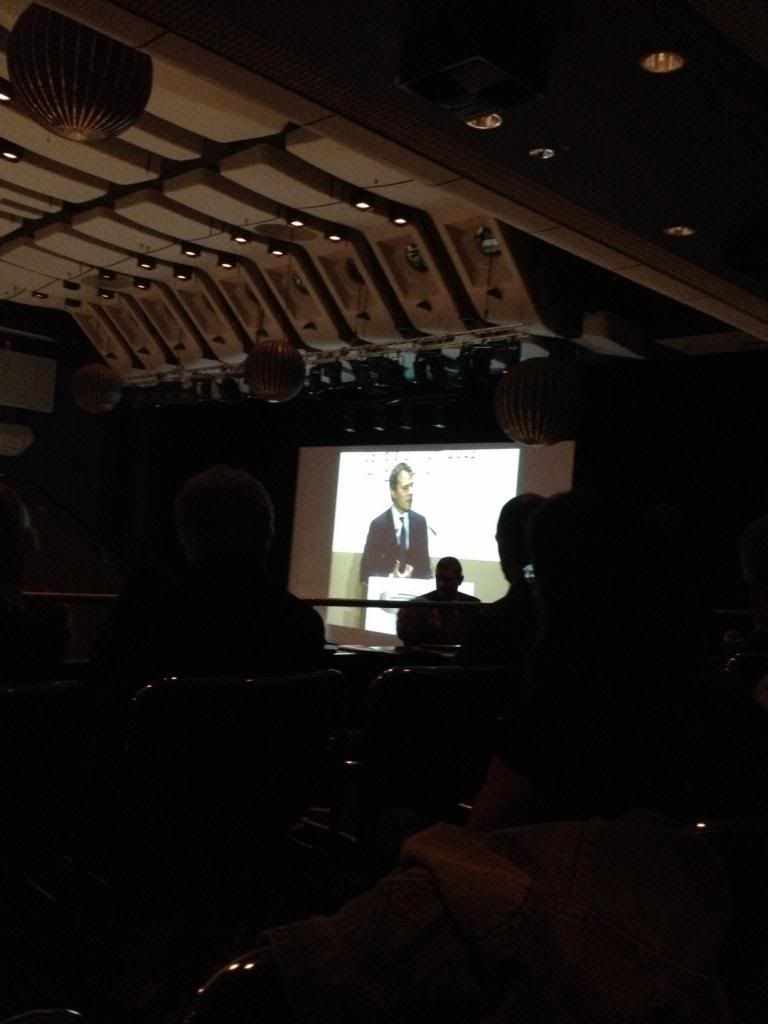
German Health Minister,
via a Berlin jumbotron
The Disease Management Care Blog has just returned from its successful whirlwind policy tour of Germany.  It spent three days in Berlin chatting it up with leaders from the German health care system.

The DMCB is reminded that Germany has hundreds of highly regulated and non-profit insurance companies that provide a standard benefit package to about 85% of the population. The premium for this compulsory health insurance is paid by a combination of personal and employer financing with government subsidies. The basic insurance benefit and the base pricing is governed by budget setting that is negotiated at a regional level.

Self-employed and very wealthy individuals can opt out of the non-profit insurance companies and buy private insurance with a richer benefit structure.  About 10% of the population take advantage of that option.

The DMCB was told that the hospitals in Germany are about one third public/non-profit, one third religious institutions and one third private/for-profit.  None are closed out of any insurance networks.  Many seem to be part of large horizontally integrated systems. They are largely paid using DRGs. Physicians can be in independent practice or hospital employees.

The theme of the meeting?  Health care costs are too high and quality is lacking.  That point was repeatedly made by political wunderkind Daniel Bahr, the 30-some and telegenic German Federal Health Minister.  While it understands no German, colleagues told the DMCB that Herr Bahr announced during his plenary session speech that it was high time that Germany moves from (you guessed it) "volume to value."

DMCB Berlin health policy take-aways:

If Europe's horizontal "systems" integration with physician employment is supposed to be a value-enhancing panacea, why is German's health care cost inflation trend of 2.6% matching the U.S. rate?  And why does it need to turn to other blunt force tools to curb costs like increasing deductibles, limiting coverage of non-evidence based interventions or promoting generics

In it's conversations with some of Germany's health system leaders, there appeared to be a consensus that there were "too many" hospitals and that some had to close.  This belief in supplier-induced demand, however, was tempered by the recognition that hospitals are not only important employers but have significant political power.  It remains to be seen if Berlin can pull that off.

While admiration for U.S. innovations abound, German leaders were skeptical and repeatedly referred to a need to "adapt" any American solutions that work to the German system.  They are interested in value-based purchasing, bundled payments and ACOs, but are first waiting to see if they succeed.  Only then will they think about importing them.

Other off topic asides:

The German economy - despite the threat of having to prop up Europe - is very strong.  Construction is everywhere, sentiment is optimistic and folks are living very well.

Wind farms are a common sight on the autobahn.  They reportedly supply about 5% of Germany's power and are changing a landscape of forests and quaint towns.

More persons in Berlin seem to speak Russian than English.  What's more, well-dressed "noveau-riche" Russians were more prevalent than Americans in all of the center-city restaurants.

Berlin resembled New York City in three important respects: atrocious traffic, storefront opulence and odors of dubious pedigree.